
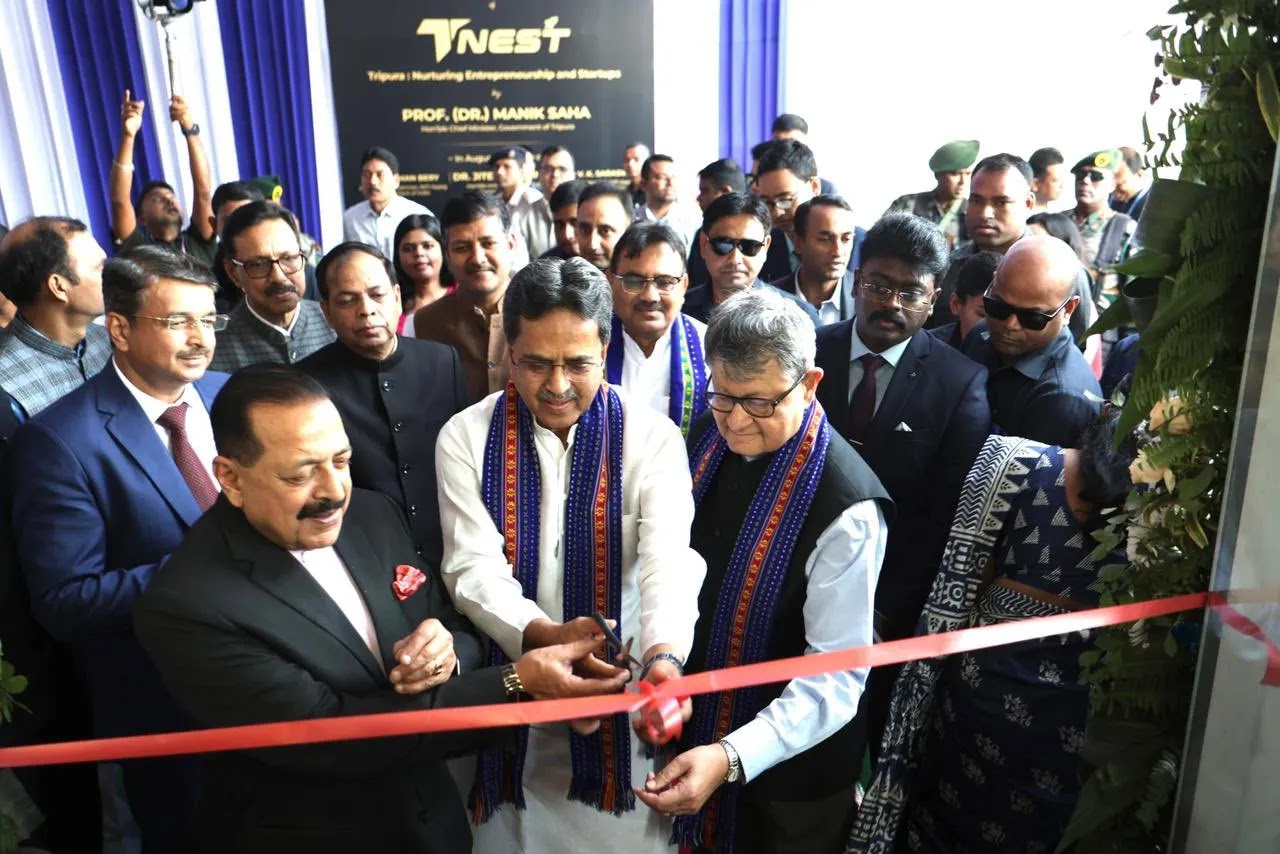
Agartala, February 26, 2026: In a major push toward decentralised innovation, Tripura has become the first state in India to launch a State Innovation Mission (SIM), aiming to institutionalise a district-level innovation ecosystem and transform local ideas into scalable startups.
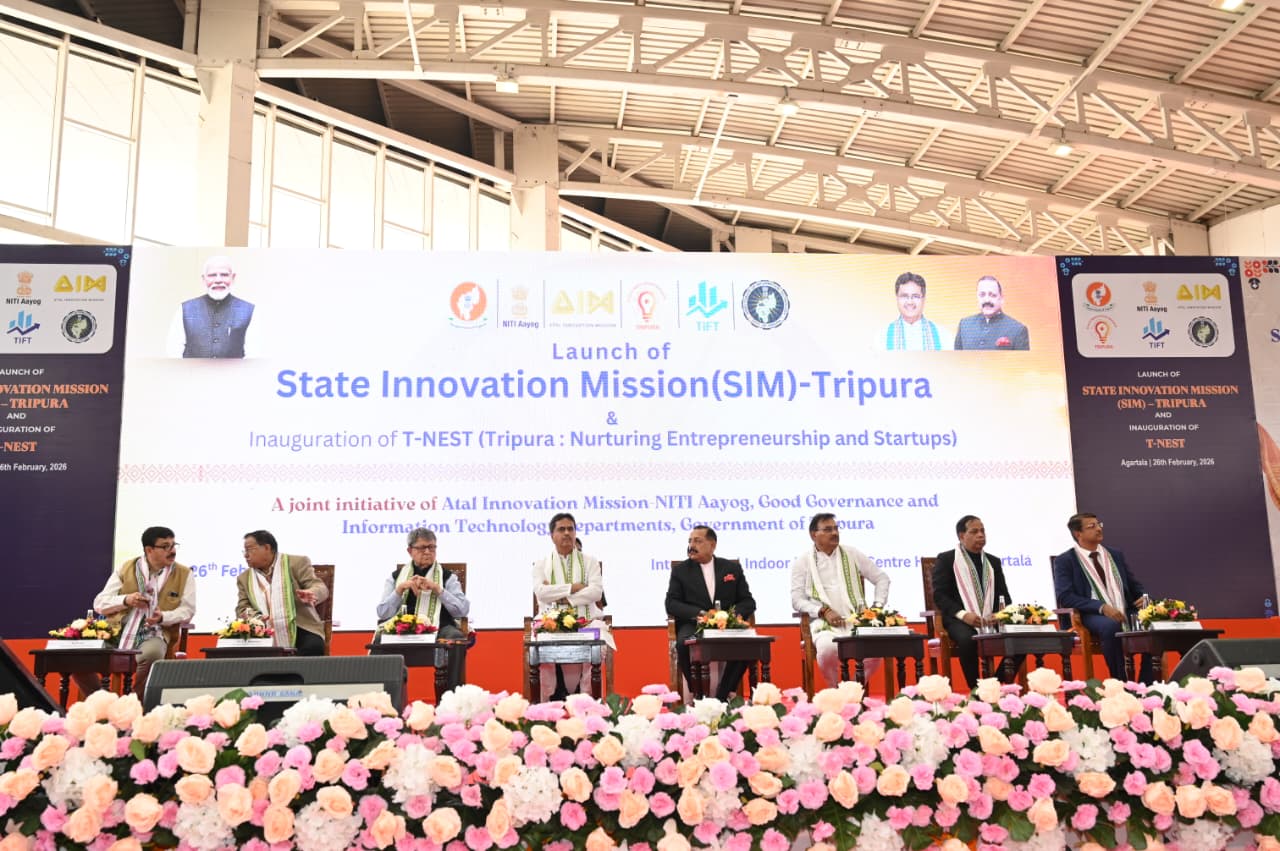

Union Minister of State (Independent Charge) for Science and Technology, Dr Jitendra Singh, launched the mission in Agartala, emphasising that innovation must reach districts, villages and small towns. He said technology should not remain confined to laboratories or metropolitan corridors but empower citizens across the country.
Describing the Northeast as India’s “new engine of growth,” the Minister said Tripura’s initiative reflects a broader national effort to democratise opportunity. The move follows the success of the Atal Innovation Mission (AIM), which has expanded innovation culture across India over the past decade.
Nearly 10,000 Atal Tinkering Labs have already been established nationwide, with plans to add 50,000 more to deepen grassroots innovation. According to the government, this expansion will significantly strengthen school-level creativity and entrepreneurship.
Boost to Startups and MSMEs
Tripura has recorded a 66 percent surge in startup recognitions over the last five years. The state currently has more than 150 registered startups, with a notable share led by women entrepreneurs, positioning it as a leader in gender-inclusive innovation in the Northeast.
The State Innovation Mission is expected to accelerate commercialization of innovative ideas, particularly at the district level. It will also integrate local industries, research institutions and startups into a structured support system.
The Minister highlighted that over 3.13 lakh MSMEs are registered in Tripura on the Udyam portal, including more than 1.18 lakh formal Udyam registrations and nearly two lakh micro-enterprises supported through the Udyam Assist Platform. SIM is expected to provide fresh momentum to this enterprise ecosystem.
Policy Support for Deep-Tech
Dr Jitendra Singh underlined recent policy measures aimed at supporting deep-tech and research-driven startups. These include a Rs 10,000 crore Fund of Funds for deep-tech ventures and the creation of a Rs 1 lakh crore Research, Development and Innovation Fund to help enterprises scale.
He said the government has also eased sustainability conditions for CSIR-backed startups and encouraged greater risk-taking in innovation. According to him, sectors previously considered restricted, including nuclear energy, have been opened to wider collaboration under reform measures.
The Minister stressed that India’s startup ecosystem has grown from a few hundred ventures in 2014 to over two lakh today, generating more than 21 lakh jobs. Nearly half of these startups are emerging from Tier-II and Tier-III cities, reflecting decentralised growth.
Leveraging Local Strengths
Tripura’s rich bamboo and rubber resources were identified as strategic strengths that could support high-value manufacturing. The Minister pointed to potential applications in defence, biofuel production for aerospace and specialised materials.
He said aligning local strengths with national priorities would define the next phase of India’s growth story. Technology, he added, must drive equity and inclusion by reaching underserved communities and improving ease of living.
Cooperative Federalism in Action
The launch event was attended by Chief Minister Prof. (Dr.) Manik Saha, NITI Aayog Chairman Suman Bery, and other senior officials. The initiative reflects what the Minister described as the “double engine” approach aligning national vision with state-level execution.
Dr Jitendra Singh said balanced development across regions has been a key focus since 2014, with improved connectivity and infrastructure transforming the Northeast’s economic landscape. He expressed confidence that SIM Tripura would integrate Artificial Intelligence and digital tools into governance and entrepreneurship.
Calling innovation a collective responsibility, he urged greater participation from the private sector and academic institutions. “When states innovate, India accelerates,” he remarked, adding that collaborative effort between science, society and industry would define India’s innovation decade.