
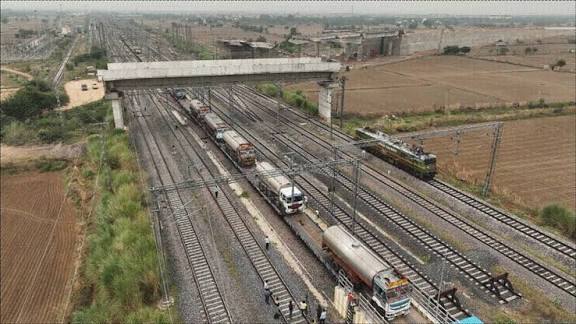
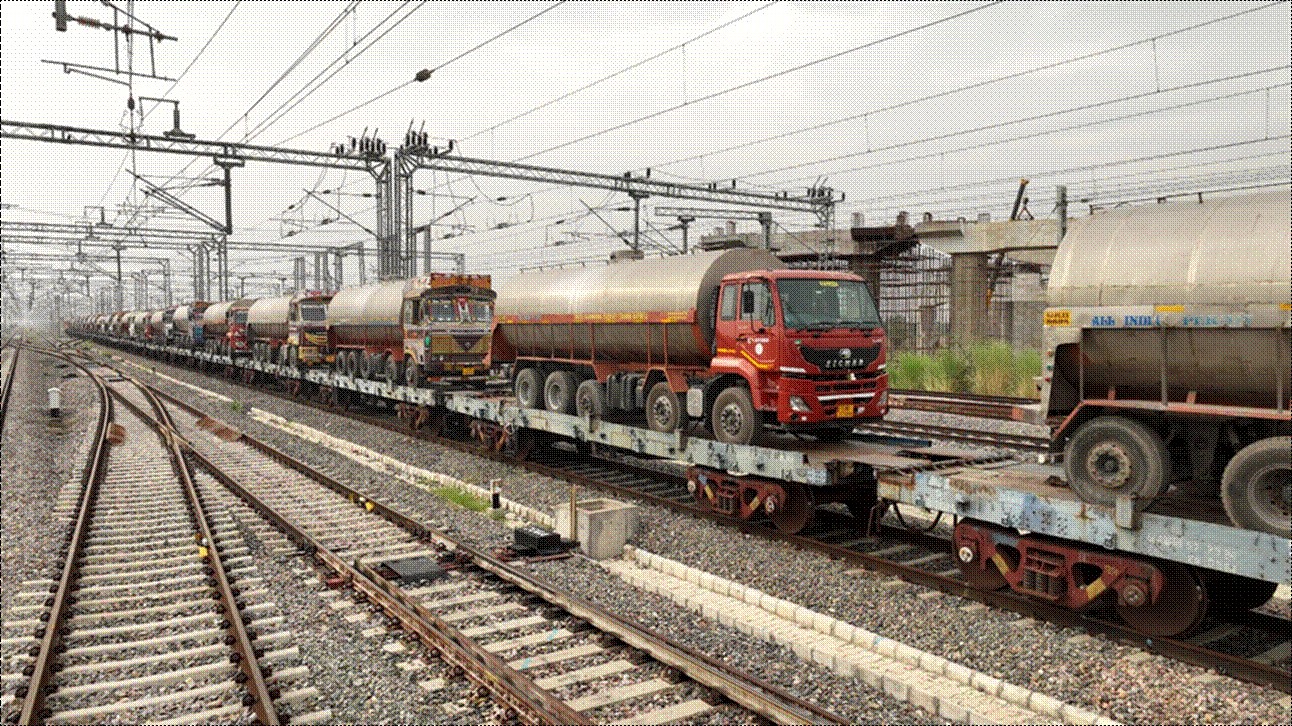

The ToT service currently operates between New Rewari and New Palanpur on the Western DFC network, spanning 636 km. Transit time is reduced from nearly 30 hours by road to approximately 12 hours by rail. Transparent pricing and no GST on milk tankers make it especially attractive for perishable cargo.
During FY 2025, the service handled 545 rakes, moving over 3 lakh tonnes of freight and generating ₹36.95 crore, highlighting its commercial viability.
Strategic Modal Shift
Trucks-on-Trains shifts long-haul freight from road to rail, decongesting highways, reducing diesel consumption, and lowering accident risks. Each train can replace dozens of trucks, cutting fuel usage and reducing carbon and particulate emissions.
The Palanpur–Rewari corridor alone removes nearly 48,875 trucks from highways, saving over 88 lakh litres of diesel and preventing the emission of 2.3 lakh tonnes of CO₂.
Environmental and Social Benefits
Fully electrified DFC corridors ensure cleaner transport. Road dust pollution is reduced, improving air quality for communities along highways. Additionally, reduced long-distance truck driving minimizes driver fatigue and enhances highway safety.
Revenue Growth and Industry Adoption
Since inception, ToT has completed over 1,955 trips, moving more than a million tonnes of freight and generating ₹131 crore in revenue. Major users include the Gujarat Cooperative Milk Marketing Federation (Amul) and other FMCG and automobile sectors. New-generation wagon designs under the Flat Multipurpose (FMP) platform are enhancing efficiency and scalability.
Part of a Larger Multimodal Vision
ToT is a core component of DFCCIL’s broader vision for integrated logistics, combining high-capacity corridors, multimodal terminals, and logistics parks. The initiative ensures India’s freight movement is efficient, environmentally sustainable, and commercially viable.