

In a move that has sparked global discussion, U.S. President Donald Trump has stated that continued U.S. support for Ukraine in its war against Russia will depend on Ukraine granting the U.S. access to its rare earth materials. The announcement, made just days after Trump’s return to the White House, underscores his administration’s strategic shift in foreign aid policies.
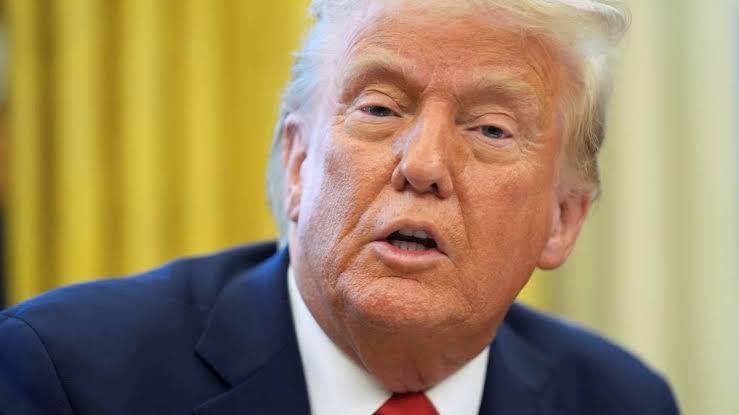

Trump suggested that Ukrainian officials had already signaled their willingness to negotiate. “We’re putting in hundreds of billions of dollars. They have great rare earth. And I want security of the rare earth, and they’re willing to do it,” he stated. His remarks reflect a broader U.S. strategy to secure supply chains for rare earth materials, which are essential for manufacturing advanced electronics, defense equipment, and renewable energy technologies.
The President also reiterated his belief that a resolution to the war was within reach. “We made a lot of progress on Russia and Ukraine. We’ll see what happens. We’re going to stop that ridiculous war,” he declared. His comments align with previous assertions that he could quickly bring an end to the conflict, though the specifics of such a deal remain unclear.
However, Ukrainian President Volodymyr Zelenskyy has pushed back against negotiations between the U.S. and Russia that do not directly involve Ukraine. In a recent interview, he warned that discussions excluding Ukraine could be dangerous. “They may have their own relations, but talking about Ukraine without us—it is dangerous for everyone,” he said. Zelenskyy acknowledged that his administration had been in contact with Trump’s team but described the discussions as being at a “general level,” with more detailed meetings expected in the near future.
As Trump’s administration seeks to reshape U.S. foreign policy, this proposed deal could have far-reaching consequences for both the war effort and the global rare earth supply chain. While it remains to be seen whether Ukraine will formally agree to such terms, the proposal marks a significant shift in how the U.S. is approaching its role in the conflict.