
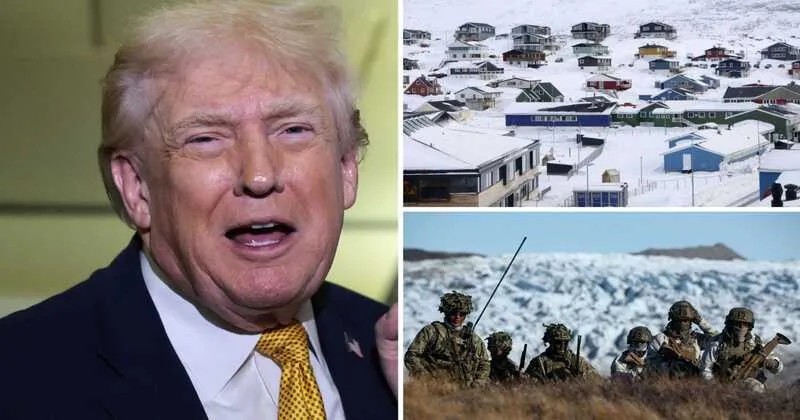
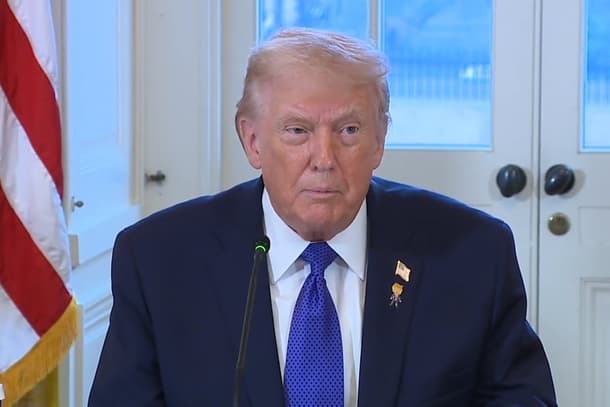

Addressing reporters during a meeting with American oil industry executives, Trump asserted that the United States must take Greenland to prevent Moscow or Beijing from expanding their influence there. He accused Denmark of failing to adequately secure Greenland’s surrounding waters, a charge firmly rejected by Danish and Greenlandic leaders.
“We are going to do something on Greenland whether they like it or not,” Trump said, adding that failure to act would allow Russia or China to become “next-door neighbours” to the US. While he claimed to prefer negotiations, the President made it clear that force was not being ruled out.
Such language marks one of the most explicit threats yet by a sitting US president against a NATO ally’s territory, prompting immediate diplomatic unease across Europe.
Denmark Warns of NATO Breakdown
Danish Prime Minister Mette Frederiksen reacted sharply, cautioning that any armed US action against Greenland would be unacceptable and potentially catastrophic for NATO unity. She warned that such a move could destabilise the alliance and undermine decades of transatlantic security cooperation.
Denmark maintains responsibility for Greenland’s defence and foreign policy, though the island enjoys extensive self-governance. Copenhagen has repeatedly stated that Greenland is not for sale and that its future must be decided by its people.
European governments, including Germany and France, have reportedly begun quiet consultations with allies amid fears that Trump’s rhetoric could translate into concrete military or economic pressure.
Greenland Seeks Direct Dialogue with Washington
Greenland’s Foreign Minister Vivian Motzfeldt said the island should take the lead in discussions with the United States, including upcoming talks with US Secretary of State Marco Rubio. While stressing that Greenland is not yet a sovereign state, she argued that its government must have a stronger voice in matters directly affecting its future.
Motzfeldt emphasised that Greenland and the US share mutual interests and that cooperation, rather than coercion, is essential. She also reiterated Greenland’s long-term aspiration for statehood, which would eventually allow it to conduct its own foreign policy.
However, she made clear that until such a transition occurs, Greenland remains bound by constitutional arrangements with Denmark.
NATO Attempts to Defuse the Crisis
As tensions mounted, NATO Secretary General Mark Rutte held discussions with Marco Rubio, focusing on strengthening security in the High North. A NATO spokesperson said the alliance recognises the Arctic’s growing strategic importance and is enhancing surveillance and defence capabilities in the region.
Despite political friction, NATO’s Supreme Allied Commander Europe, US General Alexus Grynkewich, insisted the alliance remains stable. Speaking in Finland, he said NATO was “ready to defend every inch of alliance territory” and dismissed suggestions of an immediate crisis.
Nevertheless, analysts warn that Trump’s threats could weaken trust within NATO at a time when unity is already strained by conflicts in Ukraine and the Middle East.
India Watches Arctic Developments Closely
India, though geographically distant, has increasing stakes in Arctic stability through climate research, emerging shipping routes, and global energy markets. New Delhi has consistently emphasised respect for international law and peaceful dispute resolution, principles outlined in India’s Arctic Policy.
The Ministry of External Affairs has previously highlighted the Arctic’s relevance to global climate systems and sustainable development. India’s scientific engagement in the region aligns with its broader commitment to multilateral cooperation.
Uncertain Road Ahead
With diplomatic talks scheduled but rhetoric intensifying, the future of Greenland has emerged as a flashpoint in global politics. Trump’s willingness to publicly threaten force has altered the tone of international discourse around the Arctic.
For Denmark and Greenland, the priority remains safeguarding sovereignty and regional stability. For NATO, the challenge lies in maintaining unity amid unprecedented pressure from within. And for the world, the episode highlights how strategic competition is reshaping even the planet’s most remote regions.