

Atakan Bakiskan, an economist at Berenberg Bank, called the policy an example of “anti-growth policymaking.” He cautioned that the higher barrier to attracting foreign talent would lower productivity and innovation. “Investments in artificial intelligence are unlikely to offset the damage caused by the loss of human capital under restrictive immigration policies,” Bakiskan said.
Berenberg recently revised its US growth forecast from 2% to 1.5% for 2025. Bakiskan added that even this estimate “may soon look optimistic” if restrictive measures persist, warning of long-term risks such as a weaker dollar and higher bond yields.
Tech Industry in Turmoil
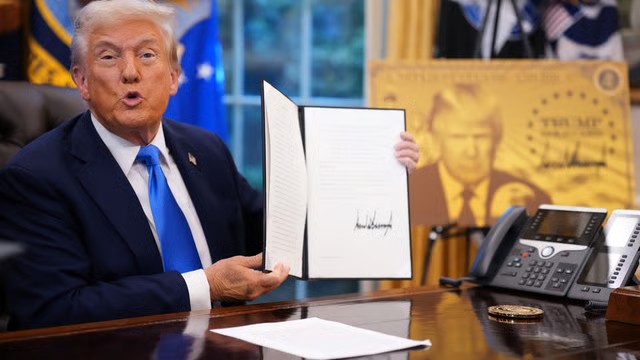
The announcement triggered panic across Silicon Valley. Some firms advised employees on H-1B visas to avoid international travel until rules were clarified. Over the weekend, the White House confirmed the $100,000 fee would apply only to new applicants and as a one-time payment.
Big tech companies remain deeply concerned. Amazon, which had over 10,000 H-1B visas approved in the first half of 2025, is the largest user of the program, followed by Microsoft, Meta, Apple, and Google. While these corporations can absorb the cost, smaller firms and sectors like healthcare and education may face severe hiring challenges.
Impact on India and Global Workforce
India, the biggest source of H-1B talent, is particularly affected. In 2024, Indians accounted for 71% of approved visas. The Indian government criticized the move, warning of “humanitarian consequences” for families disrupted by the sudden cost hike. Commerce Minister Piyush Goyal commented, “They are also a little afraid of our talent. We have no objection to that.”
The news also jolted Indian markets. Shares of IT giants Infosys and Tata Consultancy Services (TCS), both heavy users of H-1B visas, fell by around 3% on Monday following Trump’s announcement.
Broader Economic Risks
Deutsche Bank strategist Jim Reid highlighted the “huge amount of uncertainty” the policy created over the weekend. Economists fear the move could deter skilled immigration at a time when the US faces shortages in critical areas like software development, healthcare, and scientific research.
The H-1B program currently provides 65,000 visas annually, with an additional 20,000 for advanced degree holders. If fewer skilled professionals are able to enter the US, industries may struggle to meet demand, reducing competitiveness on the global stage.
For India, the impact goes beyond economics. The H-1B program has long been a gateway for Indian engineers, coders, and researchers to build careers in the US. A sharp drop in access could shift opportunities toward Canada, Europe, or Australia, reshaping global migration trends.
Looking Ahead
As the dust settles, US companies are lobbying for exemptions or revisions to the policy. Meanwhile, Indian IT firms are expected to accelerate their push to expand in Europe and Asia, reducing dependence on US visas. Observers suggest that unless the Trump administration softens its stance, the decision could mark a turning point in global talent mobility.
For now, uncertainty looms large. With foreign workers, economists, and corporations voicing concerns, the $100,000 H-1B visa fee may prove more damaging to US economic competitiveness than beneficial to American workers.