

Data show that in FY24, computer-related roles accounted for nearly two-thirds of all H-1B approvals, with half of them tied to professional, scientific, and technical services. Around 71% of approved petitions were for Indian nationals, underscoring how deeply India’s tech talent is embedded in the US economy. JPMorgan noted that of the 141,000 new H-1B petitions approved last year, roughly 65,000 were processed abroad—making them the most vulnerable under the new fee structure.
“If all of them were to stop, it would reduce work authorization for immigrants by up to 5,500 per month,” the economists Abiel Reinhart and Michael Feroli wrote in the analysis, suggesting that unless alternative visa routes are found, the impact could be severe.
Experts Warn of System Breakdown
Labour market experts caution that the steep fee hike could dismantle the H-1B system as it currently exists. Loujaina Abdelwahed, a senior economist at Revelio Labs, said the change could effectively eliminate up to 140,000 new jobs annually in US firms that rely on global talent pipelines.
The warning comes at a time when the US job market is already cooling. Over the past three months, payrolls have grown by just 29,000 jobs per month on average. Federal Reserve Chair Jerome Powell recently acknowledged a “marked slowing” in worker supply and demand, attributing part of it to declining immigration levels.
California Pushes Back
California Attorney General Rob Bonta strongly criticised the administration’s move, arguing that it injects uncertainty into an already strained hiring system. California, home to Silicon Valley, relies heavily on the H-1B program to attract software engineers, data scientists, and AI researchers.
“We wouldn’t be here without the talent that has come to California on these visas,” Bonta said. He confirmed that his office is examining whether the policy violates the Administrative Procedure Act, which requires transparency, justification, and public notice for regulatory changes.
Shift Toward High-Paid Roles
Bloomberg Economics predicts the new fee could tilt the visa system toward higher-paying jobs in technology, finance, and healthcare while pricing out lower-paid positions in education and research. That shift, experts argue, could fundamentally reshape the composition of immigrant labour in the US.
For Indian IT professionals, particularly those in entry-level or mid-tier roles, the cost burden could be prohibitive, pushing firms to expand offshore delivery centres in India and other countries instead of relocating talent to the US.
Legal and Economic Uncertainty
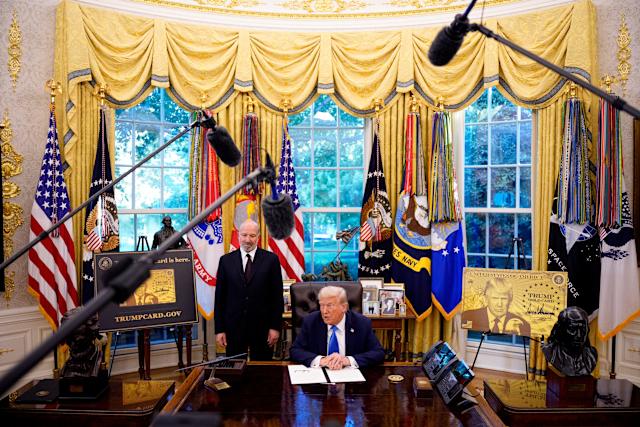
The Biden administration had sought to stabilise immigration processes, but Trump’s latest policy marks a dramatic reversal. If legal challenges proceed, the courts will determine whether the fee is arbitrary and whether it complies with established federal law.
For now, companies, especially in Silicon Valley, remain in limbo. Industry leaders have long argued that the H-1B programme fuels innovation and strengthens America’s global competitiveness. Any disruption, they warn, could have ripple effects across sectors dependent on advanced technology and research.
Indian industry observers, including India’s IT industry associations, are monitoring developments closely, fearing a significant reduction in opportunities for Indian talent in the US market.