Reciprocal Tariff Shock: What Just Happened?
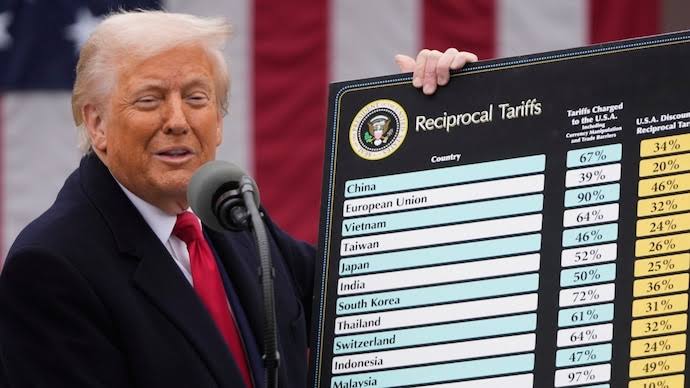
U.S. President Donald Trump has fired another shot in the global trade war. On Thursday, he signed a sweeping executive order that imposes reciprocal tariffs ranging from 10% to 41% on goods from over 70 countries.
India faces a new 25% tariff under this order, putting billions of dollars in exports at risk. The White House said this move is aimed at “correcting decades of unfair treatment” by trade partners.
These tariffs will come into effect in just seven days, leaving governments and businesses scrambling to assess the impact.
 Why Is India in the Crosshairs?
India’s inclusion in the 25% tariff category surprised many, given recent diplomatic warmth between New Delhi and Washington.
However, Trump’s administration cited “long-standing trade imbalances” and a lack of reciprocity in tariff structures as justification.
According to the U.S. Trade Representative (USTR), India maintains higher average tariff rates on American agricultural and technological goods, despite multiple rounds of talks to reduce them.
How Will This Affect Indian Exporters?
India exports a wide range of products to the U.S., including textiles, pharmaceuticals, automotive components, and IT services.
With a 25% tariff, Indian goods could become significantly less competitive in the U.S. market. Sectors like textiles and leather, already facing global headwinds, are likely to be hit the hardest.
Experts warn this could shrink India’s trade surplus with the U.S., which stood at $23.6 billion in 2024 according to India’s Ministry of Commerce.
Canada, Pakistan, Vietnam Also Hit
India isn’t alone. Canada will now face a 35% tariff—up from 25%—in response to what Trump called their failure to act on the “illicit drug crisis.”
Meanwhile, Pakistan, Bangladesh, Vietnam, and others fall into the 15%–30% tariff band. The administration emphasized that these figures were carefully calculated to reflect “mutual fairness.”
India’s Likely Response
India’s Ministry of Commerce and External Affairs have not issued an official response yet. But diplomatic sources say a “measured and firm” reply is under consideration.
Trade experts believe India may file a complaint at the World Trade Organization (WTO), citing the lack of prior consultation and potential violation of global trade norms.
India could also retaliate with increased tariffs on U.S. agricultural goods or high-end electronic imports.
U.S. Business Reactions: Mixed Signals
While Trump’s base applauded the move as pro-America, U.S. importers and retailers are bracing for price hikes.
Retail industry groups warned that these tariffs may raise prices for American consumers and disrupt supply chains, especially in consumer electronics and clothing sectors heavily reliant on Indian and Southeast Asian imports.
What This Means for the Global Economy
This aggressive shift could trigger another round of trade disputes. Analysts fear it may slow global trade recovery following post-COVID disruptions and the Ukraine crisis.
The International Monetary Fund (IMF) has repeatedly warned against rising protectionism, calling it “a threat to shared prosperity.”
Key Takeaways
- India faces a 25% U.S. tariff under Trump’s new reciprocal trade order.
- Over 70 nations impacted, with tariffs ranging from 10% to 41%.
- Canada’s tariff raised to 35% amid drug policy retaliation.
- India’s export sectors—textiles, pharma, IT—may suffer immediate impact.
- India likely to respond diplomatically and possibly retaliate.
Conclusion: A Critical Juncture for India–U.S. Trade
The U.S. and India have seen growing cooperation in defense and technology. But this tariff decision risks undoing hard-earned trust.
As the world watches, India’s response could shape the tone of global trade for months to come. With elections nearing in both countries, the issue may also evolve into a major political talking point.
For now, businesses and policymakers will need to act swiftly—and strategically.