
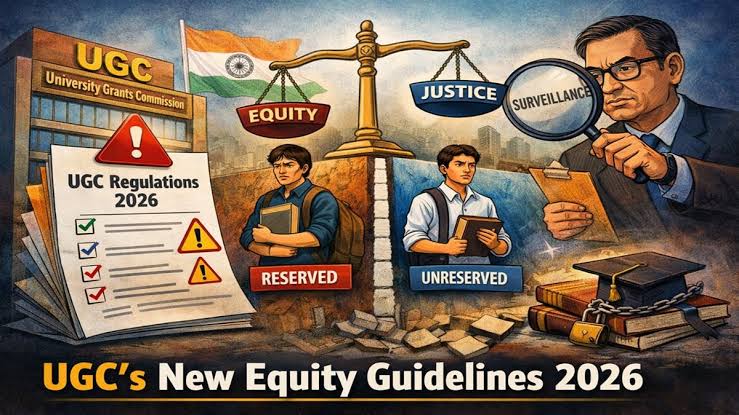
New Delhi, January 26, 2026: The controversy surrounding the University Grants Commission’s (UGC) newly notified guidelines has escalated sharply, with protests spreading across states and dissent now spilling into bureaucratic and political ranks.

In a significant development, a city magistrate in Uttar Pradesh tendered his resignation in protest against the UGC guidelines, citing concerns over their impact on academic autonomy and institutional functioning. The move has been widely seen as a rare expression of dissent from within the administrative machinery.
While official reasons were not elaborated publicly, the resignation has added weight to allegations that the guidelines were introduced without adequate stakeholder consultation.
BJP Youth Leader Steps Down
The political ramifications became more evident after a BJP Yuva Morcha leader in Noida resigned from his post, expressing disagreement with the Centre’s approach to the issue. The resignation has embarrassed the ruling party, which has so far defended the guidelines as reform-oriented.
Opposition parties were quick to seize upon the development, arguing that dissent within the BJP’s own ranks reflects growing discomfort over the policy.
Minister Avoids Media Questions
Fueling further controversy, a Union minister faced criticism for evading media questions on the UGC guidelines during a public interaction. Visuals of the minister avoiding queries quickly circulated on social media, intensifying criticism from students, teachers, and political opponents.
Analysts say the optics have contributed to perceptions of a government unwilling to engage transparently with concerns raised by the academic community.
Protests Spread Across States
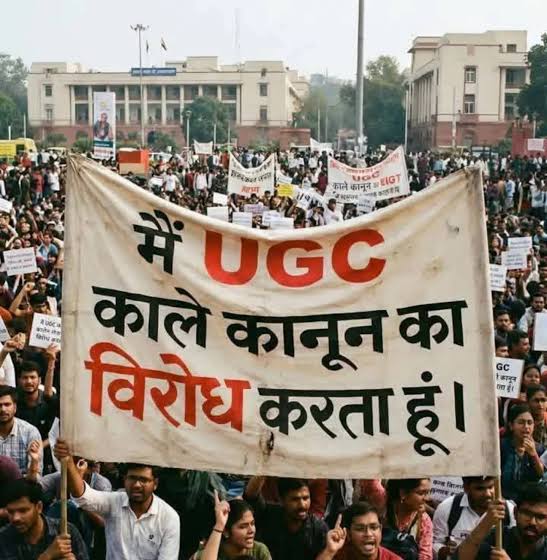
Protests against the UGC guidelines have been reported from multiple states, with students’ unions, teachers’ associations, and university staff staging demonstrations, marches, and sit-ins. Many protesters argue that the guidelines centralise decision-making and undermine institutional independence.
Several student bodies have announced plans to intensify protests, including demonstrations at the UGC headquarters in Delhi, signalling that the agitation is far from subsiding.
Political Stakes Rise Ahead of Key Elections
The controversy comes at a sensitive political moment, with multiple state elections scheduled in the coming months. Education policy, traditionally a less polarising issue, now risks becoming a major electoral talking point.
Opposition parties have accused the Centre of imposing sweeping changes without consensus, while the government maintains that the guidelines aim to modernise and standardise higher education.
Centre Yet to Issue Detailed Clarification
Despite growing pressure, the Union government and the UGC have so far refrained from issuing a detailed clarification addressing the specific concerns raised by stakeholders. Education experts warn that prolonged silence could further erode trust between policymakers and academic institutions.