Kyiv Government Building Hit
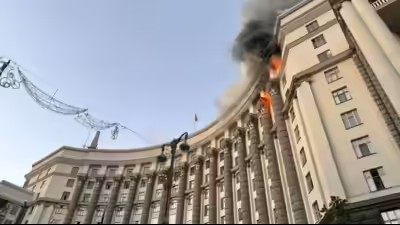
For the first time in the conflict, a central government building in Kyiv was damaged. Smoke rose from the roof of the Cabinet of Ministers building after several drones struck the capital. Ukrainian Prime Minister Yulia Svyrydenko confirmed that the roof and upper floors were hit, adding: “We will restore the buildings, but lost lives cannot be returned.”
 Casualties Reported
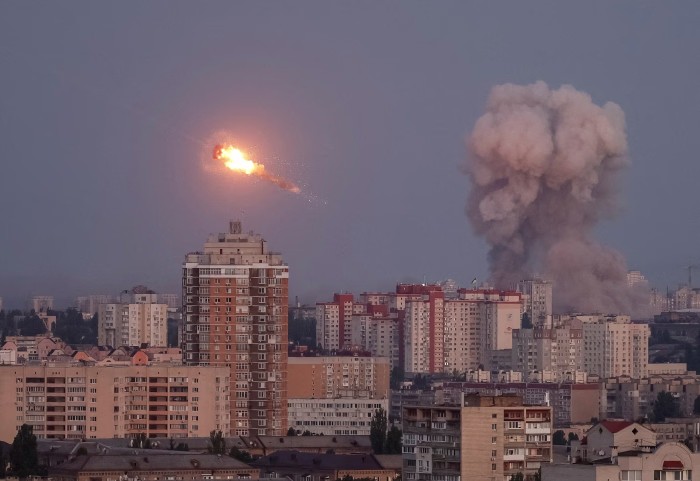
A mother and her three-month-old child were killed when their home collapsed due to falling debris. At least 17 others were injured across the city, with residential areas in Sviatoshynskyi and Darnytskyi districts suffering direct hits. Emergency teams worked through the night to rescue residents and clear rubble.
Ukraine Strikes Back
Ukraine retaliated by launching strikes on Russia’s Druzhba oil pipeline, one of Moscow’s critical energy supply routes. Officials in Kyiv stated that the attack was aimed at weakening Russia’s war financing through its energy exports.
International Calls for Action
Prime Minister Svyrydenko urged the global community to strengthen sanctions, particularly targeting Russian oil and gas. “The world must respond to this destruction not only with words, but with actions,” she said. Ukrainian President Volodymyr Zelenskyy echoed the demand for harsher measures and signaled readiness to meet Russian President Vladimir Putin for direct peace talks.
Peace Talks Losing Momentum
This assault marked the second large-scale drone and missile attack on Kyiv in just two weeks, further dimming prospects for negotiations. Recent diplomatic efforts, including an invitation by US President Donald Trump to host talks in Alaska with Russian and Ukrainian leaders, ended without significant progress. European leaders have also called for renewed dialogue, but no concrete breakthrough has been achieved so far.
Global Implications
The renewed escalation highlights the fragility of international efforts to end the war. Analysts warn that further Russian strikes on Ukraine’s political and civilian infrastructure could trigger stronger sanctions and deepen Europe’s energy crisis. For India and other neutral nations, the crisis underscores the importance of energy security and diplomatic balance in global geopolitics.