
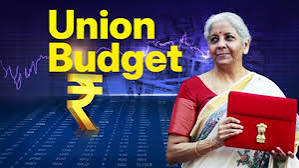

The Union Budget 2026–27 was presented in the Lok Sabha at Parliament House, New Delhi, with the speech lasting over an hour. Following the address, detailed Budget documents were tabled in both Houses of Parliament.
Fiscal Discipline and Capital Expenditure Push
A key highlight of Budget 2026–27 is the government’s continued emphasis on capital expenditure as the primary driver of economic growth. Economists expect capex allocations to rise again in FY27, though at a more calibrated pace compared to the post-pandemic surge.
Priority sectors include railways, urban transport, renewable energy, defence manufacturing and power transmission infrastructure. Sitharaman confirmed that the fiscal deficit has been reduced below 4.5 per cent of GDP, reinforcing the government’s commitment to fiscal consolidation.
The Centre plans to borrow ₹11.7 trillion through dated securities to fund the fiscal deficit in FY27, while ₹1.4 trillion will be devolved to states as tax transfers.
Taxes: Stability with Targeted Reforms
On the taxation front, the Finance Minister maintained that large-scale changes to income tax slabs are unlikely, following relief measures announced in the previous Budget. However, several targeted reforms were unveiled to improve compliance and transparency.
The government proposed setting up a joint panel comprising officials from the Ministry of Corporate Affairs and the Central Board of Direct Taxes to oversee income computation and disclosure standards. Additionally, buyback proceeds will now be taxed uniformly for all shareholders.
Sitharaman also announced a six-month foreign asset disclosure window aimed at small taxpayers, students, tech professionals and relocated NRIs, providing an opportunity to regularise overseas asset declarations.
Jobs, Skills and Manufacturing
Employment generation remains a central pillar of Budget 2026–27. The Finance Minister outlined measures to encourage labour-intensive manufacturing, supported by skilling and apprenticeship programmes.
The government will review and refine Production-Linked Incentive schemes to enhance their effectiveness in boosting domestic manufacturing, exports and job creation. New initiatives in hospitality education, including a National Institute of Hospitality, were also announced.
Green Transition and Strategic Sectors
Reinforcing India’s climate commitments, the Budget places strong emphasis on renewable energy, green hydrogen, battery storage and electric mobility. Sitharaman said the government aims to reduce import dependence by promoting domestic manufacturing of clean-energy equipment.
Foreign firms setting up cloud service facilities in India will be eligible for tax holidays extending till 2047, aligning with the country’s digital infrastructure ambitions.
States and Social Initiatives
Although FY27 is not a general election year, the Budget includes measures likely to benefit poll-bound states such as West Bengal, Tamil Nadu, Kerala and Assam. The Centre accepted the recommendations of the 16th Finance Commission, retaining 41 per cent tax devolution to states.
Other initiatives include the launch of a scheme to develop a Buddhist tourism circuit in the North East and the proposal to set up community-owned “She Marts” to promote women-led enterprises.