 Sunday Budget Not Without Precedent
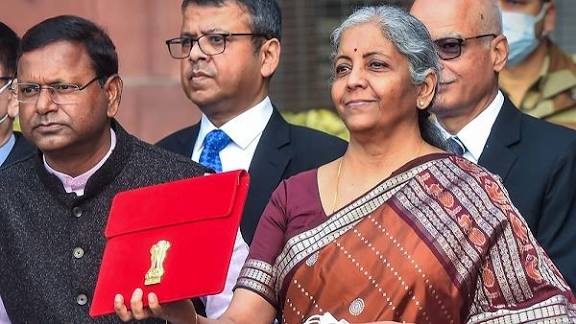
The possibility of a Sunday budget has sparked discussion, but it is not unprecedented. Former Finance Minister Arun Jaitley presented budgets on a Saturday in 2015 and on a Sunday in 2016. More recently, Finance Minister Nirmala Sitharaman presented the Union Budget on a Saturday in 2025.
According to parliamentary convention cited by PTI, if traditions are followed, the finance minister can table the budget even on a holiday. The final decision, however, rests with the Cabinet Committee on Parliamentary Affairs.
Government Signals Point to Continuity
Media reports quoting official sources indicate that preparations are progressing on the assumption that Budget 2026 will be presented on February 1 itself. A CNBC-TV18 report noted that the government is inclined to stick to the established schedule unless logistical or parliamentary constraints emerge.
If presented on February 1, Nirmala Sitharaman will become the first finance minister in India to present the Union Budget for nine consecutive sessions, underlining continuity in fiscal leadership.
Industry Expectations Remain Positive
Corporate India has expressed optimism ahead of the budget. Ajay S. Shriram, Chairman of DCM Shriram Ltd, said expectations are positive due to strong GDP growth, encouraging industrial output, and sustained reform momentum.
India’s Index of Industrial Production (IIP) grew by 6.7 percent in November 2025, driven by manufacturing sectors such as metals, pharmaceuticals, and automobiles, according to data released by the Ministry of Statistics and Programme Implementation.
Infrastructure, Jobs and Capital Spending in Focus
Infrastructure investment is expected to remain a key priority. L&T CFO R. Shankar Raman projected a possible 10 percent increase in capital expenditure in the upcoming budget, stressing that public spending is unlikely to crowd out private investment.
Industry leaders believe sustained infrastructure spending will be essential for India to achieve its long-term goal of becoming a developed economy by 2047.
Sector-Specific Demands Emerge
Several sectors have flagged targeted expectations. Space startups have called for simplified tax norms and early government procurement to help commercialise indigenous space technology.
The Indian Rice Exporters’ Federation has urged the government to announce focused measures to boost basmati and non-basmati rice exports, citing ecological stress, rising costs, and global market volatility.
Legislative Agenda and Fiscal Balance
The government is also expected to introduce the Seed Bill during the Budget Session to strengthen quality control and traceability in the agriculture sector. Meanwhile, IMF assessments suggest fiscal consolidation may face pressure due to rising interest costs and moderated revenue growth.
Despite these challenges, policymakers remain focused on balancing growth support with fiscal discipline in Budget 2026.