 Concern Over PM10 Levels and Waste Management
Shri Yadav expressed serious concern over elevated PM10 concentrations across the reviewed cities, noting that dust emissions from construction activities, poorly managed solid waste and unregulated industrial operations continue to undermine air quality goals. Particular emphasis was placed on construction and demolition waste, which remains a major contributor to dust pollution in industrial and rapidly urbanising areas.
The Minister indicated that coordination with the Government of Haryana would be strengthened to resolve funding bottlenecks and expedite approvals required for pollution control infrastructure. He also underscored the need to bring all NCR cities under the National Clean Air Programme (NCAP) framework to ensure uniform standards, funding access and performance monitoring.
Crackdown on Non-Compliant Industrial Units
A key highlight of the meeting was the directive to compile comprehensive datasets on industrial units operating with and without statutory approvals. The Minister instructed district administrations to gather information on Consent to Establish (CTE) and Consent to Operate (CTO) permissions, electricity connections and GST registrations.
These datasets will be cross-verified to identify illegally operating units, particularly those lacking Online Continuous Emission Monitoring Systems (OCEMS) and Air Pollution Control Devices (APCDs). The exercise aims to close regulatory gaps and ensure that industrial growth does not come at the cost of public health and environmental sustainability.
Push for Real-Time Air Quality Monitoring
To improve transparency and timely interventions, Shri Yadav directed authorities to significantly increase the number of Continuous Ambient Air Quality Monitoring Stations (CAAQMS). These stations will be integrated with the SAMEER mobile application, enabling real-time dissemination of air quality data to both administrators and citizens.
Officials were told that accurate, location-specific data is essential for evaluating the effectiveness of action plans and for initiating targeted enforcement during pollution hotspots and seasonal spikes.
Clean Transport, Dust Control and Urban Planning
The Minister stressed the importance of expanding clean public transport, particularly in smaller municipal corporations. He recommended deploying appropriately sized electric vehicles based on road width and passenger demand, while enhancing last-mile connectivity to discourage private vehicle use.
The meeting also highlighted the role of Mechanical Road Sweeping Machines and handheld litter pickers in controlling road dust. Authorities were instructed to procure only electric or CNG-based machines under an operational expenditure model to reduce emissions while maintaining urban cleanliness.
For dust suppression, directions were issued for plantation of local bush varieties in open spaces and along pavements, coupled with real-time repair of potholes. Cities were also asked to submit short-term and long-term smart traffic management plans to reduce congestion and vehicular emissions.
Accountability and Targeted AQI Reduction
Calling for stronger on-ground leadership, Shri Yadav urged officials to take ownership of pollution control measures and actively involve local stakeholders. He emphasised innovation and realistic solutions tailored to city-specific challenges.
The Commission for Air Quality Management (CAQM) will compile actionable points emerging from the review and monitor progress in real time. The Minister set an ambitious target of achieving a 15–20 per cent reduction in AQI levels across NCR cities by 2026 through focused interventions and fixed accountability.
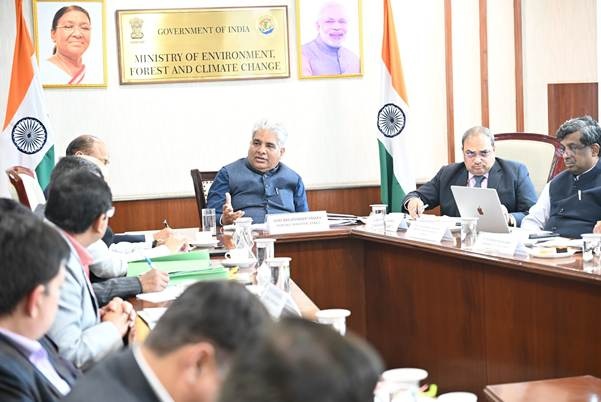
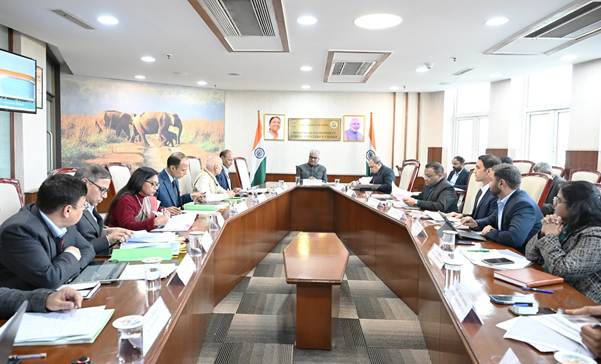
Senior officials from the Ministry of Environment, Forest and Climate Change, Central Pollution Control Board, Haryana State Pollution Control Board, municipal bodies and district administrations participated in the meeting.