
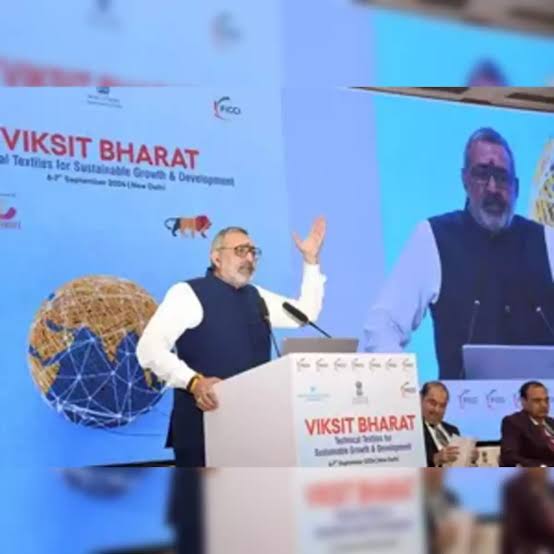
In a significant step towards revitalizing India’s textile sector, Union Minister of Textiles, Shri Giriraj Singh, chaired a high-level meeting of the Textile Advisory Group (TAG) on Cotton and Man-Made Fibres (MMF) at Vigyan Bhawan, New Delhi. The meeting was attended by key stakeholders including Shri Pabitra Margherita, Minister of State for Textiles, and Smt. Neelam Shami Rao, Secretary, Ministry of Textiles, alongside senior officials and industry leaders.
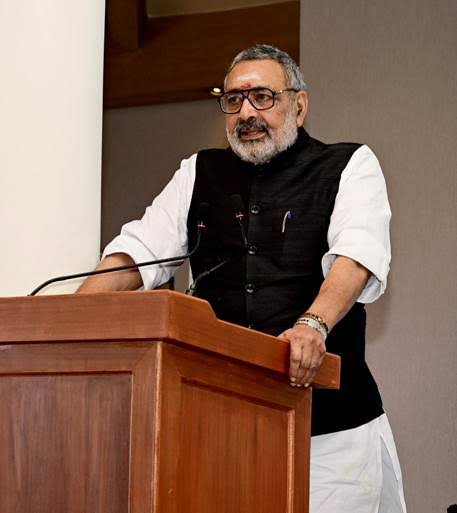

Shri Giriraj Singh, with a strong sense of urgency and vision, outlined the ambitious “Mission for Cotton Productivity,” expressing confidence that with focused efforts, the Indian textile industry can achieve a target of $350 billion by 2030. The Minister emphasized that the future of the textile sector rests on four essential pillars—Integration, Innovation, Scale, and Speed—each crucial for propelling export growth and enhancing global competitiveness.
In his address, he also drew attention to the importance of adopting a data-driven approach, encouraging stakeholders to map the industry’s demand-supply gaps. He underscored the need for cohesive collaboration between farmers, manufacturers, and policymakers to improve productivity and ensure equitable benefits across the value chain. His call for innovation and advanced practices in cotton farming struck a chord, particularly in view of the challenges faced by small farmers who continue to form the backbone of this industry.
The Minister also shed light on the potential of milkweed as a valuable alternative fibre source. Its remarkable physical and thermal properties make it not only an environmentally friendly option but also a promising source of income for farmers, highlighting the government’s ongoing efforts to align sustainability with rural prosperity.
Shri Pabitra Margherita echoed these sentiments, urging the industry to work in unison towards the shared goal of Vision 2030. He emphasized the role of sustainable farming and high-quality cotton production, rooted in the adoption of modern technology, as critical drivers of value creation for both farmers and the textile industry.
Smt. Neelam Shami Rao reinforced the need for a collaborative strategy, encouraging the development of a comprehensive roadmap that embraces integration and innovation throughout the textile value chain. Her appeal for unified action reflects a growing consensus that only collective efforts can truly transform India into a global textile leader.
The meeting saw active participation from representatives of the Ministries of Textiles, Agriculture and Farmers’ Welfare, and Commerce and Industry, as well as members from the Office of the Textile Commissioner, various research institutes, and industry associations. The diverse presence and constructive discussions underscored the government’s commitment to inclusive policymaking and a resilient textile future.
As India looks ahead, the path set by leaders like Shri Giriraj Singh promises not only economic growth but also a more dignified and sustainable livelihood for millions of farmers and workers who are the real weavers of India’s textile story.