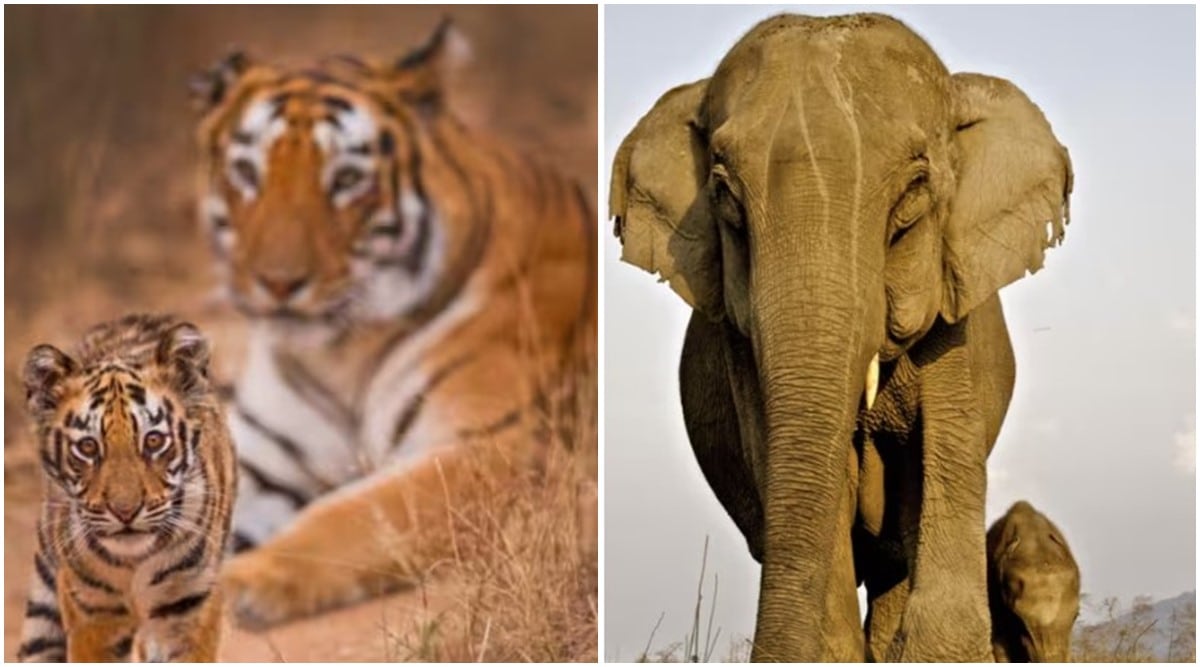
 Key Decisions on Tiger Conservation
During the NTCA meeting, Shri Yadav highlighted India’s globally recognised tiger conservation model, emphasizing science-based management, landscape planning, community participation, and inter-state coordination. The meeting ratified Tiger Conservation Plans, discussed the extension of Project Cheetah to Gandhisagar Wildlife Sanctuary and Banni Grasslands in Gujarat, tiger translocation, prey augmentation, and carnivore health management training programmes. Preparations for the Global Big Cat Summit were also reviewed.
Major updates included progress under the sixth cycle of All India Tiger Estimation, landscape-level training programmes, and international cooperation with delegations from South Africa, Namibia, and Botswana. The meeting also considered Supreme Court directives relevant to tiger management.
Project Elephant Steering Committee Reviews
The Project Elephant Steering Committee confirmed the Action Taken Report from its previous meeting and reviewed the status of Regional Action Plans across Southern and North-Eastern India. Discussions included the All-India Synchronized Elephant Estimation, Model Elephant Conservation Plan for the Nilgiri Elephant Reserve, DNA profiling of captive elephants, and the mitigation of human–elephant conflict.
Committee members also evaluated elephant population estimation methods, conservation strategies for the Ripu–Chirang Elephant Reserve, and plans for habitat studies, corridor assessments, and Management Effectiveness Evaluation for all Elephant Reserves supported under CAMPA.
Community-Centric & Science-Based Conservation
The Steering Committee reaffirmed the government’s commitment to science-driven, community-centric conservation, emphasizing inter-state coordination, technological innovation, and sustainable coexistence with local populations living in elephant landscapes.
On the occasion, Shri Yadav released six publications, including updates on Project Cheetah in India, NTCA’s outreach journal STRIPES, a booklet on India’s tiger conservation framework, Tigerverse highlighting tiger reserve biodiversity, Best Practices in Captive Elephant Management, and the December 2025 issue of the TRUMPET Quarterly Journal.
Future Conservation Initiatives
Both NTCA and Project Elephant meetings stressed proactive measures for human–wildlife conflict management, scientific habitat monitoring, and community involvement. With coordinated action, India aims to strengthen its position as a global leader in large carnivore and elephant conservation while ensuring sustainable coexistence with human populations.