 Military Claims, Limited Evidence
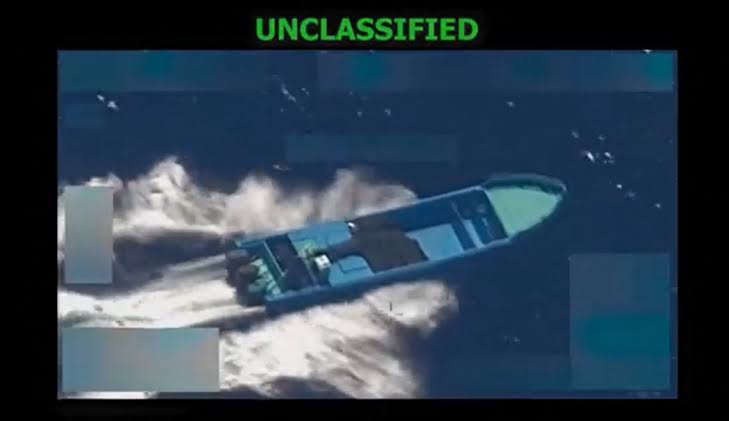
US Southern Command said all four individuals killed were male and no American military personnel were injured during the strike. The command asserted that the vessel was associated with a designated terrorist organisation involved in narco-trafficking activities.
However, the military did not release independent evidence confirming that the boat was carrying drugs or that those onboard were members of an organised cartel. This lack of publicly available proof has become a central point of criticism from lawmakers and civil liberties groups.
Rising Toll Since September
The latest strike brings the total number of confirmed boat attacks since September to 26, according to figures released by the Trump administration. At least 99 people have reportedly been killed in these operations across the eastern Pacific and Caribbean regions.
The campaign represents a significant escalation in US military involvement in counter-narcotics operations, shifting from traditional interdiction and law enforcement cooperation to direct use of lethal force at sea.
Congress Pushes Back on War Powers
The strike coincided with a crucial vote in the US House of Representatives, where Republican lawmakers rejected two Democratic-backed resolutions seeking to limit the president’s ability to conduct military operations against drug cartels without explicit congressional authorisation.
These votes marked the first formal consideration by the House of Trump’s expanding military campaign in Central and South America. Similar efforts to impose restrictions have already failed in the Senate, where most Republicans have opposed curbs on executive war powers.
Administration Defends Strategy
The Trump administration maintains that the United States is engaged in an “armed conflict” with transnational drug cartels. Officials argue that aggressive military action is necessary to disrupt narcotics flows into the country and dismantle networks that fund organised crime and terrorism.
President Trump has indicated he would veto any legislation that seeks to restrict his authority in this domain, reinforcing his stance on broad executive powers in matters of national security.
Criticism Over Transparency and Civilian Risk
Critics in Congress have raised serious concerns about the legal basis for the strikes, the absence of judicial or legislative oversight, and the potential risk to civilians. These concerns intensified after reports that an early September operation included a follow-up strike that killed two survivors clinging to debris after their boat was destroyed.
Lawmakers have questioned whether such actions comply with international law and whether the definition of “narco-terrorism” is being applied too broadly without sufficient verification.
Broader Regional Tensions
The boat strike forms part of a wider US military buildup in the Caribbean Sea and eastern Pacific, including a major naval deployment off the coast of Venezuela. The administration has also ordered a blockade of “sanctioned oil vessels” traveling to and from Caracas.
These measures are presented as efforts to pressure Venezuelan President Nicolás Maduro and cut off funding streams linked to drug trafficking and terrorism. Maduro, however, has rejected the allegations, accusing Washington of using narcotics enforcement as a pretext for regime change.
Global Implications
Analysts warn that the expanding use of military force against alleged drug traffickers could set a precedent for future conflicts and complicate international maritime law. For countries like India, which closely monitor global security trends, the developments underscore the growing intersection between counter-narcotics efforts and military strategy.