
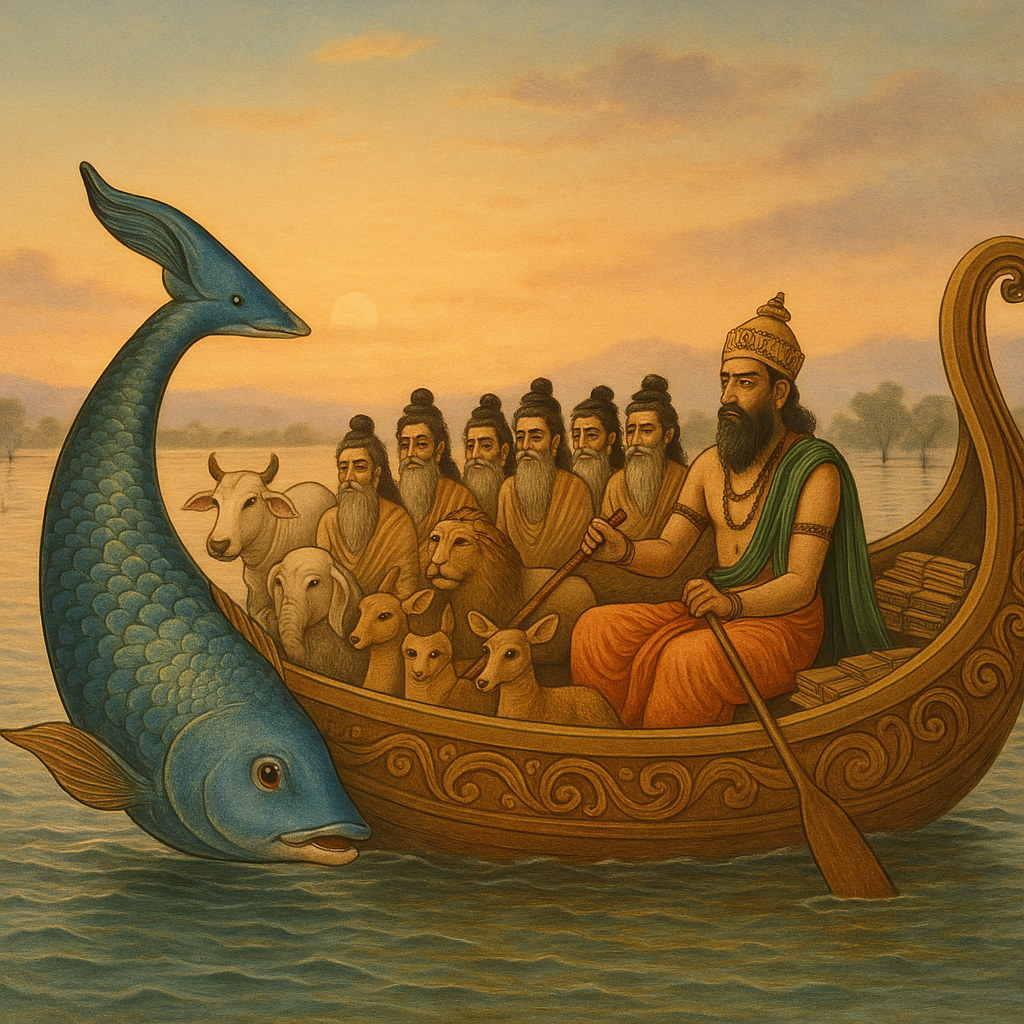
Vaivasvat Manu, also known as Sraddhadev or Satyavrat, is revered in ancient Vedic history as the seventh Manu, or progenitor of humankind after the great deluge – the Jal Pralay (Known to Abrahamics as Noah). As the son of Vivasvan, the solar deity, he is referred to as Vaivasvat, meaning “son of Vivasvan.” His role is crucial in the continuity of human civilization, and he is considered a foundational figure in the Vedic age.
According to ancient records, Vaivasvat Manu ruled during the current Vaivasvat Manvantara, which is the seventh of the 14 manvantaras that divide each day of Brahma, the creator god. During this era, the avatar of Vishnu was Matsya, the great fish who saved Manu from a catastrophic flood by guiding his boat—containing sages, seeds, and animals—to safety.
Manu’s consort was Shraddha, and together they had ten sons: Ikshvaku, Nabhaga, Dhrsta, Saryati, Narisyanta, Dista (or Nabhanedista), Tarusa (Karusha), Prsadhra, Vasuman (Pramshu), and Ila (Sudyumna). From these lineages sprang many of the most powerful ancient dynasties, including the Solar Dynasty (Ikshvaku), which played a central role in the epics of Ramayan. Also, the Lunar Dynasty form Ila/ Ail/ Sudyumna
The seven sages (Saptarishis) of this era included renowned figures such as Jamadagni, Kashyap, Atri, Vashist, Gautam, Agastya, and Bharadwaj. The deities presiding during this period are the Adityas, Vasus, Rudras, Maruts, Asvini Kumaras, and Ribhus, while Purandara holds the post of Indra, king of the heavens.
Far from being mythological, Vaivasvata Manu is recognized in the Vedas and Puranas as a historical patriarch who helped re-establish order, dharma, and civilization after a global cataclysm.