

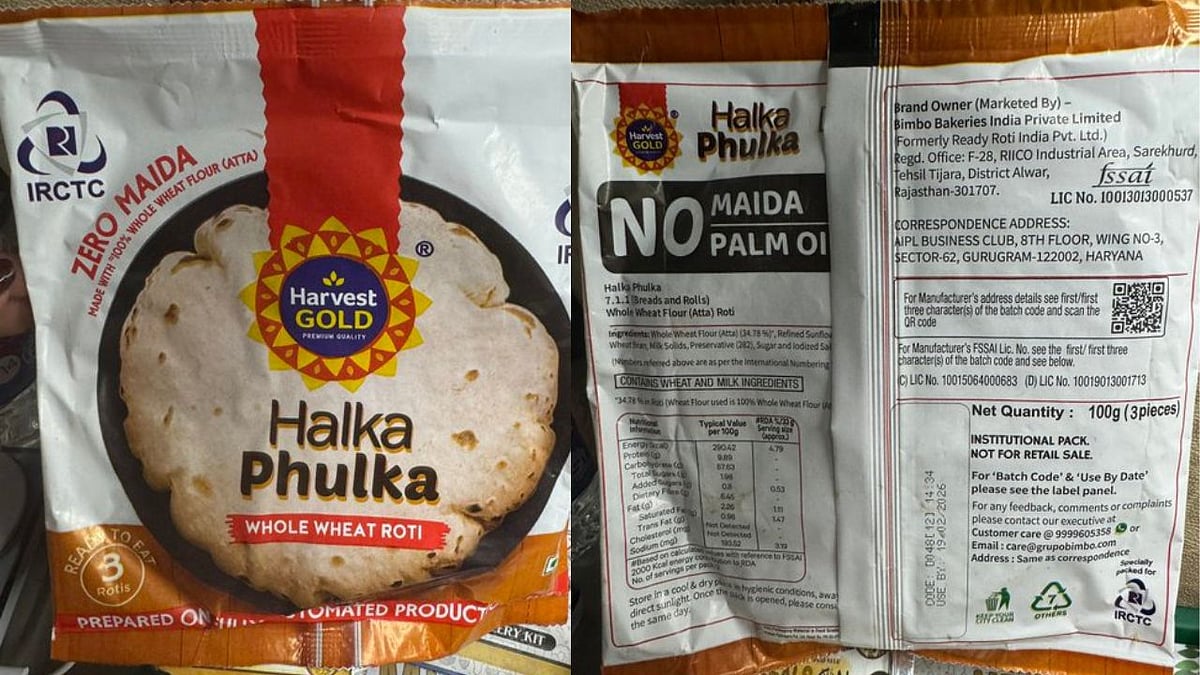

The passenger pointed out that the roti packet carried basic storage instructions such as “store in a cool and dry place,” but did not mention whether the packaging was microwave-safe. She questioned whether food-grade plastic automatically qualifies as safe for heating.
Earlier, she had reportedly encountered a similar situation while travelling on the Rajdhani Express, where a hot kachori was served in sealed plastic packaging. Observing the same practice on Vande Bharat prompted her to seek clarification.
The concern raised is not limited to a single meal. Experts often caution that certain plastics, when heated repeatedly, can lead to chemical migration into food if not specifically certified for high temperatures. Clear labeling and compliance testing are therefore considered essential in mass catering systems.
IRCTC Issues Clarification
Responding to the viral discussion, the Indian Railway Catering and Tourism Corporation (IRCTC) stated that the packaging used is suitable as per prevailing temperature standards onboard trains. The agency said the packaging is unharmful from a health perspective and that the food served is safe for consumption.
IRCTC is responsible for onboard catering services across premium trains including Vande Bharat and Rajdhani. Catering standards and food safety practices are governed under Indian food safety regulations overseen by the Food Safety and Standards Authority of India (FSSAI).
Public Reaction and Larger Questions
The incident has triggered strong reactions online. Several users supported the passenger’s concerns, arguing that “food grade” does not automatically mean heat-safe. Some called for clearer labeling on packaging used in railway catering.
Others demanded greater transparency in vendor selection and food quality monitoring, particularly on flagship trains like Vande Bharat, which are positioned as premium services.
Food safety specialists note that packaging meant for “in-pack heating” requires specific certification and migration testing. Without visible microwave-safe markings, consumers may reasonably question the safety protocol.
Need for Transparent Communication
While IRCTC has assured passengers that the packaging meets temperature standards, the episode highlights the importance of proactive communication. Clear labeling, public disclosure of safety certifications, and visible compliance with FSSAI norms could help prevent similar controversies.
As railway catering serves millions daily, maintaining public trust is critical. Premium trains such as Vande Bharat are symbolic of modern Indian Railways. Any perceived lapse in food safety can quickly gain traction online.
For now, IRCTC maintains that the food is safe. However, the discussion has opened up a broader conversation about packaging transparency, health standards, and accountability in large-scale public catering systems.