Strengthening NASA’s Commercial Space Strategy
The agreement reflects NASA’s continued push toward commercial partnerships for human spaceflight. Over the past decade, the US space agency has increasingly relied on private players to transport astronauts and cargo to the ISS, freeing up resources for deep-space exploration under programs such as Artemis.
NASA’s commercial strategy mirrors global trends, including India’s own push to encourage private sector participation through reforms led by IN-SPACe and ISRO.
For Vast Space, this will be its first private astronaut mission conducted in direct collaboration with NASA, placing the company among a select group of commercial space operators supporting crewed ISS missions.
 Mission Profile: Falcon 9 and Dragon
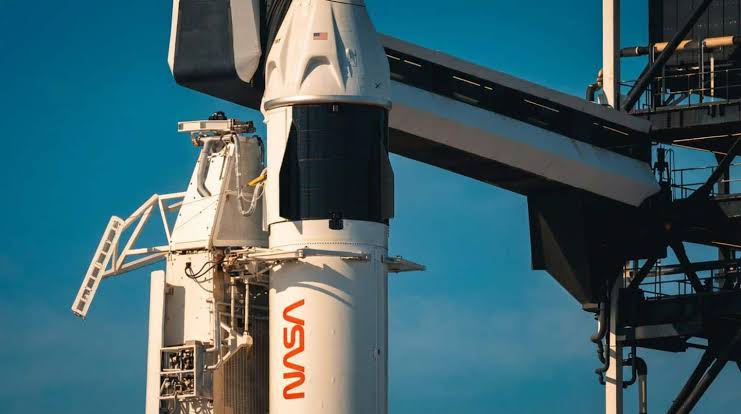
The 2027 mission will launch aboard SpaceX’s Falcon 9 rocket using the Dragon spacecraft to ferry astronauts to the ISS. The exact launch date will depend on orbital traffic, spacecraft readiness, and scheduling coordination with NASA and its international partners.
Once docked, the crew is expected to remain on the ISS for up to two weeks. During this period, they will conduct a series of scientific experiments and technology demonstrations designed to support future human spaceflight capabilities.
The collaboration underscores the maturity of reusable launch systems and commercial crew transportation, which have become central to ISS operations in recent years.
Focus on Science and Research
Vast Space has indicated that the mission will carry a comprehensive science and research portfolio. The company plans to prioritize biology and biotechnology experiments, physical sciences research, human health studies, and technology demonstrations.
Such missions are increasingly being viewed as stepping stones toward independent commercial space stations. Vast Space previously invited research proposals for a potential private astronaut mission and has an existing agreement with the Center for the Advancement of Science in Space (CASIS), which manages the US National Laboratory portion of the ISS.
By combining government oversight with private sector agility, the mission aims to generate data that will shape the next phase of orbital infrastructure.
Preparing for Haven-1 and Beyond
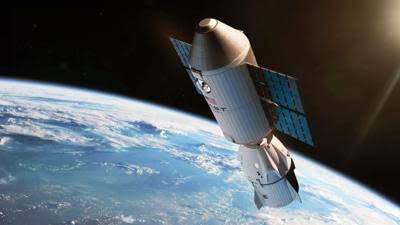
Beyond the ISS mission, Vast Space has ambitious long-term plans. The company intends to launch Haven-1 in 2027, describing it as the world’s first commercial space station. Additional Haven modules are planned by 2030 to enable a sustained human presence in low-Earth orbit.
CEO Max Haot has emphasized that leveraging the remaining operational years of the ISS through science-driven commercial missions is critical for transitioning to privately operated stations. According to him, this transition will help unlock the full potential of the orbital economy.
The company is also exploring opportunities in international markets, including India. Senior leadership has previously participated in global space forums to assess collaboration prospects in human spaceflight and space station development.
Commercial Spaceflight Enters a New Phase
The award of this NASA contract signals a broader transformation in how space missions are planned and executed. Instead of relying solely on government-built stations, agencies are preparing for a future where commercial platforms host astronauts, researchers, and even private citizens.
For India and other emerging space economies, the development offers valuable lessons in fostering innovation while maintaining regulatory oversight. As more nations invest in human spaceflight programs, partnerships between public agencies and private firms are likely to define the next chapter of low-Earth orbit operations.
With its 2027 ISS mission and plans for Haven-1, Vast Space is positioning itself at the forefront of that transition one that could reshape the economics and accessibility of space in the coming decade.