
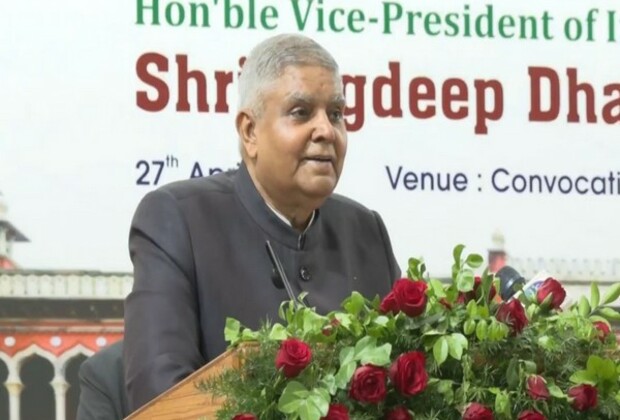
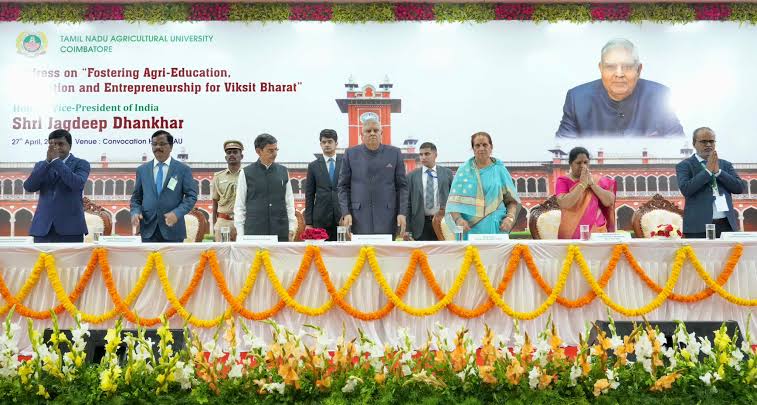
In a heartfelt address at Tamil Nadu Agricultural University in Coimbatore, Vice-President Shri Jagdeep Dhankhar reflected on India’s rich legacy of inclusivity and freedom of expression, calling them the proud hallmarks of the world’s oldest civilization. Speaking to a gathering of students, scholars, and agricultural experts, the Vice-President emphasized that Bharat has historically been a peace-loving nation where free thought and acceptance have flourished for thousands of years, and even today, no other country matches Bharat’s vibrancy in these ideals.

Turning his focus to the agricultural sector, Shri Dhankhar spoke passionately about the need for a shift in mindset—from ensuring food security to ensuring farmer prosperity. He highlighted that farmers must be seen not just as producers but as entrepreneurs who can market, add value to, and innovate around their produce. He underscored the importance of empowering farmers with awareness and knowledge, stressing the robust support provided by government cooperative systems and calling for more proactive engagement in marketing and agribusiness.
In an inspiring call to action, the Vice-President spoke of the need for farmers to step beyond traditional roles, urging them to become traders and industry starters who transform basic agricultural produce into higher-value products. He explained that the prosperity of farmers would not just uplift rural communities but also strengthen the nation’s economy.
The Vice-President also drew attention to the vital role research and innovation must play in modernizing agriculture. He insisted that the connection between agricultural research labs and the fields must be seamless, advocating for the empowerment of Krishi Vigyan Kendras across the country to serve as vibrant hubs of learning and exchange for farmers. Stressing the importance of applied and impactful research, he called on universities, industry, and trade to collaborate in supporting research initiatives that have tangible benefits for farmers.
Praising government initiatives like the PM Kisan Nidhi Samman, he made it clear that direct transfers to farmers were acts of justice, not mere freebies. He even suggested that redirecting subsidies directly to farmers could significantly enhance their annual incomes, offering them greater financial independence and dignity.
Reflecting on India’s journey from food scarcity to surplus, Shri Dhankhar lauded Tamil Nadu Agricultural University for its seminal contributions to agrarian development and rural transformation. He paid glowing tributes to the late Dr. M.S. Swaminathan, an alumnus of the university, describing him as a towering figure in Indian agriculture who had left an indelible mark on the nation’s progress.
In an emotional closing, the Vice-President reminded everyone that Bharat’s soul lives in its villages and that agriculture remains the lifeline of the nation’s economy and its people. Quoting the ancient Tamil poet-saint Thiruvalluvar, he praised farmers as the true architects of humanity and providers of prosperity. His address carried a powerful message: as India strides towards becoming a developed nation, it must hold close its roots of agriculture, inclusivity, and the freedom of every citizen to express and dream.
The event was attended by Tamil Nadu Governor Shri R.N. Ravi, state ministers, senior officials, and members of the academic community, marking a day of deep reflection on the future of Indian agriculture and the enduring values that have shaped the nation.