 Deepavali A Civilisational Phenomenon
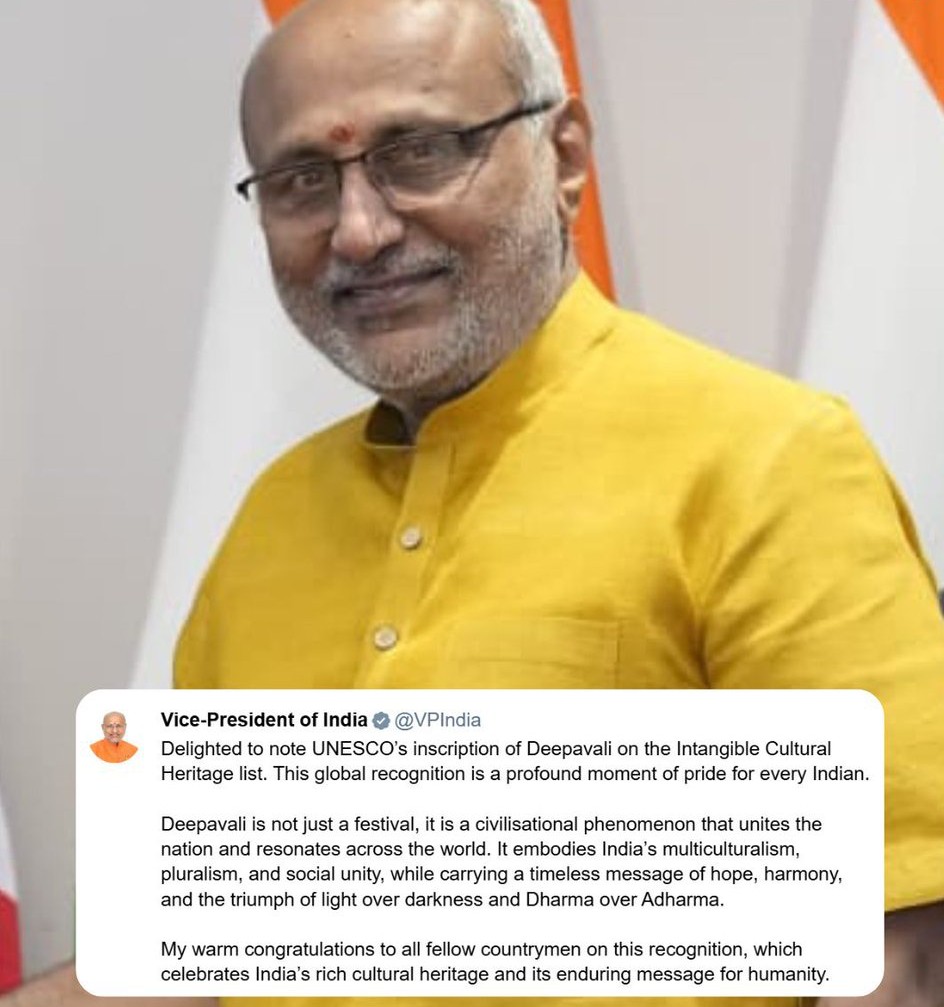
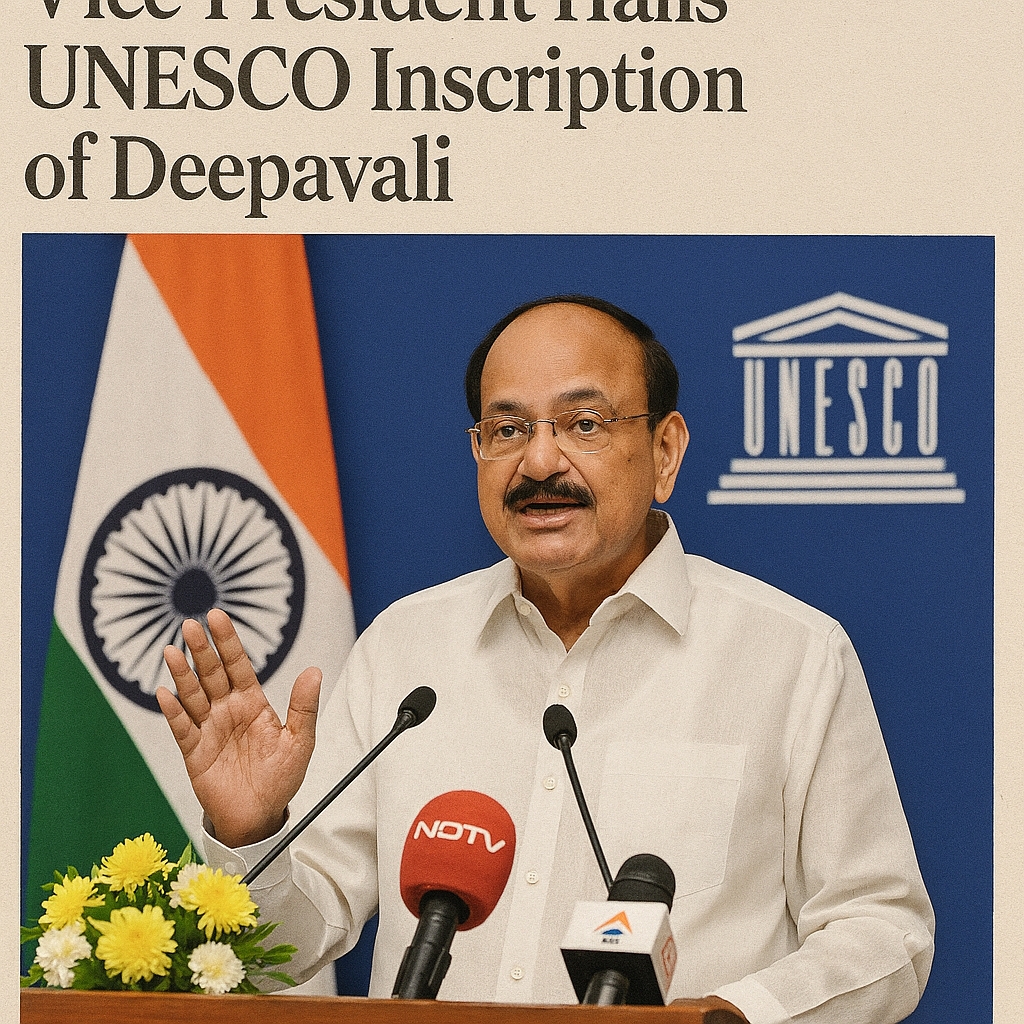
Shri Radhakrishnan said Deepavali goes beyond ritual: it embodies India’s multiculturalism and pluralism, resonating with communities across the world. He noted that the inscription recognises not only ritual practices but also the social bonds and shared values that the festival fosters. The Vice-President extended warm congratulations to all Indians, framing the UNESCO recognition as a celebration of India’s living cultural heritage.
UNESCO Recognition and the Global Stage
The listing, confirmed during UNESCO’s Intergovernmental Committee sessions held in India, places Deepavali among other globally recognised Indian traditions and raises the festival’s profile on an international platform. Observers say the inscription underscores the role of intangible heritage in sustaining social cohesion and cultural expression. Media reports note that Deepavali’s inclusion increases India’s tally of UNESCO-listed intangible heritage elements.
Civic and Cultural Significance
Shri Radhakrishnan emphasised Deepavali’s message of Dharma over Adharma and its timeless appeal across regions and faiths. He described the festival as a civilisational bridge that unites communities and communicates hope and harmony. Such official endorsements, he added, help preserve traditional practices while encouraging contemporary communities to keep shared cultural values alive.
Policy and Cultural Promotion
The UNESCO inscription is expected to encourage documentation, community involvement and safeguarding measures for festival practices from rituals and crafts to culinary traditions and public celebrations. Experts say such recognition can spur support for artisans, traditional performers and cultural organisations that sustain festival-related skills and knowledge. News outlets covering the development emphasised the collaborative effort behind the nomination, including inputs from cultural bodies and communities.
National Reactions
The decision drew reactions across political and cultural leadership. The Prime Minister’s Office and other offices welcomed the inclusion, describing it as an honour that underscores Deepavali’s central place in India’s civilisational history. Civil society and cultural organisations also hailed the listing as a chance to amplify inclusive narratives about the festival’s diverse regional expressions.