
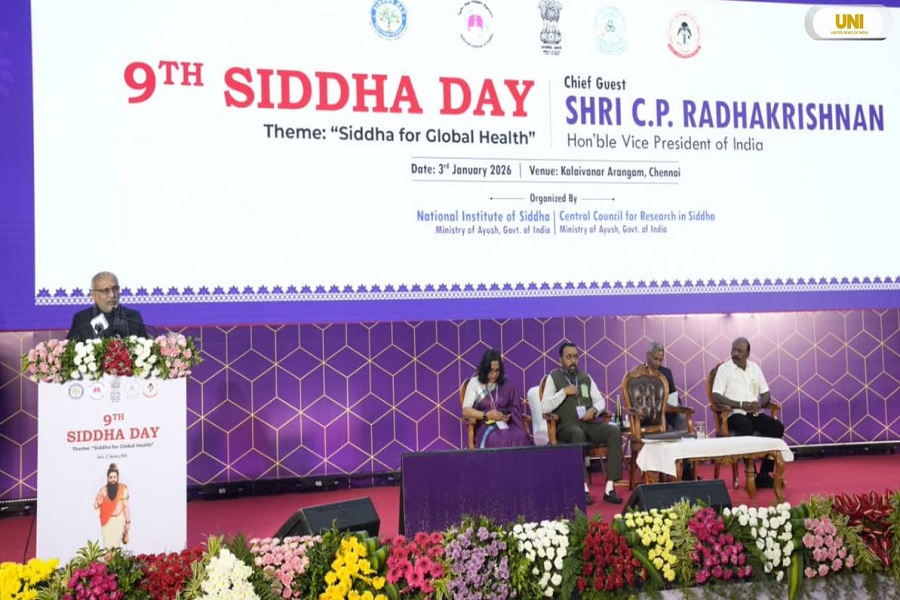

Highlighting the broader role of traditional health systems, the Vice President said that Siddha, Ayurveda, Unani, and Yoga, under the AYUSH umbrella, are time-tested practices that continue to contribute meaningfully to public health. He stressed that these systems are not relics of the past but living sciences that emphasise prevention, lifestyle management, and long-term well-being.
The Siddha system, he observed, offers a comprehensive approach to healthcare by focusing on balance and prevention. At a time when lifestyle disorders, mental stress, and environmental challenges are on the rise, Siddha’s emphasis on holistic living provides valuable solutions for sustainable health outcomes.
Focus on root causes and complete healing
Drawing attention to the distinctive strengths of Siddha medicine, Shri Radhakrishnan noted that the system places strong emphasis on identifying and addressing the root causes of disease. Unlike symptom-centric treatments, Siddha aims at complete healing and recovery through an integrative understanding of the human body and its interaction with nature.
He said this approach gives hope for managing and even curing diseases that are often considered difficult or incurable, provided there is sustained research, documentation, and scientific validation of traditional formulations and practices.
Call for integration with modern science
Stressing the importance of collaboration, the Vice President urged researchers, practitioners, and academic institutions to work together to preserve, modernise, and globally disseminate Siddha knowledge. He emphasised that while modernisation is necessary, it must be done without compromising the ethical and philosophical foundations of the Siddha tradition.
Encouraging young students and scholars, he called for rigorous scientific research in Siddha medicine to develop evidence-based solutions for contemporary health challenges. Integrating traditional wisdom with modern science, he said, is essential for building a healthier, balanced, and sustainable society.


Exhibition showcases Siddha heritage
Earlier in the day, the Vice President visited an exhibition organised by the Ministry of Ayush at the venue. He appreciated the extensive display of Siddha manuscripts, classical texts, raw materials, and herbal medicines, describing it as a powerful reflection of India’s rich medical heritage.
The exhibition highlighted ongoing efforts by the Ministry of Ayush to preserve ancient knowledge while promoting research and innovation.
‘Siddha for Global Health’ theme
The 9th Siddha Day celebrations were jointly organised by the National Institute of Siddha (NIS) and the Central Council for Research in Siddha (CCRS), along with the Directorate of Indian Medicine and Homoeopathy, Government of Tamil Nadu. The theme, “Siddha for Global Health,” underscored India’s vision of sharing traditional healthcare knowledge with the world.
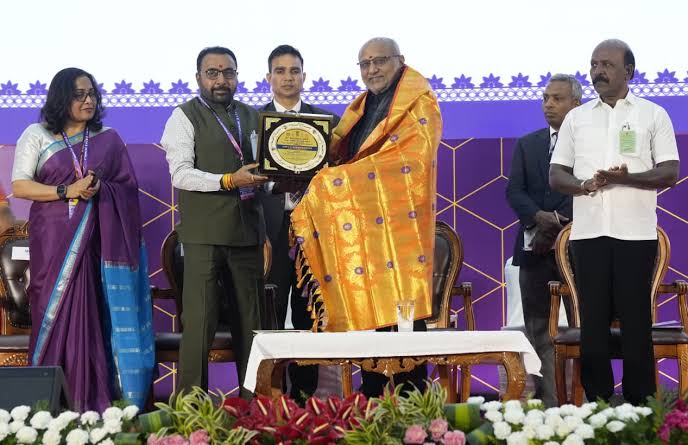
The event brought together Siddha practitioners, scientists, academicians, and students from Tamil Nadu and other states. On the occasion, five eminent personalities from the Siddha system were felicitated for their outstanding contributions to the field.
The celebrations were also attended by Union Minister of State (Independent Charge) for Ayush Shri Prataprao Jadhav, Tamil Nadu Health Minister Shri Ma. Subramanian, Joint Secretary in the Ministry of Ayush Ms. Monalisa Dash, and several other dignitaries, reflecting the growing national focus on traditional systems of medicine.