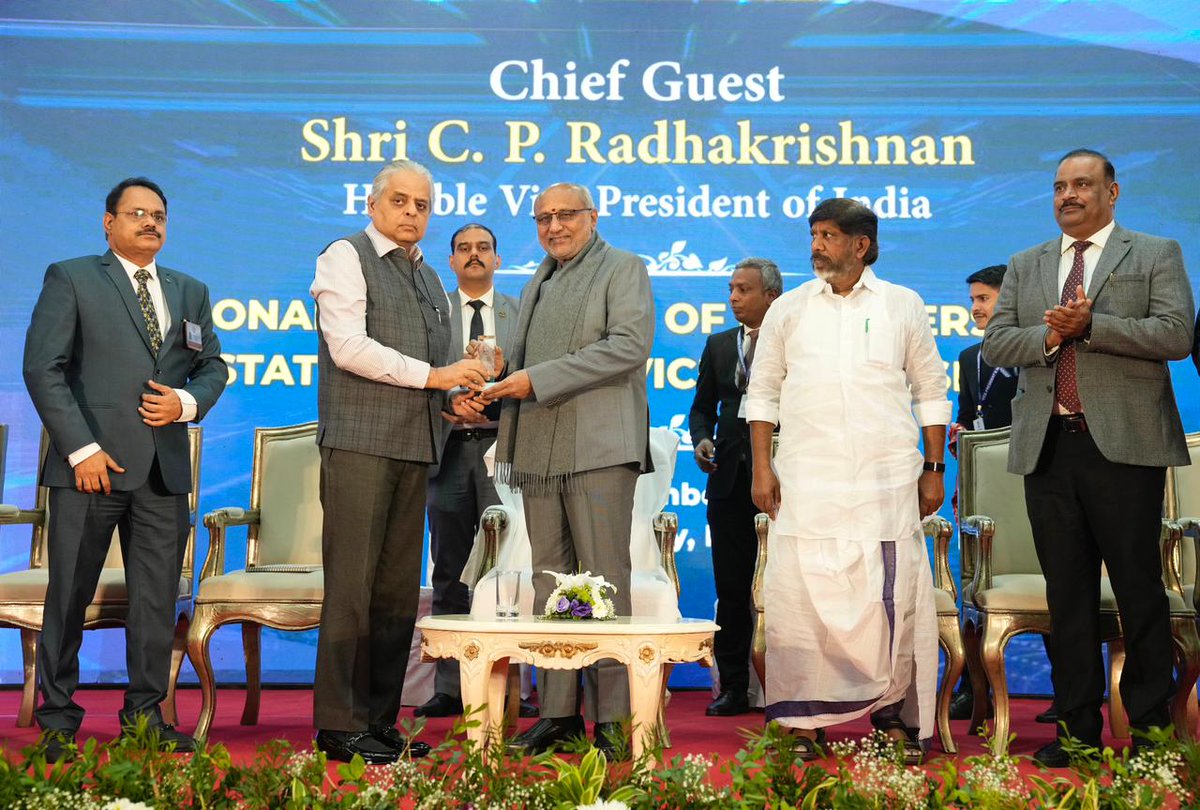
Public Service Commissions as Pillars of Governance
Highlighting the constitutional status of Public Service Commissions, Shri Radhakrishnan said these institutions are central to maintaining the integrity and effectiveness of India’s governance systems. He noted that PSCs play a foundational role in ensuring that public administration remains professional, neutral and committed to public welfare.
As India progresses on its developmental journey, he said, the strength of institutions will depend not only on policies but on the people who implement them. In this context, the Vice-President described PSCs as custodians of merit and fairness in public recruitment.
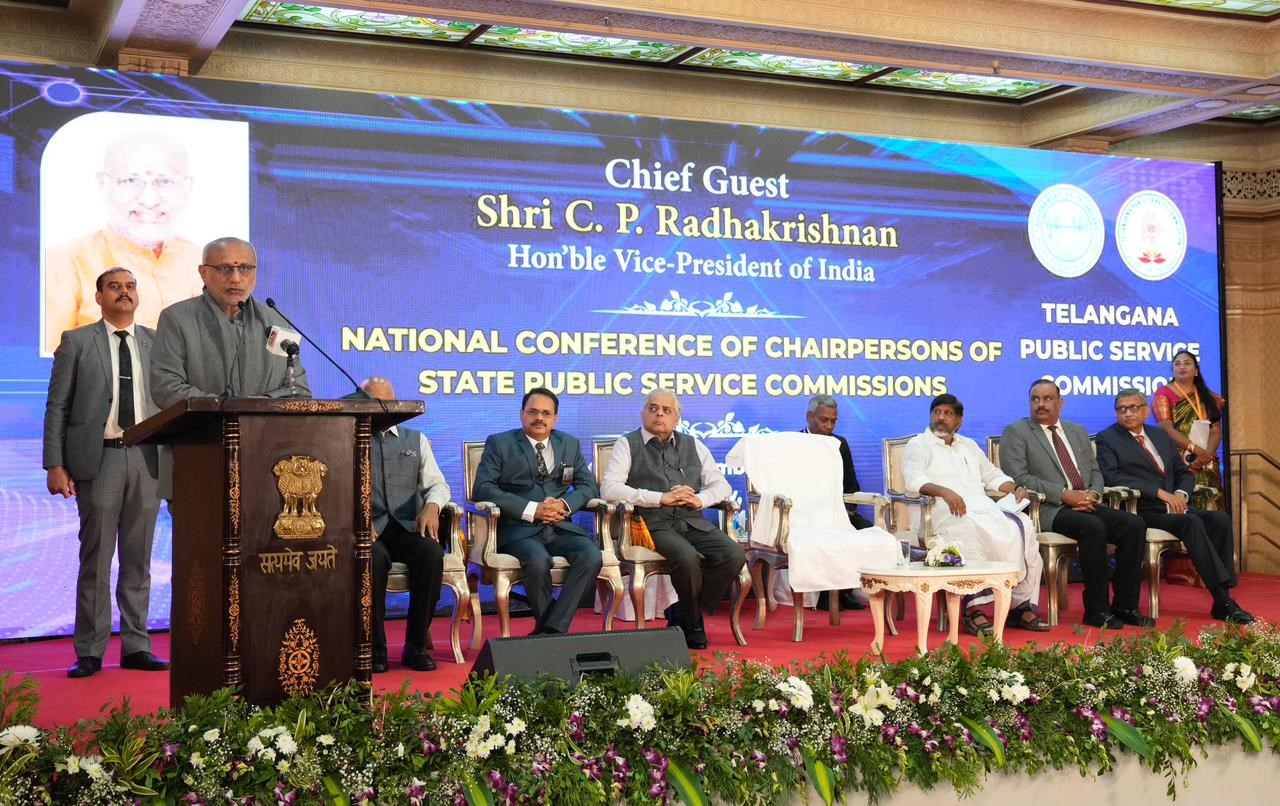 Merit and Transparency Must Be Visible
Stressing the importance of public trust, Shri Radhakrishnan remarked that merit must not only be upheld but must also be clearly seen to be upheld. He observed that transparency and impartiality form the moral foundation of public recruitment and are essential to eliminating bias and favouritism.
Even isolated irregularities, he warned, can erode institutional credibility built over decades. Calling for zero tolerance towards malpractice in examinations and selection processes, the Vice-President urged PSCs to strengthen safeguards that protect fairness and accountability.
Quality Civil Services for Viksit Bharat
The Vice-President said that achieving the goals of Viksit Bharat@2047 would require a new generation of civil servants equipped to handle complex and evolving challenges. Effective implementation of national priorities such as digital governance, social inclusion, infrastructure expansion, climate action and economic transformation depends on the quality of administrators selected today.
He emphasised that civil servants must possess not only academic competence but also ethical judgment, leadership skills, emotional intelligence and the ability to work collaboratively in diverse teams.
Beyond Exams: Assessing Ethical and Behavioural Skills
Shri Radhakrishnan suggested that Public Service Commissions explore structured and fair methods to assess behavioural and ethical competencies alongside traditional knowledge-based examinations. He said modern governance demands administrators who can take balanced decisions, manage people sensitively and uphold public interest under pressure.
Such holistic assessment approaches, he added, would help ensure that selected candidates are well-rounded and capable of serving citizens effectively.
Continuous Evaluation and Institutional Integrity
The Vice-President noted that recruitment alone cannot guarantee lifelong excellence in public service. He stressed the importance of objective performance appraisal systems, vigilant oversight and periodic reviews to maintain high standards within the civil services.
According to him, character and ethical conduct are fundamental to nation-building and sustaining public trust in government institutions.
Harnessing India’s Demographic Dividend
Referring to India’s vast pool of young talent, Shri Radhakrishnan encouraged Public Service Commissions to explore innovative approaches to talent mapping and employability. He cited initiatives similar to Pratibha Setu as examples of how the right talent can be matched with appropriate roles.
Such efforts, he said, would strengthen governance outcomes while providing meaningful opportunities to India’s youth.
Strengthening the Foundations of Good Governance
Concluding his address, the Vice-President expressed confidence that Public Service Commissions across the country would continue to reinforce the foundations of good governance. He said their commitment to merit, transparency and ethical standards would be central to India’s journey towards a Viksit and Aatma Nirbhar Bharat.