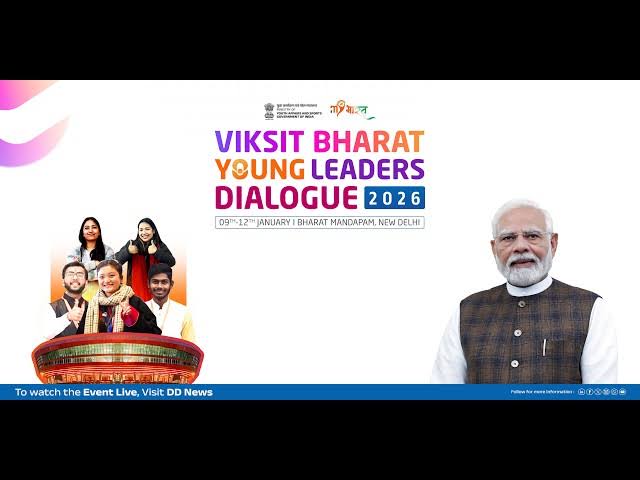
 Youth as Nation Builders: Message from Leadership
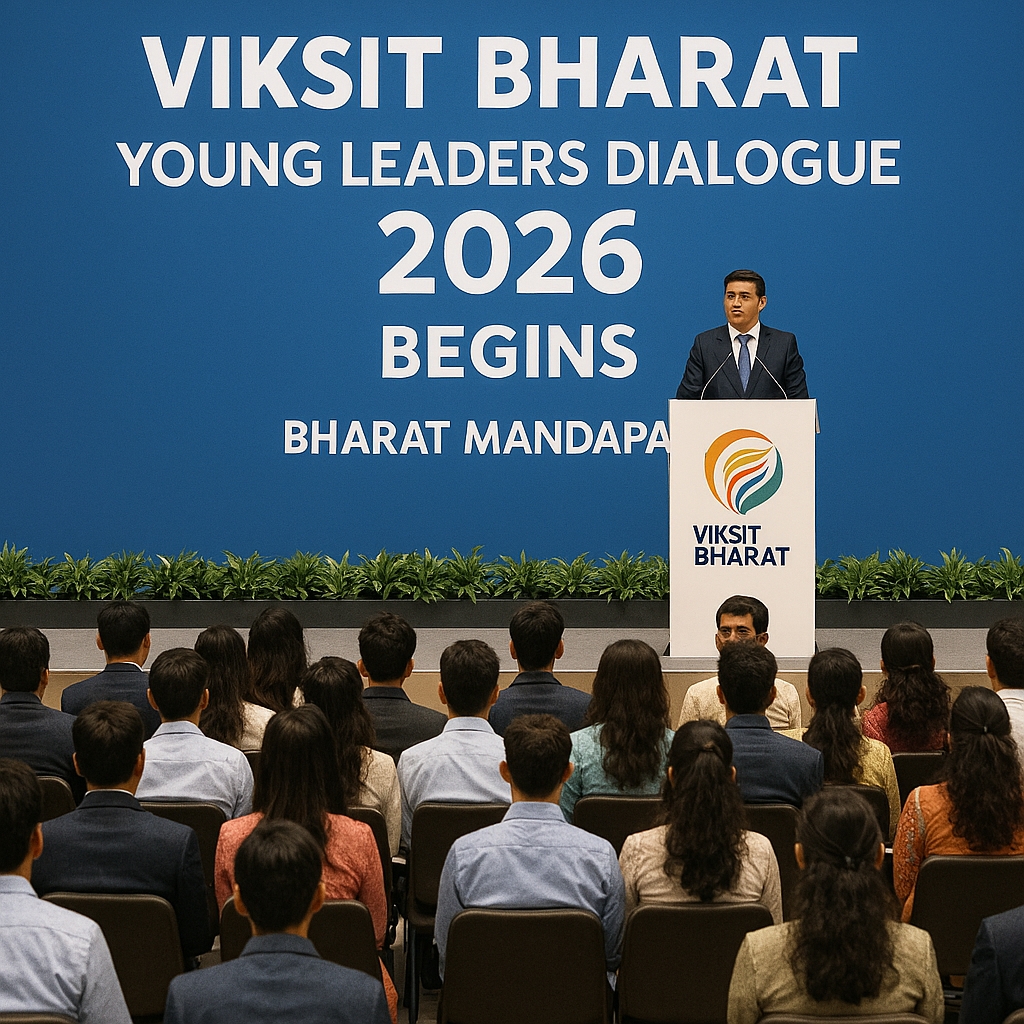
Addressing the young delegates, Smt. Raksha Khadse invoked the philosophy of Swami Vivekananda, who believed that youth are the true strength of any nation. She emphasised that the vision of Viksit Bharat cannot be realised by government efforts alone, but through the active participation, leadership and ideas of young citizens.
Highlighting the success of the MY Bharat (Mera Yuva Bharat) initiative, the Minister revealed that more than two crore youth have already registered on the MY Bharat portal. She urged participants to expand the reach of the platform at colleges and district levels to build a nationwide movement of responsible and engaged youth.
Dialogue, Not Competition
In her welcome address, Dr. Pallavi Jain Govil described the Dialogue as a two-way communication platform where youth perspectives are directly heard by national leadership. She underlined that VBYLD reflects Prime Minister Narendra Modi’s commitment to meaningful engagement with young minds from diverse backgrounds.
MY Bharat volunteers were felicitated during the session, acknowledging their contributions in mobilising youth participation and fostering civic engagement at the grassroots level.
Ten Thematic Tracks Shaping India’s Future
Following the plenary, participants engaged in thematic sessions across ten critical areas central to India’s long-term development. These tracks encouraged structured presentations, expert evaluation and collaborative ideation.
The themes included Youth in Democracy and Governance, Women-Led Development, Fit Bharat Hit Bharat, Making India the Startup Capital of the World, Cultural Diplomacy and Soft Power, Innovation with Tradition, Aatmanirbhar Bharat, Smart and Sustainable Agriculture, Green Development, and Building a Future-Ready Workforce.
Women-Led Development and Fitness Take Centre Stage
A strong emphasis emerged on women-led development, with youth proposing dual-skilling for rural women, AI-driven mentorship platforms, monetisation of traditional skills and stronger grassroots leadership mechanisms. The deliberations reflected a shift from welfare-centric approaches to women as drivers of economic growth.
Equally prominent was the Fit Bharat, Hit Bharat track, where participants presented innovative ideas such as community fitness hubs, inclusive infrastructure, rural sports initiatives and technology-driven fitness incentives, linking physical well-being to national productivity.
Innovation, Sustainability and Cultural Strength
Sessions on startups, innovation and sustainability highlighted the need to strengthen grassroots entrepreneurship, promote indigenous technologies and invest in research and incubation. Youth also explored how India’s cultural heritage can be leveraged as soft power in global diplomacy.
Ideas blending traditional knowledge with modern technologies like AI, VR and AR showcased how ancient wisdom can contribute to sustainable and inclusive development in a modern Bharat.
Learning Beyond the Conference Hall
Parallel activities such as ‘Design for Bharat’ and ‘Hack for Social Change’ provided hands-on opportunities for problem-solving. Two batches of participants also visited the Prime Ministers’ Museum and Library, gaining insights into India’s democratic journey and leadership legacy.
The inaugural day concluded on a strong note, reinforcing the government’s resolve to empower youth as partners in nation-building. The Dialogue will culminate on 12 January 2026, with Prime Minister Narendra Modi scheduled to interact directly with young leaders.