
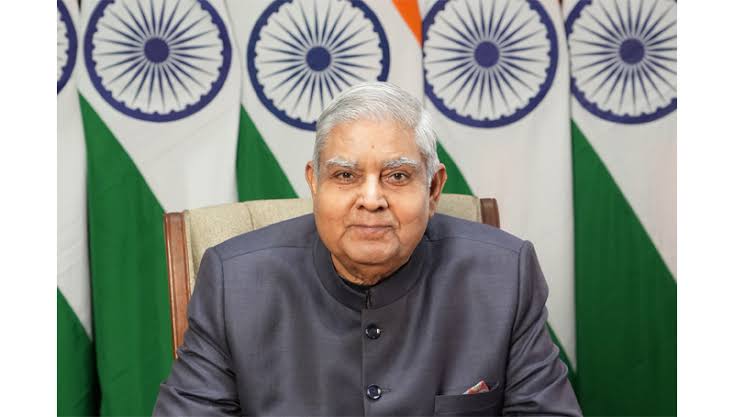
SC’s 1976 Emergency Verdict Was the Darkest Judicial Moment: VP Dhankhar
New Delhi | June 22, 2025
Vice President Jagdeep Dhankhar delivered a scathing critique of the Supreme Court of India’s ruling during the Emergency era, calling it the “darkest judgment in judicial history.” He made these remarks while addressing interns at the Rajya Sabha, reflecting on the infamous ADM Jabalpur v. Shivkant Shukla case, commonly known as the Habeas Corpus case.
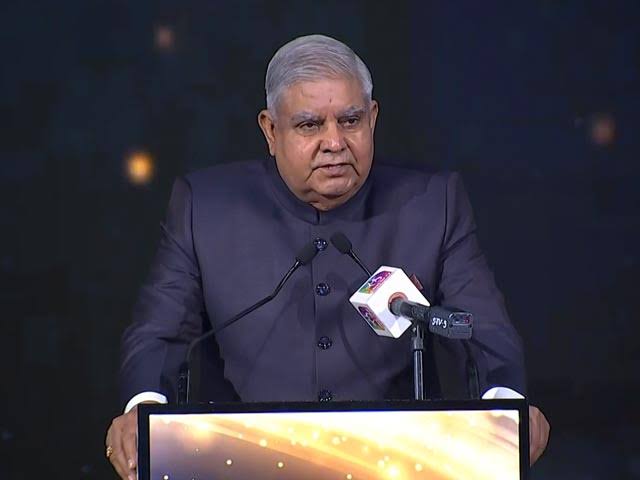

Dhankhar revisited the 1976 Supreme Court judgment during the Emergency (1975–77), where a 4-1 majority of the bench ruled that fundamental rights could be suspended, including Article 21, which guarantees the right to life and liberty.
“Nine High Courts had upheld that rights remain intact—even during emergency,” Dhankhar said. “But the Supreme Court overturned them all.”
He stated that this decision effectively legitimized dictatorship, authoritarianism, and despotism, shaking the very foundation of India’s democratic structure.
A Judiciary That Failed Its People
The Vice President emphasized that during times of political crisis, citizens look to the judiciary for protection. But in this case, the highest court of the land failed to uphold the Constitution.
“This ruling will be remembered as the darkest in the history of any judicial institution that believes in the rule of law,” he asserted.
He cited the case of more than 1 lakh citizens, including future Prime Ministers like Atal Bihari Vajpayee, Morarji Desai, and Chandra Shekhar, who were arrested within hours after the Emergency was declared.
Dhankhar Criticizes President’s Role During Emergency
Dhankhar also pointed to the then President Fakhruddin Ali Ahmed, who, he said, signed the Emergency proclamation on the advice of Prime Minister Indira Gandhi alone, bypassing the constitutional requirement of advice from the Council of Ministers.
“This was a clear constitutional violation. One man’s decision put thousands behind bars,” he said.
The Price of Democracy: Remembering June 25
He also praised the government’s decision to observe June 25 as “Samvidhan Hatya Diwas” (Constitution Killing Day) to commemorate the suspension of civil liberties.
“This day is a reminder that we must protect our democracy ourselves. Learn about the Emergency. Know its horrors. That is the price of freedom,” Dhankhar told the interns.
The ADM Jabalpur Case: A Legal Tragedy
The ADM Jabalpur case remains one of the most controversial rulings in Indian legal history. The lone dissenting voice, Justice H.R. Khanna, argued that basic rights cannot be suspended under any circumstances.
His courageous stand is now hailed as an example of judicial integrity, even as the rest of the bench sided with the government.
In fact, Justice Khanna’s dissent later cost him the position of Chief Justice of India. Yet, his words echo in Indian legal education and discourse to this day.
Revisiting the Past for a Better Future
The Vice President’s remarks are part of a broader national reflection on the Emergency era. Many historians, journalists, and jurists agree that India’s democracy survived only due to the resilience of its people, not because of its institutions.
By bringing this issue to light, Dhankhar urged young citizens to take ownership of democratic values, stressing that awareness is the first step toward accountability.