
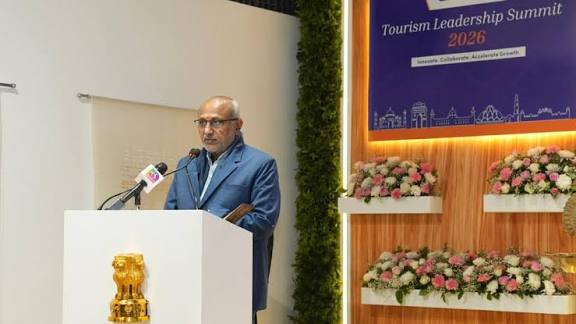
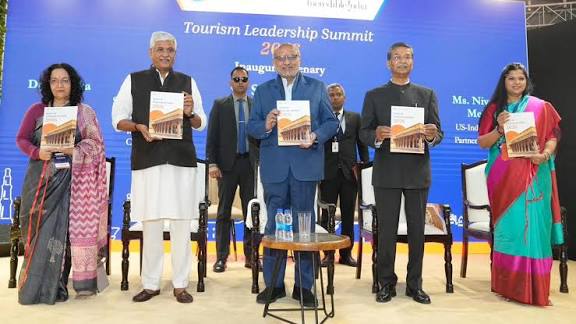
Appreciating the organisers, Shri Radhakrishnan said the summit provided a strategic platform to deepen collaboration between India and the United States in travel and hospitality. He observed that tourism exchanges reflect shared democratic values, entrepreneurial spirit, and the vibrancy of the Indian diaspora in the US.
The Vice-President expressed confidence that stronger cooperation in tourism can enhance the broader India–US economic corridor, creating opportunities for investment, innovation, and sustainable growth.
Tourism Vision 2029 and Holistic Development
Referring to forward-looking initiatives under Prime Minister Shri Narendra Modi’s leadership, the Vice-President highlighted Tourism Vision 2029. The initiative aims to develop at least one world-class tourist destination in every State with global standards of hospitality and infrastructure.
He emphasised that the vision extends beyond beautification. It focuses on building holistic tourism ecosystems featuring seamless connectivity, digital integration, safety standards, sustainability measures, and enhanced visitor experiences.
Preserving Heritage with Global Standards
India’s civilizational heritage and diverse landscapes position the country as a unique global tourism destination. The Vice-President called for world-class development and preservation of India’s UNESCO World Heritage Sites.
He stressed the importance of improving visitor amenities, strengthening last-mile connectivity, establishing interpretation centres, and leveraging digital storytelling. Sustainable practices, he said, must be integrated into every stage of tourism planning.
Aligning Tourism with Environmental Goals
Highlighting climate concerns, Shri Radhakrishnan said tourism growth must align with environmental goals. He advocated climate-conscious infrastructure, community-led tourism models, and the preservation of natural and cultural heritage.
Sustainable tourism, he noted, ensures that economic benefits do not come at the cost of ecological degradation. Community participation is essential for long-term resilience and equitable growth.
Technology and AI Transforming Travel
The Vice-President emphasised the integration of emerging technologies such as artificial intelligence to enhance the tourism experience. From personalised travel recommendations to smart visitor management systems, AI can significantly improve efficiency and satisfaction.
He also called for the development of new-age destinations that showcase India’s achievements in space exploration, digital public infrastructure, renewable energy, and advanced manufacturing.
Tourism as a Major Employment Generator
Describing tourism as one of the largest employment-generating sectors, the Vice-President urged greater investment in skill development, entrepreneurship, and women-led enterprises. Inclusive growth, he said, should remain central to tourism expansion.
He concluded by expressing hope that the summit would mark a new chapter in India–US cooperation driven by sustainability, innovation, inclusivity, and shared prosperity.