
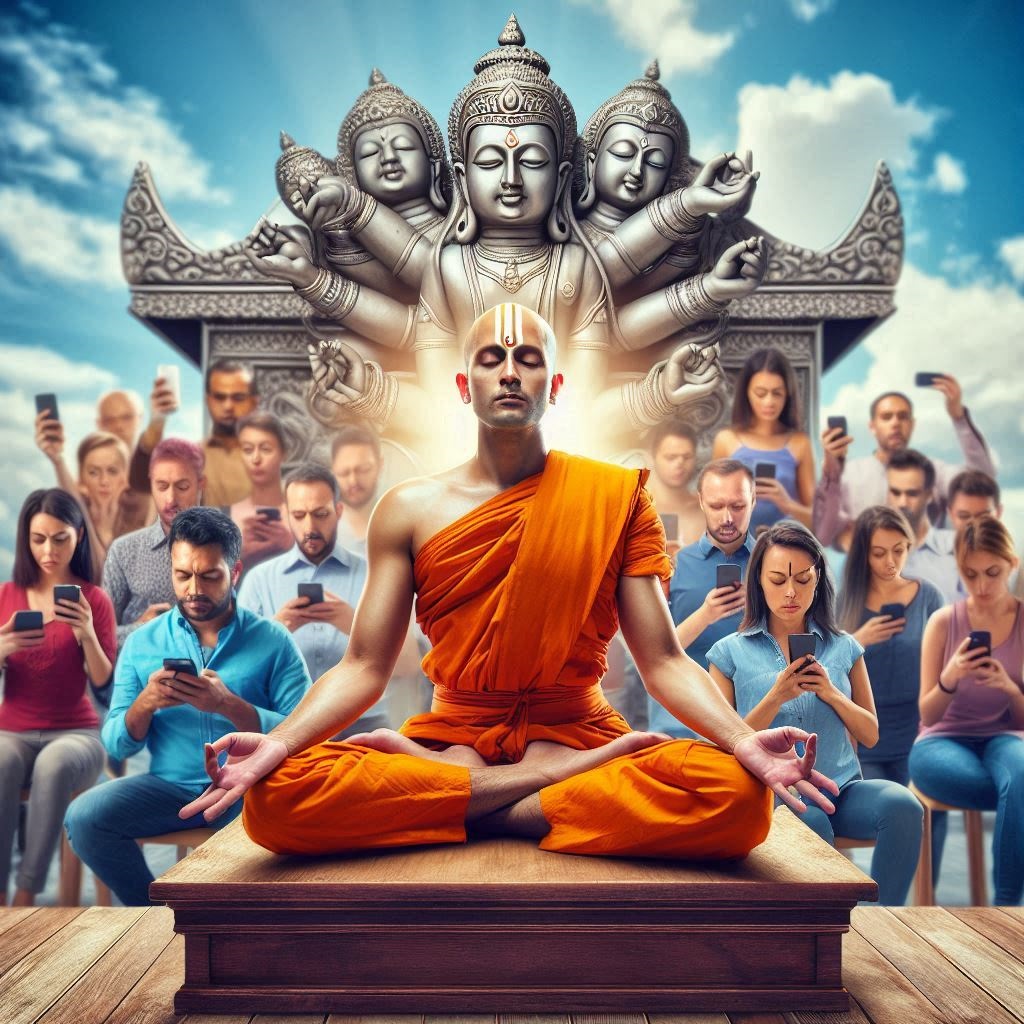
Faith, Identity, and the Decline of Hindu Resistance
In India, discussions about the decline of Hindus and the expansion of Islamic influence are frequent. Yet, rarely do we explore the core reason behind this shift.
The collective character of any civilization doesn’t form in a year or two—it takes thousands of years. Each major civilization has a foundational belief system that anchors its survival:
-
Jews find strength in the belief that they are the “chosen people of God”, giving them a sense of divine immortality.
-
The Western world’s technological dominance arises from harsh climatic conditions that forced innovation and exploration.
-
Chinese society is driven by a belief in the superiority of the Han race and a vision of a China-centric world.
-
The Islamic world is united by a powerful belief in paradise after death, which grants them a sense of eternal purpose and superiority—similar to the Jewish idea of immortality.
In contrast, Hindus once rooted their strength in the belief of the soul’s immortality and the cycle of rebirth. While others preserved their civilizational core beliefs, Hindus abandoned theirs.
A scene from the TV series Rome illustrates this beautifully. A Hindu merchant, captured by Roman soldiers and facing death, remains calm. Surprised, a Roman asks him, “Aren’t you afraid of dying?” The merchant responds with the essence of a Gita verse:
‘वासाँसि जीर्णानि यथा विहाय’
“You can only destroy my body, not my soul. My soul will take birth again in a new form.”
This belief system once helped spread Hindu civilization from the Philippines to Portugal. It inspired freedom fighters like Khudiram Bose, Bhagat Singh, and Bismil, who sang, “I shall return in nine months.”
This same spiritual conviction enabled Brahmins to look down upon Muslim invaders by calling them “mlechchas”—untouchables—instilling such a deep psychological divide that even the lowest castes wouldn’t drink water touched by Muslims.
But this spiritual backbone was fractured:
-
The first blow came from Buddha, who denied the existence of the soul.
-
The second blow came from a misunderstood science, which only said there is no experimental evidence of reincarnation—not that it is impossible.
-
Yet, over time, secular intellectuals and “brown colonials” began to declare with certainty that rebirth doesn’t exist.
This led to a corrupted popular belief:
“Eat, drink, and be merry. Who knows what happens after death?”
This shift has weakened moral restraint among Hindus, eroding the law of karma taught by Krishna. As a result, many Hindus are becoming increasingly immoral, passive, and cowardly. Without belief in karma or rebirth, they no longer fight challenges—they prefer escape, even if it means living dishonorably.
Unless Hindus shed shallow ritualism and return to a deep, heartfelt belief in Krishna’s karma philosophy and reincarnation, their decline and displacement will continue.
Other ancient faiths didn’t vanish naturally:
-
Zoroastrianism in Iran
-
Assyrian beliefs in Babylon
-
Norse paganism in Scandinavia
They were destroyed systematically—first by demolishing temples and symbols, then by breaking their spiritual conviction.
What foreign invasions couldn’t do in a thousand years, consumerism and hollow slogans of “all religions are equal” have achieved in just fifty.
Consider this: Hindus once wouldn’t touch water offered by Muslims. Today, they import biryani into their kitchens—a path that has led to interfaith infiltration into homes, and eventually into Hindu daughters’ lives, while Hindus are being driven out of their neighborhoods.
As long as Hindus don’t truly believe in the laws of karma and rebirth, and cannot say—boldly, even at personal cost—that Hindu Dharm is the greatest, and that Islamic invaders were mlechchas, they will continue to flee from Muslim-majority areas, blaming the government instead of looking inward.