

India’s defence partnership with the Soviet Union and later Russia dates back to the early years after independence. Moscow supported India diplomatically during critical moments, including the Kashmir issue and the 1971 war that led to the creation of Bangladesh.
More importantly, Russia enabled India’s earliest defence indigenisation efforts. The licensed production of MiG-21 fighters in the 1960s laid the foundation for India’s aerospace manufacturing capability, long before “Make in India” became a policy slogan.
Make in India Began With Russian Support
Factories set up for the MiG-21 later produced MiG-27s and over 220 Su-30MKI fighters at HAL’s Nashik facility. The Su-30MKI programme was not just licensed production but joint design and development, with India contributing avionics, mission computers, and flight-control logic.
Today, the Su-30MKI remains the backbone of the Indian Air Force. Its upcoming upgrades, including BrahMos-ER integration, will again require close Russian cooperation.
Joint Ventures That Delivered Results
The BrahMos missile stands as the most successful Indo-Russian joint venture. Developed with shared ownership and increasing indigenous content, the supersonic cruise missile is now exported to friendly nations, reinforcing India’s defence diplomacy.
Similarly, the AK-203 rifle programme has crossed 50% indigenous content, with a roadmap toward full localisation. These programmes demonstrate that meaningful technology transfer with Russia is achievable.
Changing Threat Environment
China’s rapid progress in fifth- and sixth-generation fighter programmes has altered the regional balance. Beijing’s J-20 fleet continues to grow, while Pakistan’s proposed acquisition of Chinese stealth fighters could materialise before India’s indigenous AMCA enters service.
Although the AMCA project received approval in 2024, realistic timelines point to operational induction well into the 2030s. This creates a capability gap that cannot be ignored.
The Su-57 Proposition
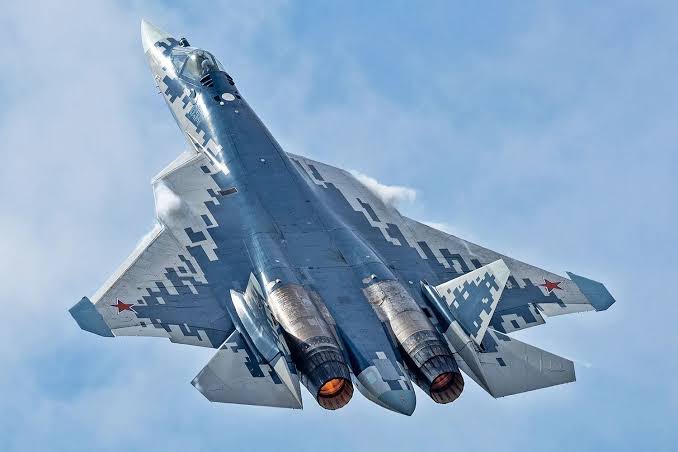
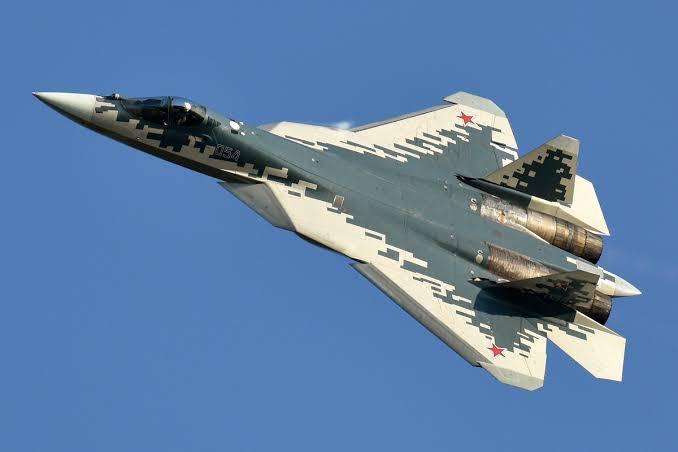
The Su-57 offers advanced manoeuvrability, distributed AESA radar coverage, artificial intelligence, and man-unmanned teaming capabilities. Russia claims lifecycle costs comparable to existing Sukhoi platforms, with a significantly lower acquisition cost than Western stealth fighters.
Crucially, Moscow has offered access to fifth-generation technologies including engines, sensors, stealth materials, and avionics areas where Western suppliers have traditionally imposed restrictions.
Western vs Russian Platforms
Western aircraft generally offer superior electronic warfare and sensor fusion, but at high acquisition and lifecycle costs with limited technology transfer. Russian platforms, while simpler in philosophy, emphasise ruggedness, ease of maintenance, and combat survivability.
India’s experience shows that Russian systems integrate well with indigenous upgrades and domestic manufacturing, providing greater long-term autonomy.
Strategic Choice Ahead
India has diversified its defence imports in recent decades, sourcing platforms from the US, France, and Israel. However, Russia remains India’s most consistent partner in co-development and production.
As geopolitical pressures reshape global supply chains, Russia sees India as a stable manufacturing hub, while India gains access to advanced technologies aligned with Atmanirbhar Bharat goals.
Conclusion
The Su-57 offer is not merely about acquiring a fighter aircraft. It represents a strategic decision on technology sovereignty, industrial capacity, and regional deterrence.
Whether India ultimately re-enters the programme or not, the debate reflects a larger truth: Indo-Russian defence cooperation, when structured as a partnership rather than a purchase, has historically delivered results.