
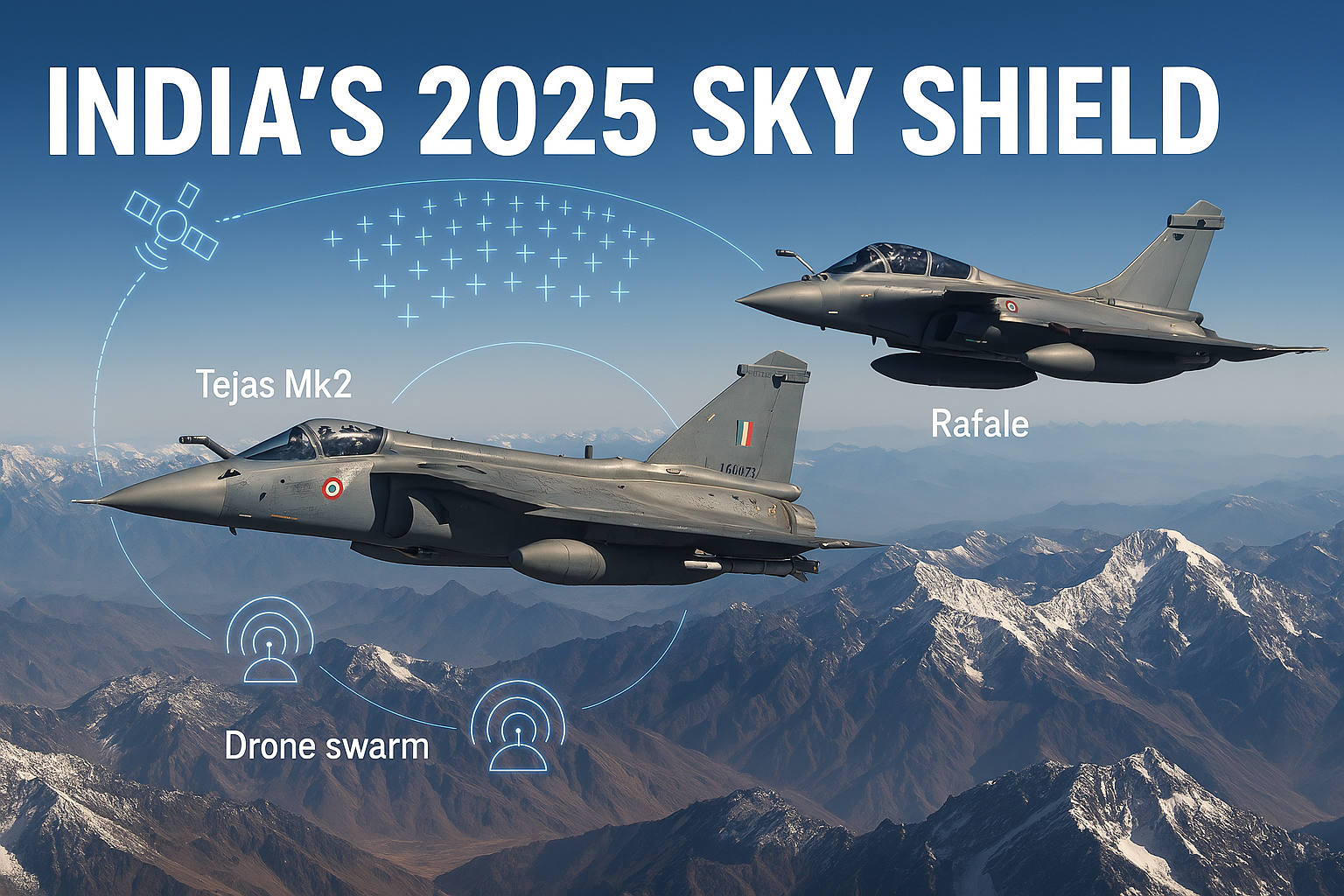
The Indian Air Force (IAF), the fourth largest in the world, is undergoing a historic transformation. As 2025 unfolds, the IAF’s modernization efforts have shifted from incremental upgrades to strategic overhauls, reflecting India’s broader aspirations of self-reliance, deterrence, and regional dominance.
Why 2025 Is a Landmark Year
The geopolitical climate, marked by persistent Chinese aggression along the LAC and Pakistan’s asymmetric tactics, has made modernization no longer optional. In response, the IAF Modernization Plan 2025 aligns with India’s “Atmanirbhar Bharat” (self-reliant India) initiative, while embracing cutting-edge aerospace technologies, multidomain operations, and AI-driven capabilities.
🔑 Key Priorities in IAF Modernization 2025
1. Rafale Edge and Beyond
The induction of 36 Dassault Rafale fighters has significantly enhanced India’s air superiority. But the IAF isn’t stopping there. The focus now is on acquiring 114 MRFA (Multi-Role Fighter Aircraft) under a competitive program involving Boeing, Saab, and Dassault again.
2. Indigenous Power: Tejas Mk2 & AMCA
India’s indigenization push is at full throttle with:
-
Tejas Mk2: A 4.5-generation multi-role fighter with enhanced payload and endurance.
-
AMCA (Advanced Medium Combat Aircraft): A stealth 5th-gen fighter under development, expected by 2030 but with core tech maturing in 2025.
These programs are central to the DRDO-IAF partnership, ensuring long-term strategic autonomy.
3. Drone Warfare: The New Battlefield
The IAF has acknowledged the shifting nature of aerial combat with a substantial investment in UAVs and UCAVs:
-
Heron TP armed drones from Israel are being deployed along LAC and LoC.
-
Swarm drones and loitering munitions are under testing via startups under iDEX and private giants like Adani and Tata.
📌 Related Read: How India Is Building Drone Swarm Capability
4. Combat Logistics: Heavy Lifters & Tankers
The acquisition of C-17 Globemasters, Chinooks, and Apache attack helicopters has modernized IAF’s airlift and close-air support capabilities. However, the IAF still lacks adequate mid-air refuelers. A joint leasing plan with France and the UK is on the table in 2025.
5. Air Defense & Multi-Domain Integration
IAF is now focusing on integrated air defense networks with:
-
S-400 Triumf systems from Russia being operational along the western and northern front.
-
Indigenous Akash NG and XRSAM (extended range SAMs) in development.
These systems, alongside ISRO’s GSAT military satellites, enable real-time battlefield coordination with Indian Army and Navy—a true step toward multi-domain operations (MDO).
🇮🇳 Strategic Objectives Driving the Modernization
-
Deterrence Through Technology: IAF aims to deter China and Pakistan by leveraging long-range strike platforms and surveillance.
-
Interoperability with global allies like the US, France, and Israel ensures India is prepared for joint ops and exercises like Garuda, Red Flag, and Cope India.
-
Human Capital: Training on simulators, AI-aided command systems, and a revamped Aerospace Command structure is strengthening officer corps and support roles.
🧭 Challenges Ahead
Despite this momentum, hurdles remain:
-
Budgetary constraints and delays in indigenous production timelines.
-
The ageing fleet of MiG-21s and Jaguars, many of which will retire by 2025-26.
-
Dependence on foreign OEMs for spares and upgrades, particularly from Russia amid the Ukraine war.
📈 Conclusion
Indian Air Force Modernization 2025 is more than just hardware upgrades—it’s a transformation of doctrine, technology, and indigenous capability. With India’s defense posture shifting toward proactive preparedness, the IAF will remain a vital pillar in India’s strategic architecture.
By investing in AI warfare, indigenous fighters, drone swarms, and integrated command structures, India is not just defending its skies—it is shaping the future of aerial dominance in Asia.