
Women-Led Development Key to Viksit Bharat, Says LS Speaker
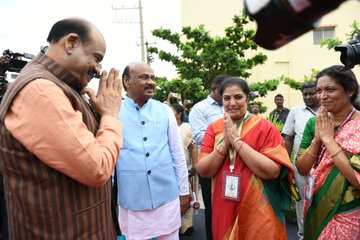
Tirupati witnessed a landmark moment in India’s democratic journey as Lok Sabha Speaker Om Birla inaugurated the first-ever National Conference of Committees on Empowerment of Women. The two-day conference, attended by representatives from more than 20 states, highlighted the crucial role of women’s leadership and gender-responsive policies in achieving the vision of Viksit Bharat by 2047.
Addressing the gathering, Shri Birla stressed that India can become an inclusive and developed nation only when its daughters are educated and self-reliant. He added that women-led development and child welfare form the foundation of national progress, ensuring that every woman becomes a principal architect of India’s growth story.


The Speaker underlined that women’s empowerment is not a one-time initiative but a continuous process requiring new laws, reforms, and participation at all levels. He said that women must have a greater presence from Panchayats to Parliament, ensuring inclusive decision-making that addresses long-standing challenges faced by women.
Highlighting the recently passed Nari Shakti Vandan Adhiniyam, Shri Birla described it as a historic step that provides women with their rightful place in governance. He recalled that it was the first Bill passed in the new Parliament building, reserving seats for women in the Lok Sabha and State Legislative Assemblies.
Legacy of Women Leaders and Freedom Fighters
Shri Birla paid tribute to women freedom fighters who broke barriers and redefined leadership during India’s independence movement. Their contributions in education, health, and social reforms laid the foundation for a more equal society. He also acknowledged the 15 women members of the Constituent Assembly, whose active role ensured that the Constitution enshrined gender-neutral principles of equality and justice.
Tracing India’s tradition of women’s leadership, he cited ancient scholars like Gargi and Anusuya, rulers such as Rani Rudrama Devi and Rani Lakshmibai, and modern leaders including women Presidents, Prime Ministers, and Chief Ministers. Today, women continue to excel in science, technology, sports, and governance, proving their capability as change-makers.
Focus on Inclusive Policy and Gender-Responsive Budgeting
The Tirupati Conference is centered around two key themes — Gender Responsive Budgeting and Empowering Women to Face Challenges of Emerging Technologies. These discussions aim to ensure that women are not just beneficiaries of policies but active shapers of India’s future.
Committees on Empowerment of Women, both at national and state levels, were praised for their non-partisan approach to scrutinizing policies. Shri Birla stressed that their recommendations should ensure that even the most marginalized women and children in remote areas get access to education, healthcare, and technology.
Viksit Bharat and the Role of Nari Shakti
Echoing the Prime Minister’s vision of Atmanirbhar Bharat, Shri Birla emphasized that economic independence for women is central to India’s journey towards Viksit Bharat. He noted that there is no sector where women are not contributing as innovators, guardians, and leaders. From village panchayats to national institutions, women are shaping the future of India.
The conference, held in the sacred city of Tirupati, also carried symbolic significance. Shri Birla offered prayers at the Sri Venkateswara Swami Temple before the event, stating that Tirupati — a land associated with devotion and sacrifice — was a fitting venue to reaffirm India’s resolve to put women and children at the heart of national development.