The fourth edition, which began on December 2, 2025, features cultural performances, exhibitions, language workshops and student exchange programmes that underline the festival’s dual purpose: deepen inter-regional empathy and create practical learning links between two distant cultural heartlands.
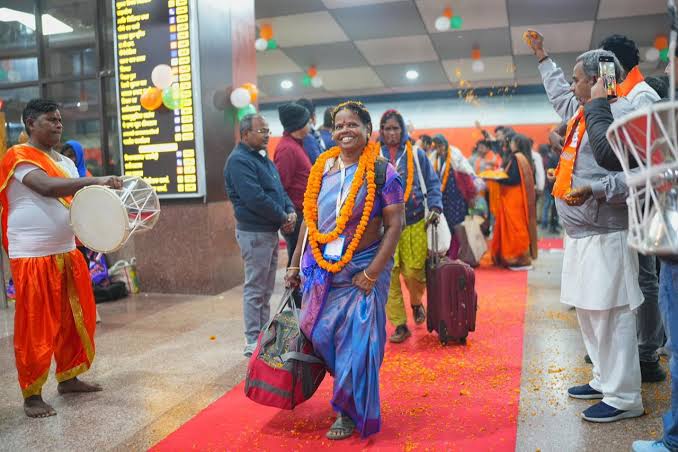 People-to-people exchange at scale
KTS 4.0 has brought more than 1,400 delegates to Varanasi across seven distinct groups students, teachers, women, artisans, media professionals, spiritual scholars and other professionals. The programme blends public performances with focused academic and language initiatives, encouraging sustained contact rather than episodic cultural display.
“Learn Tamil Tamil Karkalam,” this year’s motif, anchors a series of language workshops that aim to foster bilingual awareness among young learners. Participants are attending intensive Tamil lessons, guided tours of Tamil heritage sites in Varanasi and collaborative projects that pair schools and colleges from Uttar Pradesh and Tamil Nadu.
Sage Agasthya expedition and educational outreach
Among KTS 4.0’s flagship initiatives is the Sage Agasthya Vehicle Expedition a symbolic route from Tenkasi to Kashi that underscores historic cultural linkages. The Sangamam has also deployed 50 Tamil teachers to Varanasi schools and organised Tamil study tours for students from Uttar Pradesh, enabling classroom learning to be supplemented with cultural immersion on the ghats and temple precincts.
Organisers the Ministry of Education in coordination with IIT Madras and Banaras Hindu University (BHU) have designed the Sangamam to combine scholarship and spectacle. IIT Madras contributes academic coordination and language pedagogy support, while BHU facilitates local partnerships and on-the-ground logistics.
Traditional arts, livelihoods and local artisans
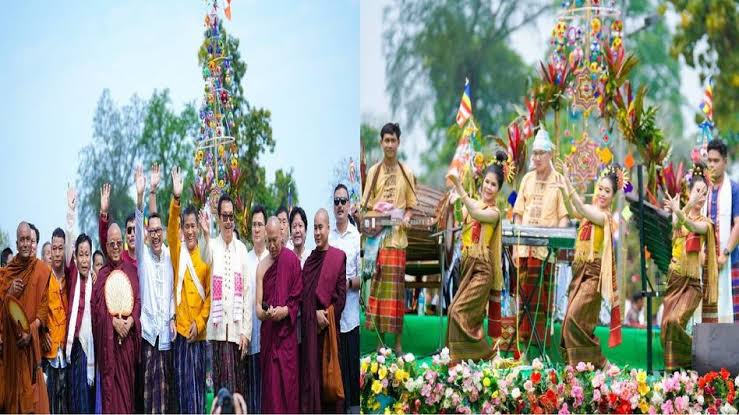
Performances of classical, folk and devotional arts have formed a key public-facing element of the Sangamam. Young artistes and craftspersons from Tamil Nadu presented traditional handicrafts and folk dances that resonated with Kashi’s ritual arts and temple traditions. Minister Jayant Chaudhary praised the role of such exchanges in promoting respect, dialogue and livelihood opportunities for artisans.
Exhibitions on handicrafts and live demonstrations have also opened markets for regional artisans, allowing visitors and delegations to purchase and commission work an economic angle that complements the event’s cultural objectives.
Education, research and institutional collaboration
Beyond performances, KTS 4.0 includes seminars and panels on language pedagogy, digital archiving of cultural materials, and collaborative curricula. The Sangamam’s academic strand emphasises sustained partnerships: student exchanges, faculty visits and joint research projects that can feed into long-term institutional linkages between universities in the two regions.
These measures align closely with the Government’s wider push to integrate cultural diplomacy into formal education, leveraging higher-education partners to sustain momentum beyond festival dates.
Why Kashi Tamil Sangamam matters
KTS exemplifies how cultural programmes can be designed for durability. By combining language learning, teacher deployment, heritage tours and market-facing artisan platforms, the Sangamam moves beyond symbolic gestures to produce durable educational and economic ties. It also reinforces the narrative that India’s vast linguistic and ritual diversity can be an asset for national cohesion.
For visitors and participants, the Sangamam has provided a rare opportunity to experience cross-regional fellowship from Tamil devotional music echoing along the Ganga to Varanasi’s temple arts interpreted by southern artistes.
Where to find official details
Organised by the Ministry of Education and coordinated by IIT Madras and BHU, Kashi Tamil Sangamam 4.0 is part of a broader set of cultural initiatives endorsed by the Government.