
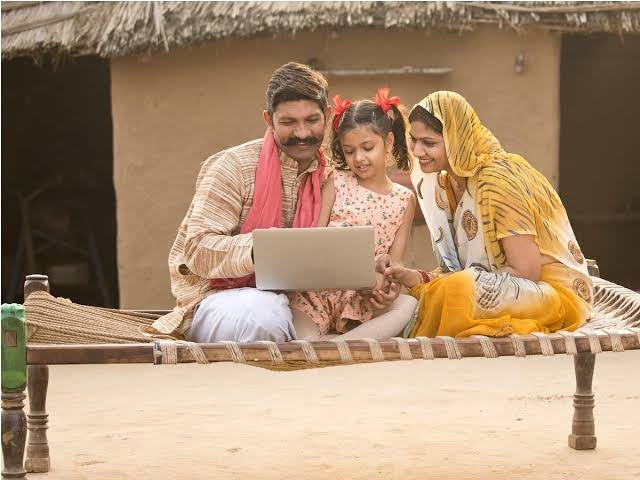
A recent national survey has brought to light the growing digital integration in the daily lives of young Indians, painting a hopeful picture of the country’s future. Conducted by the National Statistical Office (NSO) between January and March 2025, the Comprehensive Modular Survey: Telecom (CMS: T) focused on mobile and internet usage across India, particularly among the youth aged 15–29 years. The results highlight the deepening digital presence in both rural and urban communities, marking a step forward in the nation’s journey towards inclusive technological empowerment.


In rural India, nearly 97 percent of young individuals reported using mobile phones within the last three months, closely matching the urban usage rate of approximately 98 percent. Encouragingly, smartphone ownership among mobile phone users in this age group stands at 95.5 percent in rural areas and 97.6 percent in urban regions. These numbers reflect a significant digital shift even in regions where infrastructure has historically been a challenge.
Internet usage also shows promising trends. Around 92.7 percent of rural youth and 95.7 percent of their urban counterparts accessed the internet during the same period, indicating not only better connectivity but also growing digital literacy. The fact that approximately 99.5 percent of youth who perform online banking are now adept at using UPI platforms speaks volumes about the increasing comfort and trust in digital transactions among the younger population.
At the household level, the survey revealed that over 85 percent of Indian households now own at least one smartphone, and roughly 86 percent have internet access within their homes. This level of penetration signifies a remarkable transformation, particularly in how families stay informed, connected, and financially included.
More than 97 percent of young individuals reported using a mobile phone recently, a notable rise from 94.2 percent observed in the 2022–23 Comprehensive Annual Modular Survey. Additionally, nearly 85 percent of youth demonstrated the ability to send messages with attached files — a significant leap from previous years, underlining the growing proficiency in using ICT tools.
The survey, executed through computer-assisted personal interviews, was methodologically robust. It covered 4,382 sampling units and surveyed nearly 35,000 households, accounting for over 1.4 lakh individuals. The scale and precision of the study reflect the seriousness with which the government is tracking digital transformation as a key driver of social progress.
Yet, the report comes with a humble reminder: the data reflects estimates based on carefully selected samples and should be interpreted with appropriate caution, especially when viewed at the state or sub-state level. It also acknowledges that ICT skills were self-reported rather than tested, and that service-based online purchases were not part of the survey scope.
Despite these caveats, the CMS: T paints a heartening picture. It shows that young Indians—whether in the heart of bustling cities or in the far reaches of rural landscapes—are increasingly equipped to participate in a digital economy. This transformation is not merely technological but deeply social, offering new avenues for education, employment, and empowerment. Behind every percentage point lies a story of adaptation, aspiration, and the unyielding spirit of India’s youth to shape a more connected and inclusive future.