 Why Rare Earth Permanent Magnets Matter
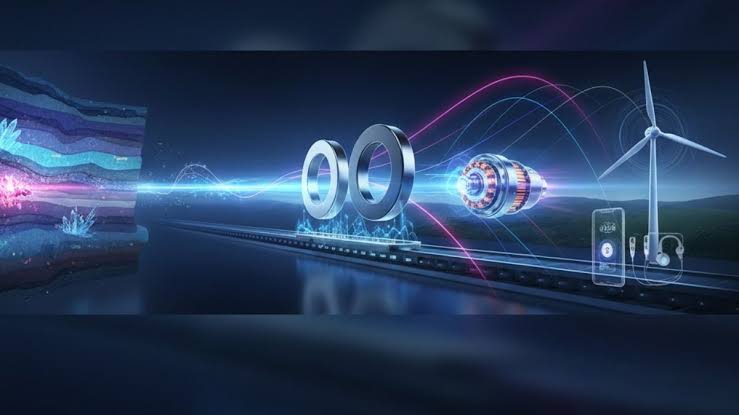
Rare Earth Permanent Magnets are among the strongest known magnetic materials and form the backbone of high-performance technologies. Their compact size and high magnetic strength make them indispensable for electric vehicle motors, wind turbine generators, electronics, aerospace systems and defence equipment. As India scales up electric mobility, renewable energy deployment and advanced manufacturing, ensuring a reliable domestic supply of REPMs has become a strategic necessity rather than an option.
India’s Resource Strength and Import Challenge
India possesses substantial rare earth resources, including an estimated 7.23 million tonnes of rare-earth oxides contained within monazite deposits across coastal and inland regions such as Andhra Pradesh, Tamil Nadu, Odisha, Kerala, West Bengal and Gujarat. Additional reserves have also been identified in Gujarat and Rajasthan.
Despite this resource base, India currently relies heavily on imports for finished permanent magnets. Official trade data shows that between 2022–23 and 2024–25, imports accounted for over 80 percent of domestic demand by volume, with China being the dominant supplier.
Key Features of the ₹7,280 Crore REPM Scheme
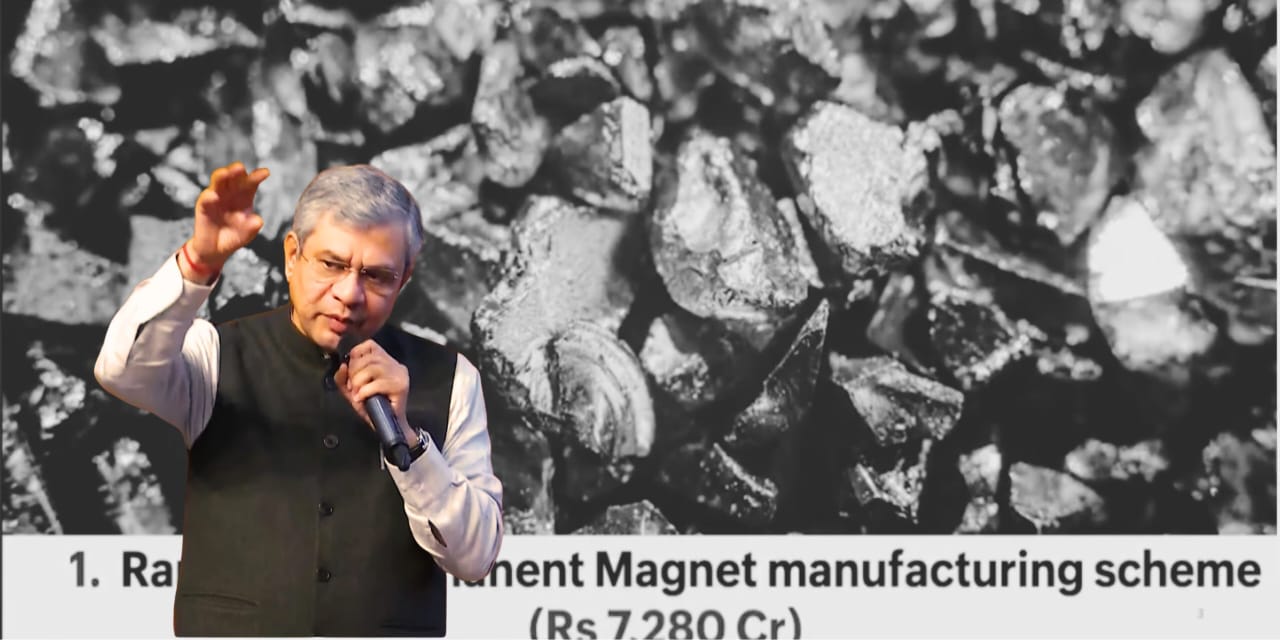
The approved scheme seeks to establish a complete value chain within India, spanning from rare-earth oxide processing to finished magnet production. The total capacity of 6,000 MTPA will be allocated through a global competitive bidding process to up to five beneficiaries.
Each selected manufacturer will be eligible to set up facilities with a maximum capacity of
1,200 MTPA, ensuring both scale and diversification. The scheme includes ₹6,450 crore in sales-linked incentives over five years and ₹750 crore as capital subsidy for advanced facilities.
Implementation Timeline and Governance
The scheme will be implemented over a seven-year period, including a two-year gestation phase for plant establishment followed by five years of incentive-linked production.
Disbursements will be milestone-based, ensuring transparency and accountability.
This structured approach is designed to provide stability during initial market development
while encouraging timely capacity creation and operational efficiency.
Alignment with National Priorities
The REPM initiative complements India’s National Critical Minerals Mission (NCMM),
approved in January 2025, which focuses on securing sustainable supplies of critical minerals from exploration to end-use manufacturing.
It also aligns with amendments to the Mines and Minerals (Development and Regulation) Act, which opened exploration and mining of critical minerals to private participation and
introduced new licensing mechanisms.
Global Context and Strategic Opportunity
Recent global disruptions in rare-earth supply chains have highlighted the risks of
concentrated sourcing. India has responded by strengthening international partnerships
with mineral-rich countries and participating in multilateral initiatives such as the
Minerals Security Partnership and Indo-Pacific Economic Framework.
Complementing these efforts, Khanij Bidesh India Limited (KABIL) continues to secure
overseas mineral assets to support domestic manufacturing for clean energy,
electronics and defence sectors.
Driving Long-Term Growth and Self-Reliance
The establishment of a domestic REPM manufacturing ecosystem is expected to generate employment, attract technology-driven investments and deepen India’s participation
in global advanced-materials value chains.
By integrating resource availability, policy reform and industrial capability, the scheme marks a significant step towards resilient supply chains, cleaner energy systems
and sustained economic growth.