In a significant achievement for public health, the Ministry of Health & Family Welfare has successfully screened over 10.18 crore women aged 30 and above for cervical cancer. This milestone marks a historic step forward in India’s journey towards accessible and preventive healthcare for women.
Massive Health Drive Under Ayushman Arogya Mandirs
This achievement is part of the ongoing initiative under the National Health Mission (NHM) and the Ayushman Arogya Mandirs (AAMs). These centers serve as crucial hubs for the population-based screening of Non-Communicable Diseases (NCDs), including cervical cancer.
The campaign specifically targets women aged 30 to 65 years, with screenings conducted through Visual Inspection with Acetic Acid (VIA) at Sub-Health Centres and Primary Health Centres. Trained health workers carry out these screenings, ensuring early detection and timely referrals.
 ASHAs: The Backbone of Community Health
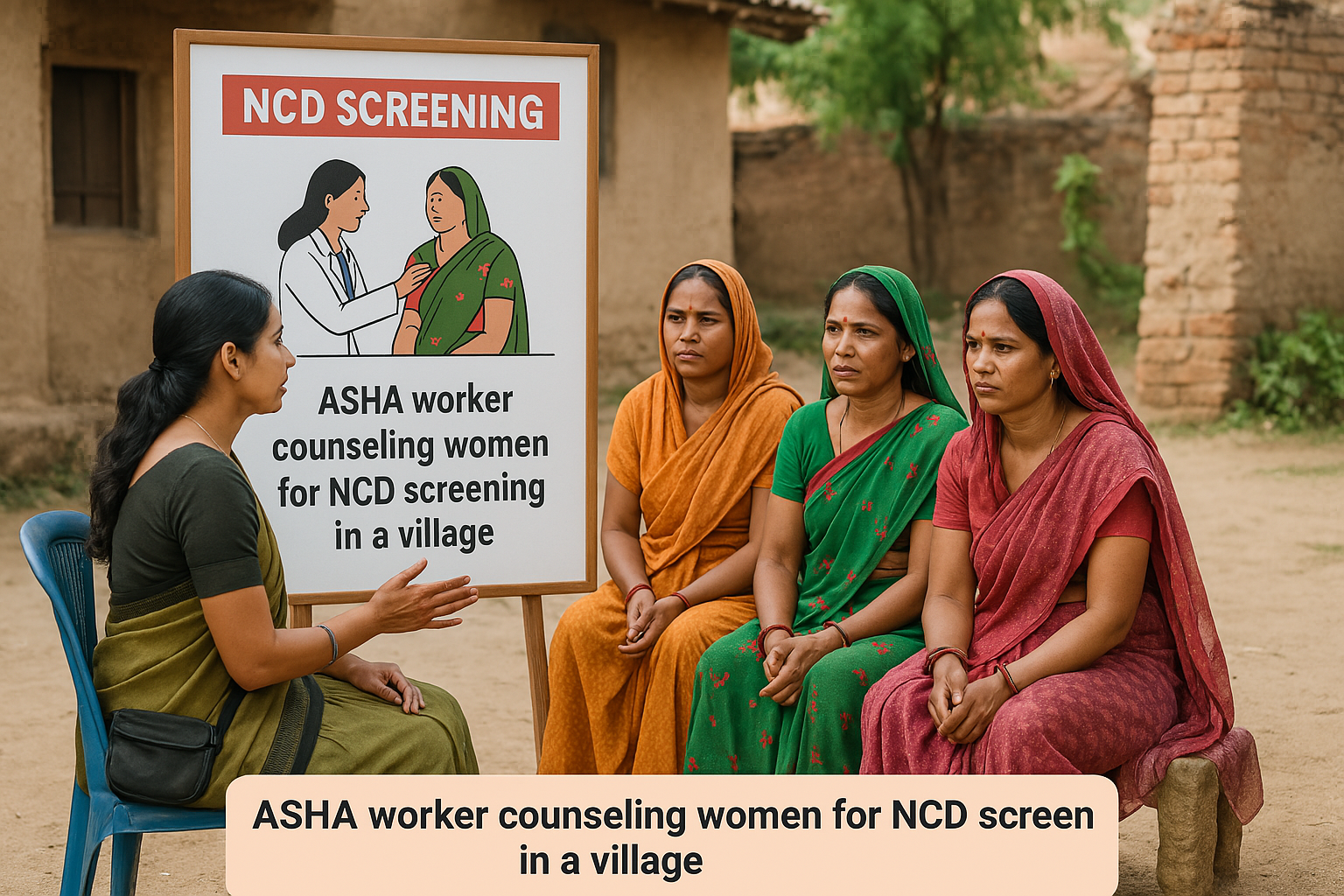
At the heart of this campaign are the Accredited Social Health Activists (ASHAs). These frontline workers use the Community Based Assessment Checklist (CBAC) to identify women at risk. They motivate women to attend health check-ups and participate in screenings at their nearest AAMs.
ASHAs also play a vital role in spreading awareness about the importance of early detection. They educate communities on adopting healthy lifestyles to prevent the onset of NCDs, including cervical cancer.
Boost from the NCD Screening Campaign
To accelerate efforts, the Ministry launched a special NCD Screening Campaign from 20th February to 31st March 2025. This time-bound push resulted in a major spike in the number of women screened across the country.
According to data from the National NCD Portal as of 20th July 2025, 10.18 crore women out of an estimated 25.42 crore eligible population have already been screened. This represents nearly 40% coverage—a significant feat for a country as diverse and vast as India.
Technology and Awareness Go Hand in Hand
The government is also leveraging technology and communication platforms to boost participation. Awareness is being raised through:
- Print and electronic media
- Social media campaigns
- Health-themed days like World Cancer Day and National Cancer Awareness Day
These campaigns emphasize preventive health practices and encourage regular screenings. The focus is clear — catching diseases early saves lives and reduces long-term healthcare costs.
States Empowered to Drive Change
Under NHM, individual States and Union Territories receive dedicated funding for awareness activities. These resources are allocated based on their Programme Implementation Plans (PIPs).
This decentralized approach allows states to tailor strategies based on local demographics, ensuring higher outreach and community participation.
Leadership Speaks on the Achievement
The Union Minister of State for Health and Family Welfare, Shri Prataprao Jadhav, shared this achievement in a written reply to the Lok Sabha. He emphasized that the screening program is a clear reflection of the government’s commitment to preventive healthcare and women’s well-being.
Cervical Cancer in India: A Persistent Threat
Cervical cancer remains one of the leading causes of cancer-related deaths among Indian women. According to the Indian Council of Medical Research (ICMR), thousands of lives could be saved every year with timely screening and treatment.
Screening through VIA is a low-cost, high-impact method, especially effective in low-resource settings. This makes it ideal for wide-scale use in India’s rural and semi-urban areas.
A Model for Global Preventive Healthcare
India’s scale and speed in implementing this program serve as a model for public health initiatives worldwide. The integration of Ayushman Arogya Mandirs, trained ASHAs, and technology-driven outreach showcases what’s possible with focused policy and grassroots execution.
As India continues to expand its health infrastructure, this campaign sets a strong foundation for tackling other NCDs like diabetes, hypertension, and breast cancer.
What Lies Ahead?
With the foundation laid, the next steps involve:
- Increasing screening coverage beyond 40%
- Strengthening referral pathways for VIA-positive cases
- Enhancing training programs for ASHAs and health workers
- Deploying mobile units for remote and inaccessible areas
The momentum must be sustained. Awareness, accessibility, and accountability will be key pillars going forward.
Conclusion
More than 10 crore women screened. Millions made aware. Thousands potentially saved.
This is not just a statistic. It is a testament to India’s commitment to women’s health and preventive medicine. Through Ayushman Arogya Mandirs and NHM, the country is stepping into a future where every woman has the right to early detection and quality care.
As the program scales further, it reaffirms one simple truth: Prevention is powerful. Prevention saves lives.