AI as a Universal Skill for the Next Generation
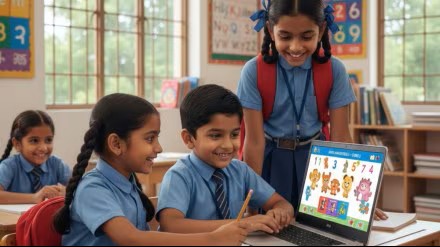
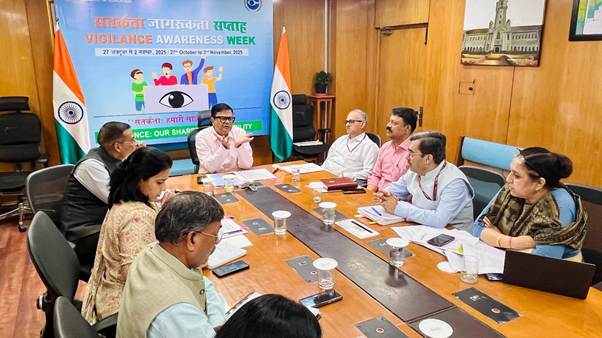
During a high-level stakeholder consultation held on October 29, 2025, Shri Sanjay Kumar, Secretary, DoSE&L, emphasized that AI education must be treated as a “basic universal skill” linked to “The World Around Us.” He noted that AI and CT learning should nurture curiosity, ethical understanding, and creativity among children, preparing them for the digital future.
“Our job as policymakers is to define the minimum threshold and continuously re-evaluate it based on changing societal and technological needs,” Shri Kumar stated, highlighting that inclusivity and broad-based learning will be the cornerstones of this reform.
 Collaborative Curriculum Development Underway
The Central Board of Secondary Education (CBSE) has constituted an expert committee chaired by Prof. Karthik Raman from IIT Madras to develop the curriculum. The process involves close coordination between CBSE, NCERT, Kendriya Vidyalaya Sangathan (KVS), Navodaya Vidyalaya Samiti (NVS), and state education boards to ensure national consistency and contextual relevance.
The committee will design modules that integrate AI and CT concepts within existing subjects, encouraging practical learning and responsible technology use. The curriculum will also introduce the idea of “AI for Public Good,” focusing on ethical applications that benefit communities.
Teacher Training and Resource Development
The success of the initiative will depend heavily on capacity building. Teacher training modules under the NISHTHA platform will serve as the foundation for curriculum delivery. Additionally, learning-teaching materials, handbooks, and digital resources are expected to be ready by December 2025.
Joint Secretary (I&T) Smt. Prachi Pandey stressed the importance of adhering to the rollout timeline, ensuring that educators are fully equipped before the 2026–27 academic year begins.
Building an Ethically-Aware AI Generation
The AI & CT curriculum will not only introduce students to coding and algorithms but also to ethical AI principles and problem-solving skills relevant to real-world challenges. The program aims to foster computational thinking from an early age, making students not just users but creators of technology.
Officials noted that cross-national and international board comparisons will be encouraged, but the final framework will remain India-specific, addressing the country’s unique socio-economic and linguistic diversity.
Key Takeaways from the Initiative
- AI and Computational Thinking to be introduced from Class 3 onwards in 2026–27.
- Curriculum aligned with NEP 2020 and NCF SE 2023.
- Teacher training through NISHTHA and associated institutions.
- Development of handbooks, digital content, and training modules by December 2025.
- Ethical, inclusive, and practical approach to AI education with a focus on “AI for Public Good.”