
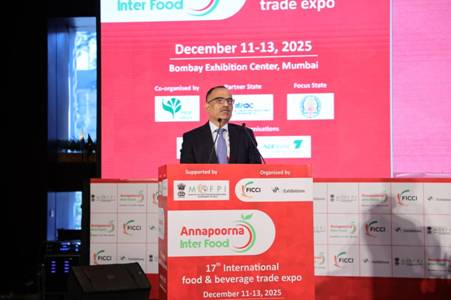
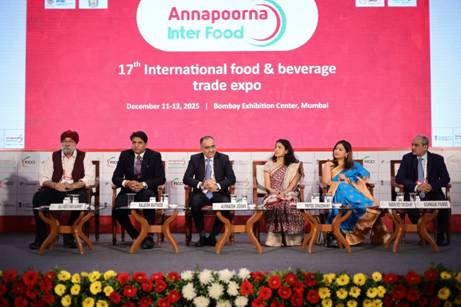

MoFPI’s flagship schemes were front and centre at Annapoorna. Joshi highlighted capital subsidies and targeted assistance under the PM Kisan Sampada Yojana (PMKSY) and the PM Formalisation of Micro Food Processing Enterprises (PMFME) scheme. The Ministry offers financial aid for cold chains, food-testing labs, incubation centres and cluster-based processing units, with capital support often ranging between 35%–50% for critical infrastructure.
These interventions aim to reduce post-harvest losses, increase shelf life and open higher-margin markets for farmers, while also creating jobs in processing, logistics and retail segments.
Gen Z and changing consumption patterns
Industry research presented at the event by Nandini Roy Chowdhury of Future Market Insights emphasised Gen Z’s outsized influence. Gen Z demands transparency on provenance and production and discovers brands through creators and visuals rather than long-form advertising. This shift is reshaping product development, packaging and supply-chain traceability requirements.
Roy Chowdhury noted that the domestic market for kitchen appliances an indirect proxy for food habits is projected to surge, reflecting evolving home-food preparation trends and convenience consumption among younger cohorts.
From farmgate to factory: investment and state push
State agencies used Annapoorna to showcase investor-ready opportunities. Rajesh Rathod of the Madhya Pradesh Industrial Development Corporation said his state is emerging as an attractive destination for food-processing units, pointing to improved connectivity, available land and a ready workforce. Such state-level momentum complements central incentives and helps accelerate project siting and implementation.
Exhibitors ranged from micro-processors and SHG groups to large exporters and multinational buyers, illustrating how policy and market demand are aligning across scales.
Women, SHGs and inclusive growth
MoFPI underlined support specifically for women-led self-help groups (SHGs) and micro-entrepreneurs. Seed funding, training and market linkages were cited as key enablers enabling SHGs to graduate from home-based units to formal micro-enterprises, integrating rural livelihoods into modern value chains.
Standards, safety and export readiness
Speakers emphasised the importance of food-safety and export compliance. The exhibition offered practical guidance on FSSAI standards and APEDA’s export norms, helping producers understand traceability, testing and certification steps required for overseas markets.
FICCI and exhibition organisers also facilitated B2B matchmaking and knowledge sessions to connect exporters with domestic suppliers who meet international quality benchmarks.
Industry view: reconnecting the value chain
FICCI’s Balvinder Singh Sawhney highlighted Annapoorna’s role in post-pandemic recovery: reconnecting producers, processors and buyers to meet accelerated demand for safe, convenient and high-quality food products. Ashwani Pande, CEO of VA Exhibitions, noted the show’s evolution into a platform where policy, trade and technology meet to accelerate sector transformation.
What this means for farmers and consumers
Speakers agreed that the food-processing sector can be a bridge between higher farm productivity and consumer choice. By reducing wastage, improving storage and enabling value-added products, processing creates price signals that reward farmers and diversify consumer options. When coupled with credit, infrastructure and skill development, processing has the potential to transform rural incomes and urban food experiences alike.