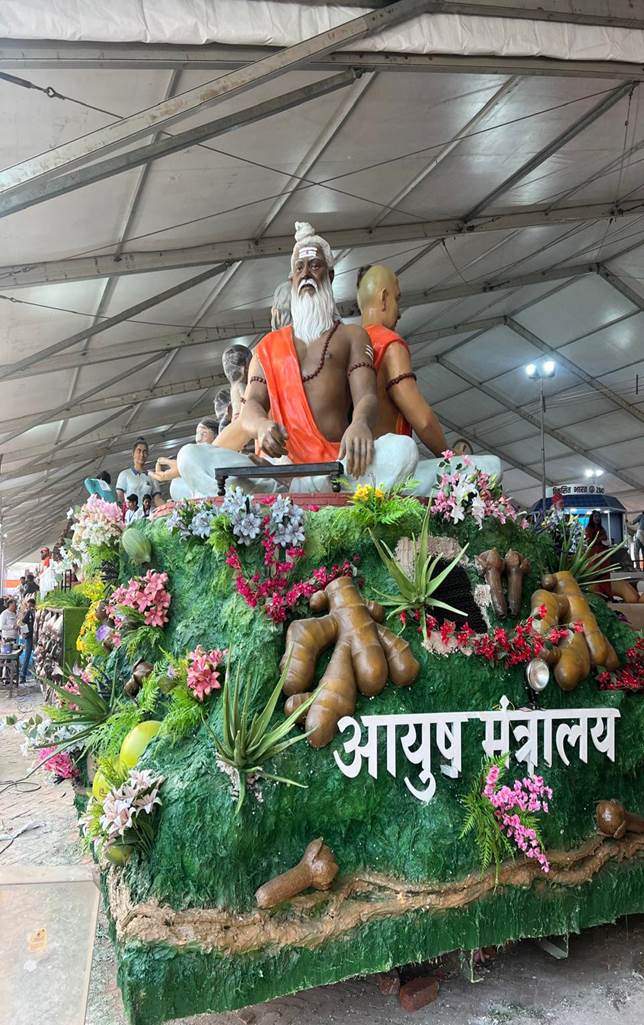
The Ministry of Ayush is set to present a powerful narrative of India’s holistic healthcare journey at the Republic Day Parade 2026, seamlessly blending ancient medical wisdom with modern public health systems. The Ayush tableau, themed “Ayush ka Tantra, Swasthya ka Mantra,” highlights how traditional systems of medicine are being integrated into contemporary healthcare under the National Ayush Mission (NAM).
 Celebrating the Foundations of Ayush
At the heart of the tableau lies a symbolic tri-sculptural depiction of Acharya Charak, Acharya Patanjali and Acharya Agastya. The revered sages are shown seated around a lush mound of medicinal plants, representing the harmony between nature and human well-being that forms the foundation of Ayush.
This visual centrepiece reflects India’s ancient understanding that health emerges from balance—between body, mind, environment and lifestyle.
Ayush and Nation-Building
Conceptualised by the Ministry of Ayush, the tableau narrates India’s journey of nation-building through health, self-reliance and civilisational knowledge. It demonstrates how holistic well-being has been intrinsic to the idea of Vande Bharat, from ancient times to a confident, future-ready nation.
The presentation underscores health as a strategic pillar of national resilience, inclusivity and social harmony.
Minister Highlights Global Relevance
Union Minister of State (IC), Ministry of Ayush, Shri Prataprao Jadhav, said the tableau reflects India’s holistic approach to healthcare, focusing on balance, prevention and overall well-being. He noted that Ayush systems, guided by the Aatmanirbhar Bharat vision, are empowering communities and offering credible solutions to modern lifestyle-related challenges.
According to the Minister, Ayush today stands as a symbol of India’s confidence in its heritage and its growing leadership in global wellness.
From Vision to Implementation
Secretary, Ministry of Ayush, Vaidya Rajesh Kotecha, highlighted that the tableau reflects the transition of Ayush from vision to execution. Through the National Ayush Mission, traditional systems are being systematically integrated into India’s public health framework.
He pointed to strengthened quality assurance, education, research and digital platforms that are expanding the reach and credibility of Ayush services nationwide.
Technology-Driven Wellness
The narrative progresses to India’s emergence as a digitally empowered wellness leader. Visual elements showcase technology-driven initiatives under NAM that enhance accessibility and transparency.
Flagship programmes such as Supraja for neonatal care, Vayomitra for elderly well-being and Ayurvidya for introducing Ayush concepts in schools highlight a life-cycle approach to healthcare.
Holistic Mind-Body Balance
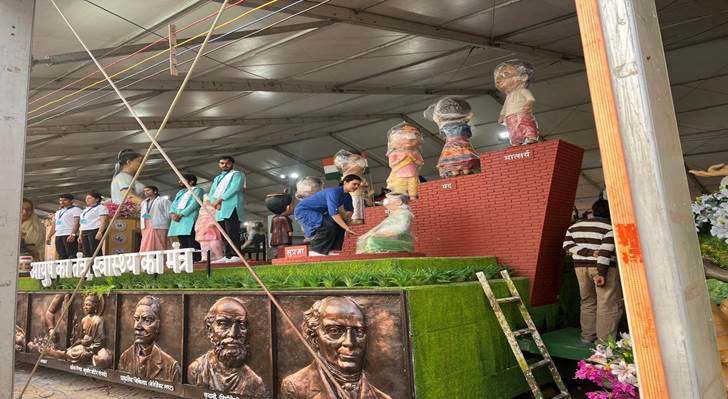
An artistic depiction of Arishadvarga the six inner enemies through expressive puppetry illustrates how Ayush practices promote mental clarity and emotional balance. Community-based healthcare delivery is represented through Ayushman Arogya Mandir (Ayush).
Visuals of Yoga, commonly used Ayush medicines and meditative forms symbolise harmony of body, mind and spirit.
Diversity, Digital Outreach and Education
The tableau also celebrates India’s diverse therapeutic traditions with three-dimensional murals depicting Marma therapy, Shirodhara and Cupping. Interactive mascots highlight digital platforms such as Y-Break Pro, WHO mYoga, Namaste Yoga and Prakriti Parikshan.
The presentation concludes with a depiction of a Government Ayurveda Medical College, symbolising institutional continuity, education and excellence.