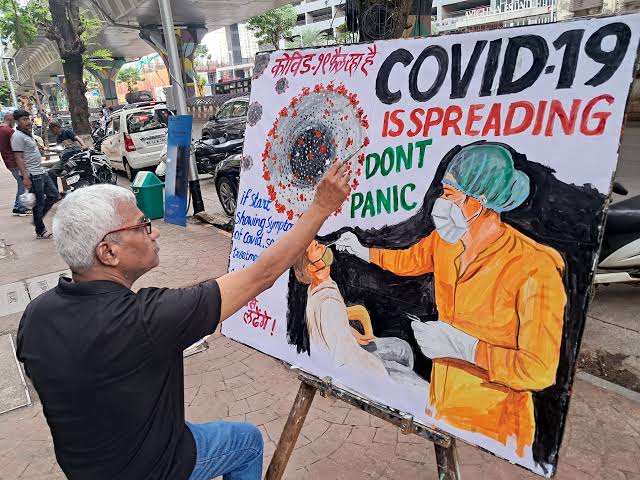
As COVID-19 cases begin to rise once again across several parts of India, health authorities are urging calm but vigilance. Dr. Rajiv Bahl, Director General of the Indian Council of Medical Research (ICMR), emphasized that while the current situation is being closely monitored, there is no immediate cause for alarm.
Speaking on the matter, Dr. Bahl explained that the ICMR is tracking the surge through its Integrated Disease Surveillance Programme (IDSP), which gathers real-time data from across the country. The organization is primarily examining three critical factors: the transmissibility of the virus, the extent to which it is able to evade existing immunity (whether through prior infection or vaccination), and the severity of infections—especially among individuals without underlying health conditions.
“There has been a gradual increase in cases—first in southern states, then western, and now in the north,” Dr. Bahl said. “We are watching the trends carefully, but the current variants do not appear to be causing serious illness.”
New variants, including the LF.7, XFG, JN.1, and NB.1.8.1 series, have been identified primarily in South and West India. These are under genomic surveillance, and according to global health bodies like the World Health Organization (WHO), they remain categorized as “Variants Under Monitoring,” rather than the more concerning classifications. So far, these variants have not demonstrated heightened severity, though their presence is believed to be driving a spike in cases in other parts of Asia, including China.
Despite the uptick in infections, health officials across various states are echoing a consistent message: the vast majority of cases remain mild. In Delhi, the health department reported 104 active cases, with Health Minister Pankaj Singh noting that symptoms resemble those of a common viral fever. He reassured the public that hospitals have been asked to stay prepared purely as a precautionary measure, not in response to any alarming trends.
In Karnataka, Health Minister Dinesh Gundu Rao also confirmed that there is no significant strain on the healthcare system. “We currently have 47 active cases. None are critical, and all are recovering at home,” he said. The state has already begun distributing RT-PCR kits to district and medical college hospitals to ensure readiness in case of further escalation.
Dr. Bahl reiterated the importance of staying vigilant without giving in to panic. “So far, the severity remains low. There’s no cause for fear, but we must remain prepared and continue monitoring closely,” he advised.
As the country reflects on the hardships endured during earlier waves of the pandemic, this resurgence serves as a reminder that COVID-19 has not fully disappeared. However, with robust surveillance systems in place, a well-informed public, and lessons learned from the past, India is better equipped to manage the evolving situation with both caution and compassion.