 Focus on Sustainable and Responsible Farming
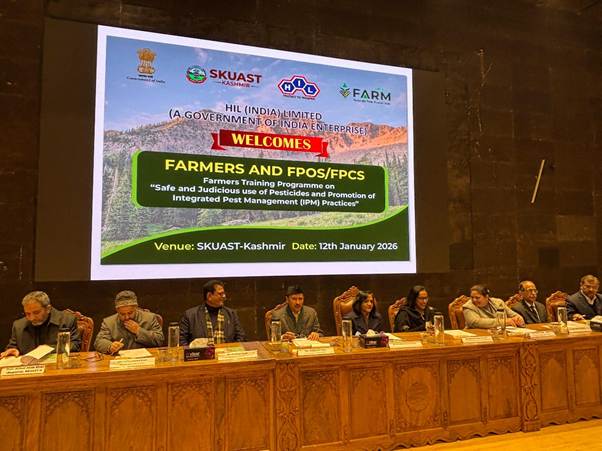
DCPC Secretary Ms. Nivedita Shukla Verma, who graced the event as the Chief Guest, underlined the need for regulated pesticide usage to ensure long-term soil health, farmer safety, and consumer well-being. She stressed that excessive reliance on chemical pesticides poses risks not only to the environment but also to human health and export credibility of Indian agricultural produce.
Ms. Verma highlighted that farmer education, awareness generation, and the adoption of IPM practices are critical strategies to curb pesticide misuse. She appreciated the collaborative efforts of HIL (India) Limited and SKUAST-K in bringing scientific knowledge directly to farmers.
Inter-Ministerial and Institutional Participation
Dr. Maninder Kaur Dwivedi, Additional Secretary in the Ministry of Agriculture and Farmers Welfare, attended the programme as the Guest of Honour. She emphasised the role of universities, extension services, and public sector enterprises in strengthening India’s farm advisory ecosystem.
Senior officials from the DCPC, the Ministry of Agriculture and Farmers Welfare, UNIDO, HIL (India) Limited, SKUAST-K, and the Department of Agriculture, Kashmir, were present, reflecting a strong inter-ministerial and institutional commitment to sustainable agriculture in the region.
Strong Farmer Participation and Knowledge Sharing
The programme witnessed enthusiastic participation from 524 farmers drawn from Srinagar and neighbouring districts. Interactive technical sessions covered topics such as safe handling of pesticides, dosage management, pest surveillance, and the economic and ecological benefits of IPM.
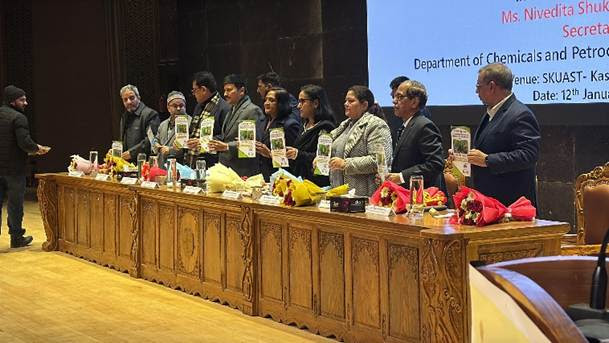
A major highlight was the release of an Integrated Pest Management Compendium for regional vegetable crops. The compendium has been designed as a practical field-level guide to support farmers and extension workers in making informed pest control decisions.
Showcasing Local Produce and Farmer Enterprises
Sixteen Farmer Producer Organisations (FPOs) from the Srinagar region showcased locally produced and value-added agricultural products during the event. These included honey, saffron, apricot-based products, and chillies, reflecting the region’s agricultural diversity and entrepreneurial potential.
The exhibition provided a platform for farmers to interact with officials and experts while highlighting the importance of linking sustainable farming practices with market opportunities.
MoU Signed for UNIDO-GEF FARM Project
In a significant development, an MoU was signed between HIL (India) Limited and SKUAST-K for the joint implementation of the GEF/UNIDO FARM Project (Financing Agrochemical Reduction and Management) in the Kashmir region. The project aims to reduce risks from hazardous agrochemicals while promoting environmentally sound pest management practices.
The partnership is expected to strengthen research, training, and field-level implementation of agrochemical reduction strategies, aligning with India’s broader goals of sustainable and climate-resilient agriculture.
Aligning with National Agricultural Priorities
The DCPC initiative aligns with the Government of India’s emphasis on sustainable farming, farmer safety, and responsible chemical management. It complements ongoing efforts under various national programmes to promote balanced fertiliser and pesticide use.
Officials noted that such region-specific training programmes are essential for translating policy objectives into practical action on the ground. More similar initiatives are expected to be rolled out in other agricultural regions of the country.