Byrnihat Tops, Delhi Follows in Mid-Year Air Pollution Report
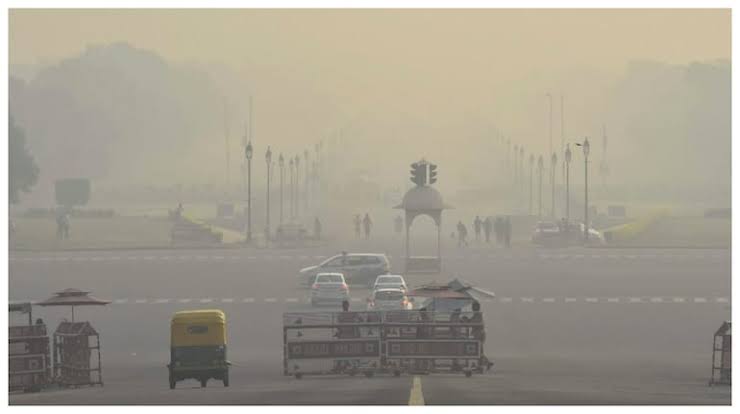
In a worrying trend, Delhi has ranked as India’s second most polluted city during the first half of 2025, according to a new mid-year report released by the Centre for Research on Energy and Clean Air (CREA).
The national capital recorded 29 ‘very poor’ air quality days and just three ‘good’ air days between January and June 2025. The average PM2.5 level in Delhi stood at 87 µg/m³, which is twice the National Ambient Air Quality Standards (NAAQS).
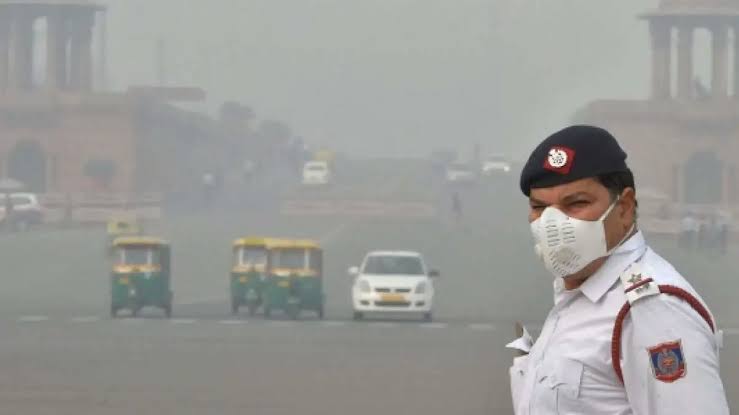 Most Polluted: Byrnihat in Assam-Meghalaya
The dubious honor of the most polluted city went to Byrnihat, a border town between Assam and Meghalaya. It recorded a PM2.5 average of 133 µg/m³. Out of 182 days, Byrnihat saw:
- 75 days in the ‘very poor’ category
- 38 ‘moderate’ days
- 27 ‘poor’ days
- 13 ‘severe’ days
- 0 ‘good’ days
This makes Byrnihat the worst performer in the country in terms of year-round air quality.
Delhi’s Struggle: Vehicle Bans Not Enough
The report acknowledges that Delhi’s end-of-life vehicle ban has helped reduce emissions. However, CREA experts emphasize that focusing solely on vehicles overlooks other major contributors.
Thermal power plants, industries, and construction dust remain major unchecked sources. Out of 11 coal-based plants near Delhi, only two—NTPC Dadri and Mahatma Gandhi Power Plant—have operational Flue Gas Desulfurization (FGD) units.

Caption: Coal-based power plant near Delhi without FGD systems
Calls for a Multi-Sectoral Pollution Strategy
According to CREA, Delhi needs a multi-sectoral pollution control strategy. While the transport and agriculture sectors face strict regulations, industrial and power sectors escape scrutiny.
This selective enforcement weakens overall pollution control efforts. Without sector-wide measures, current gains could be quickly reversed.
Cleanest City: Aizawl Sets an Example
On a positive note, Aizawl in Mizoram emerged as the cleanest city in India in the first half of 2025. With an average PM2.5 level of just 8 µg/m³, Aizawl is a model for sustainable urban living.
Other clean cities in the top 10 included locations in Karnataka, Tamil Nadu, Uttar Pradesh, Manipur, and Madhya Pradesh.
India’s Air Crisis: 259 Cities Exceed WHO Standards
The CREA report also found that 259 out of 293 monitored cities breached WHO’s PM2.5 standards by mid-2025. This exposes millions to health risks such as asthma, heart disease, and lung infections.
In contrast, only three cities exceeded India’s outdated NAAQS limit—showcasing the gap between global health guidelines and Indian benchmarks.
Urgent Reforms Needed in National Standards
The National Ambient Air Quality Standards, last updated in 2009, do not reflect recent global research on pollution’s health impacts. Experts are urging the government to align NAAQS with WHO targets.
This would push cities to take real action under the National Clean Air Programme (NCAP). As of now, several highly polluted cities are not even covered under NCAP.
Conclusion: Pollution Knows No Boundaries
The 2025 mid-year report proves that air pollution is a national challenge, not just a Delhi problem. Whether it’s Byrnihat in the Northeast or Sasaram in Bihar, India’s air remains dangerously toxic in many places.
Without a serious shift to comprehensive and inclusive environmental governance, isolated efforts like vehicle bans will fall short.
It’s time to act—and act fast.