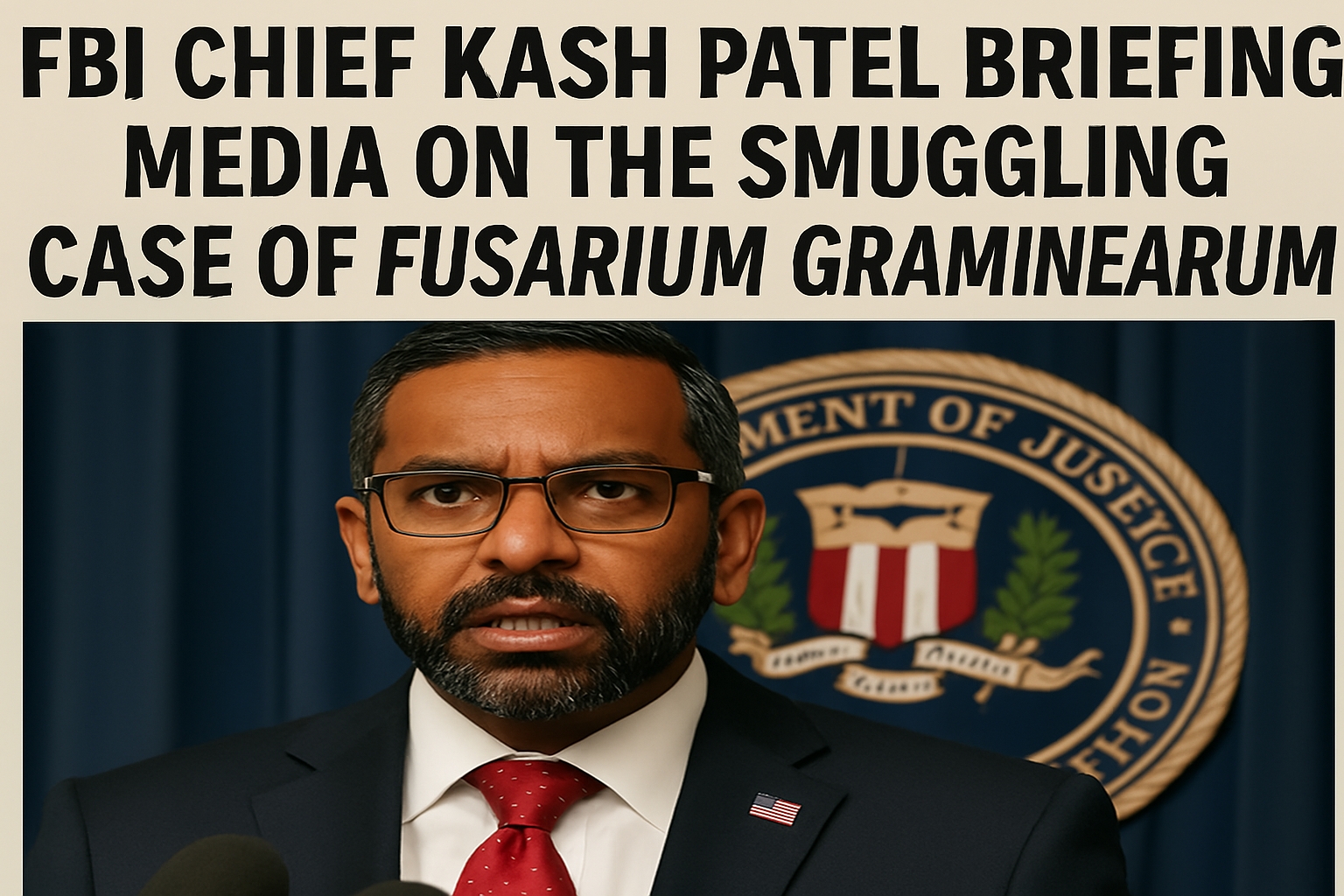
In a major development raising national security concerns, the FBI has arrested a Chinese researcher, Yunqing Jian, for allegedly smuggling a dangerous crop-killing fungus known as Fusarium graminearum into the United States. FBI Director Kash Patel confirmed the arrest, calling it an act of “agroterrorism.”
 Jian, who was working at the University of Michigan, is accused of smuggling the fungus with the help of her boyfriend, Zunyong Liu, who is also facing charges. Both have been charged with conspiracy, smuggling, providing false statements, and visa fraud.
What is Fusarium graminearum?
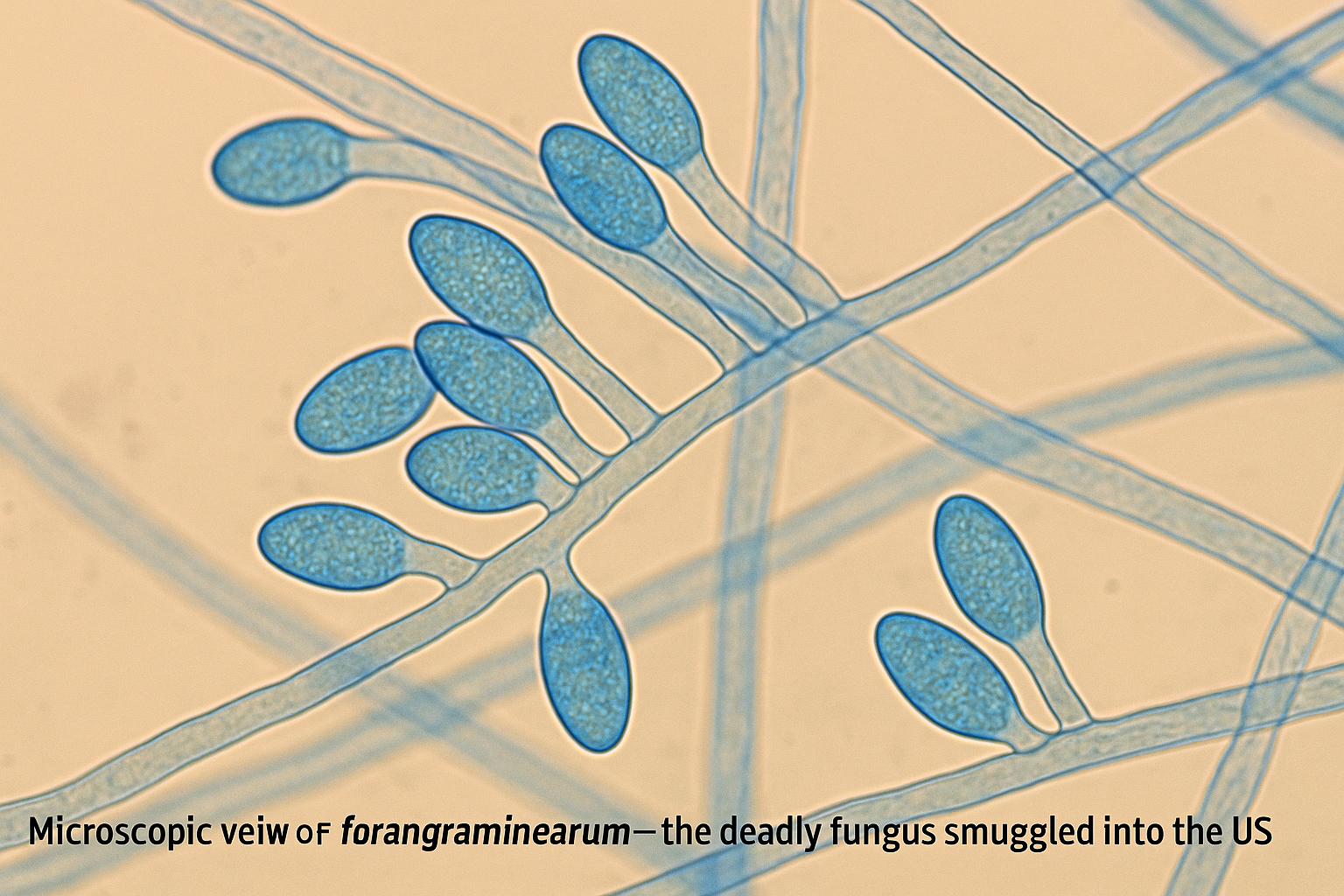
The fungus in question, Fusarium graminearum, causes a disease called “head blight,” which affects major crops like wheat, maize, barley, and rice. The disease not only reduces crop yield but also contaminates grains with toxins, posing serious health risks to both humans and livestock.
FBI Chief Patel warned,
“This fungus is responsible for billions of dollars in economic losses around the world each year and could seriously disrupt America’s food supply if intentionally spread.”
Connections to Chinese Government
According to Patel’s social media post, Jian had received prior funding from the Chinese government to work on this fungus back in China. He also noted her loyalty to the Chinese Communist Party (CCP). These connections have heightened suspicions that the act may be part of a larger plan by the CCP to infiltrate US institutions and compromise national food security.
Patel stated,
“The CCP is working around the clock to deploy operatives and researchers to infiltrate American institutions and target our food supply. These actions threaten not only our economy but also American lives.”
How the Fungus Was Smuggled
Jian allegedly brought the fungus into the country disguised as research material. Her partner Liu, who works at a Chinese university, is said to have done the same, smuggling samples through Detroit Metropolitan Airport. Initially denying the act, Liu later admitted to the charges during questioning.
The smuggled samples were reportedly intended for research at the University of Michigan, raising concerns about the misuse of academic platforms for unlawful activities.
Joint Investigation and Charges
The case was jointly investigated by the FBI and US Customs and Border Protection. Both Jian and Liu now face multiple federal charges, including:
Conspiracy to commit agroterrorism
Smuggling of biological agents
Making false statements to federal agents
Visa fraud
Legal experts say these charges could lead to long-term imprisonment and deportation if proven in court.
Wider Implications
This arrest comes at a time of increased tensions between the United States and China, particularly in areas involving academic exchange and research collaborations. Just days ago, the Trump administration announced it would “aggressively” revoke the visas of Chinese students and researchers over concerns about espionage and biological threats.
National security analysts suggest that this case is not isolated and reflects a broader pattern of using research programs as a cover for state-sponsored intelligence and sabotage missions.
What’s Next?
The Department of Justice is expected to push for a full trial. Meanwhile, the University of Michigan has issued a brief statement saying it is cooperating fully with the investigation and has suspended Jian’s access to research facilities.
This case has sent shockwaves across academic and agricultural communities in the US, raising fresh concerns about biosecurity, international research ethics, and foreign interference.
As investigations continue, the US government is expected to announce tighter regulations on biological imports and cross-border academic collaborations to prevent future incidents of agroterrorism.