Redefining the Role of Antibodies
Traditionally, antibodies are described as chemical keys that fit into microbial locks, neutralizing pathogens through binding. However, researchers from the S.N. Bose National Centre for Basic Sciences (SNBNCBS), an institute under the Department of Science and Technology (DST), have shown that antibodies can also serve as mechanical modulators. Their findings suggest that antibodies may physically change the stability of bacterial proteins to defend the body.
 Focus on Protein L and Finegoldia magna
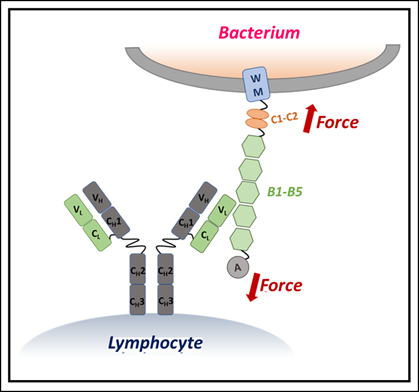
The study centered on Protein L, a molecule secreted by the bacterium Finegoldia magna. Known as a superantigen, Protein L interacts unusually with antibodies, sometimes disrupting immune responses. Using single-molecule force spectroscopy, a technique that applies ultra-fine mechanical forces to individual molecules, scientists observed that when IgM bound to Protein L, it significantly increased the protein’s mechanical stability.
In simple terms, IgM acted like a brace, making it more difficult for Protein L to unfold under stress. The effect was also dose-dependent — higher concentrations of IgM provided stronger stabilization, reducing the protein’s ability to cause harm.
Why IgM is Different
IgM antibodies are structurally larger and have multiple binding sites compared to smaller antibodies like IgG. Computer simulations showed that IgM’s ability to bind at multiple points simultaneously created a synergistic stabilizing effect. This unique architecture allowed IgM to neutralize bacterial proteins more effectively under mechanical stress, such as during blood circulation or immune attacks.
Implications for Future Therapies
Bacteria inside the human body often encounter mechanical forces — from blood flow to immune system defenses. The discovery that antibodies can mechanically stiffen bacterial toxins opens new therapeutic possibilities. Instead of just blocking bacterial proteins chemically, future treatments could use engineered antibodies to reinforce toxins mechanically, disarming them before they damage cells.
A New Frontier in Immunology
This study highlights an underexplored role of antibodies: acting not only as chemical defenders but also as physical stabilizers in the fight against disease. The work has potential applications in designing next-generation immunotherapies and contributes to a deeper understanding of how the immune system operates.
The research adds to India’s growing contributions in molecular biology and immunology. It underscores how advanced techniques, such as spectroscopy and simulation, can uncover hidden roles of biological molecules and pave the way for innovative medical solutions.