Strengthening India-Brazil Agricultural Ties
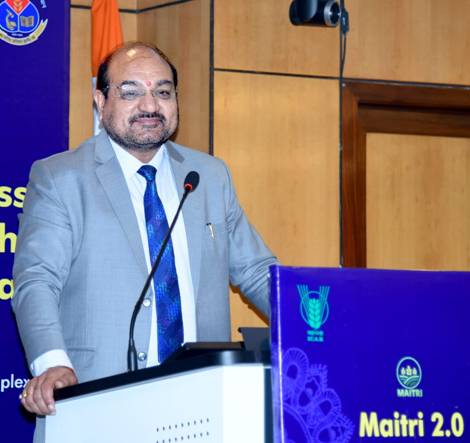
Dr. Jat highlighted the 77-year-long partnership between India and Brazil, emphasizing collaboration on global platforms such as BRICS and G20. He recalled the recent ICAR–EMBRAPA MoU as a significant milestone, covering the entire agri-food value chain. Dr. Jat highlighted ICAR’s transformation from 74 patents in 1996 to over 1,800 annually, backed by incubation centers and over 5,000 licensing agreements. He stressed that commercialization aims to deliver public-funded innovations to end-users, rather than merely generating revenue.
 Maitri 2.0: A Two-Way Learning Platform
The DG described Maitri 2.0 as a two-way learning platform for co-creation, connecting Indian and Brazilian innovators. The initiative seeks to foster an innovative, inclusive agri-food ecosystem, enhance global food security, and promote sustainable agriculture practices. By facilitating exchange of ideas, best practices, and joint incubation, Maitri 2.0 aims to empower farmers and support resilient food systems.
Brazilian Perspective on Strategic Collaboration
H.E. Mr. Kenneth Nobrega, Ambassador of Brazil, appreciated ICAR’s initiative and highlighted the strategic importance of connecting India and Brazil’s agritech ecosystems. He noted that Maitri 2.0 aligns with the broader Brazil–India strategic partnership, supporting cooperation in agriculture, emerging technologies, and food and nutritional security.
Supporting Agri-Startups and Innovation
Dr. Ch. Srinivasa Rao, Director, ICAR–IARI, shared that over 400 agri-startups have been supported, turning ideas into innovations and viable business models. “Agriculture must be seen both as a livelihood and a business,” he noted. Dr. Neeru Bhushan, ADG (IPTM), emphasized the shared challenges of climate change, food security, and sustainable intensification. The event concluded with a vote of thanks by Dr. Vishwanathan Srinivasan, JD, ICAR-IARI, acknowledging the collaboration between ICAR and the Brazilian Embassy.
Maitri 2.0 will strengthen incubator linkages, promote co-incubation, facilitate knowledge exchange, and open new opportunities in sustainable agriculture, digital technologies, and value-chain development, reinforcing bilateral cooperation in agritech innovation.