India Earns Global Trust as a Crisis Solver
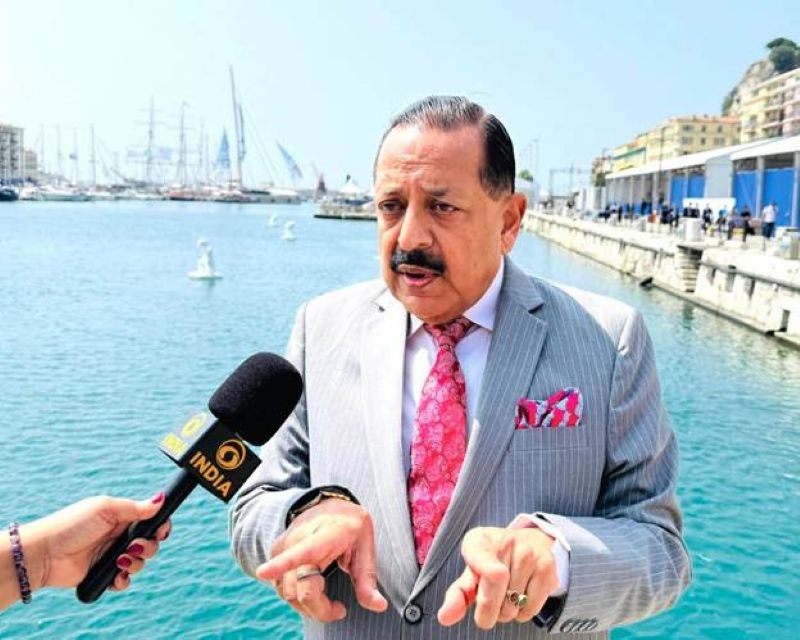
At the United Nations Ocean Conference, attended by over 150 nations, Union Minister Dr Jitendra Singh confidently declared, “The world today looks up to India to overcome global challenges.” His statement didn’t just reflect pride—it mirrored a growing reality.

A Decade of Decisive Governance
Dr Singh attributed this rising trust in India to decisive leadership by Prime Minister Narendra Modi over the past 11 years. The world’s perception of India has transformed, thanks to bold reforms, global engagement, and consistent governance.
As the Modi government marked its 11th anniversary, the timing of this conference became symbolically powerful. Global leaders and representatives expressed clear interest in partnering with India across crucial sectors—from climate action to ocean conservation.
India’s Leadership on Ocean Concerns
India has emerged as a global leader in addressing ocean-related challenges. These include:
-
Global warming and rising sea levels
-
Pollution from oil spills and plastic waste
-
Marine biodiversity protection
India’s proactive approach, particularly through the Deep Ocean Mission, showcases the country’s long-term vision. Notably, Prime Minister Modi referred to this mission twice during his Independence Day speeches, underlining its strategic importance.
From Passive Participant to Key Player
Dr Singh emphasized a crucial shift: “India is now taken seriously in global environmental dialogues.” A decade ago, many nations saw India as a passive or late actor in climate and ocean-related conversations.
Now, countries seek India’s insights. During the conference, several nations requested one-on-one meetings with the Indian delegation—clear evidence of India’s increasing global relevance.
A Scientific and Inclusive Strategy
India’s ocean conservation efforts follow the “whole of science, whole of government” approach. The Deep Ocean Mission, for instance, involves:
-
Collaboration with ISRO (Indian Space Research Organisation)
-
Support from national research institutions
-
Multidisciplinary innovation across AI, robotics, and marine studies
India was also among the first countries to ban single-use plastic, showing a strong policy commitment to ocean health.
Collective Action for a Shared Ocean
Dr Singh reminded global leaders that oceans cover 70% of Earth’s surface. They ignore national boundaries. Pollution and rising temperatures in one region impact the entire world.
Hence, collective global action is not a choice—it is a necessity. Dr Singh urged all stakeholders to work hand-in-hand, citing India’s growing capabilities as a model for collaboration.
Conclusion: India’s Global Moment
India is no longer a quiet participant in global conversations. It’s a nation leading the charge—from climate justice to ocean sustainability. The respect and attention India receives today result from 11 years of consistent, visionary governance and an unwavering commitment to sustainability.
As the world grapples with shared environmental threats, India stands ready—not just with solutions but with the confidence and cooperation needed to shape a cleaner, greener future for all.