Government Mulls Consolidation of State-Run Banks
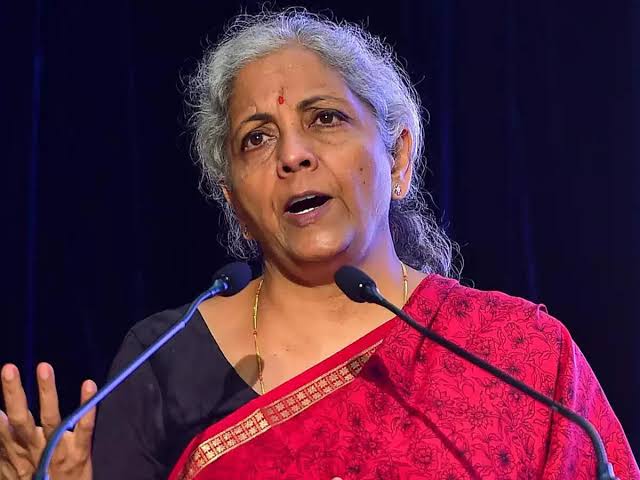
India currently has 12 state-owned banks, which collectively hold assets worth ₹171 trillion ($1.95 trillion), accounting for around 55% of the nation’s banking sector. Sitharaman emphasized that India’s growing economy needs “big, world-class banks” to support industrial expansion, infrastructure financing, and global competitiveness.
“India needs a lot of big, world-class banks. For that, we will have to talk with the Reserve Bank of India and with the banks themselves to see how they wish to proceed,” she said.
The Finance Minister also hinted that further mergers among existing public sector banks could be a key route to achieving that scale, similar to the 2020 consolidation in which 27 banks were merged into 12 larger entities.
Higher Foreign Investment Under Consideration
The government is also exploring the possibility of allowing greater foreign investment in state-owned lenders, aiming to attract global capital and strengthen the banking system’s capital adequacy. According to reports, discussions are underway on revising foreign direct investment (FDI) limits in the public banking sector.
“We are in dialogue with the RBI and the banks to evaluate what will work best. A lot of groundwork has already started,” Sitharaman added.
Experts believe such reforms could make Indian banks more competitive internationally while improving credit flow for startups, MSMEs, and major infrastructure projects.
Need for a Dynamic Banking Ecosystem
Sitharaman noted that India already has a conducive financial ecosystem but needs to make it “more dynamic” to match the pace of economic growth. “The environment for banks to operate and grow is well established in India. However, it must be made more dynamic to allow more players to expand,” she stated.
Her remarks align with the government’s vision for Viksit Bharat 2047, which aims to make India a developed nation through digital transformation, stronger institutions, and inclusive financial reforms.
Background: Banking Consolidation Journey
The 2020 mega-merger initiative brought together several banks such as Oriental Bank of Commerce with Punjab National Bank and Andhra Bank with Union Bank of India, reducing the total number of PSBs from 27 to 12. The objective was to create stronger, more efficient institutions capable of handling global-scale projects and minimizing operational redundancies.
Industry observers have lauded the results, citing improved cost efficiency and streamlined governance in merged entities. However, they also caution that further mergers must ensure minimal disruption to customers and employees.
What Lies Ahead
According to experts, the next round of consolidation could focus on building banks capable of supporting India’s global trade ambitions and infrastructure push. Financial analysts say that the government’s move will likely be balanced with regulatory caution from the RBI to maintain financial stability.
India’s banking reforms, coupled with digitization and fintech innovation, could create a new generation of global banks that reflect the country’s economic aspirations.