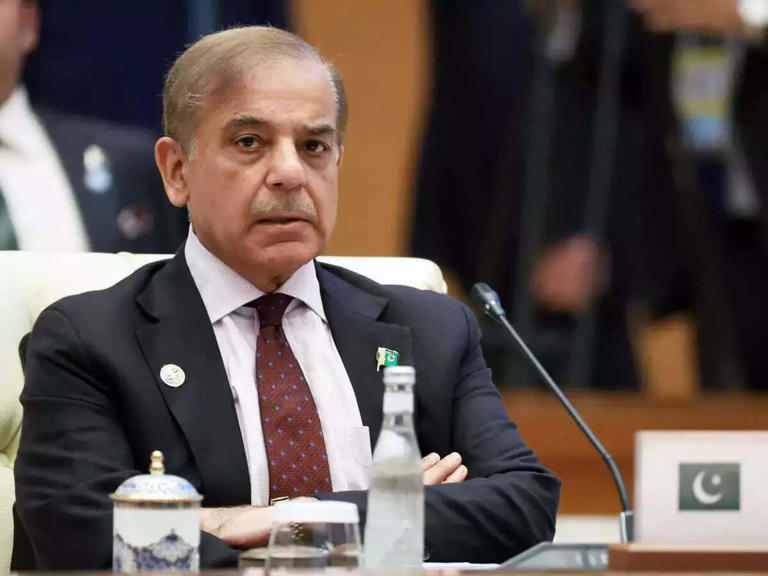
Islamabad, July 2, 2025: Pakistan Prime Minister Shehbaz Sharif has announced emergency steps to build new water storage infrastructure after India suspended the historic Indus Waters Treaty (IWT) earlier this year.
While visiting the National Emergencies Operations Centre on Tuesday, Sharif accused India of attempting to “weaponise water” against Pakistan. He called New Delhi’s decision part of an “evil design” and pledged that Islamabad would not remain silent.
India Suspended the Treaty in April
India made the bold decision in April 2025, shortly after the Pahalgam terror attack that killed over 20 security personnel. The terror group responsible had links to Pakistan-based Lashkar-e-Taiba. In response, Prime Minister Narendra Modi declared, “Water and blood cannot flow together,” signaling a shift in India’s approach.
The 1960 treaty, which the World Bank originally brokered, lays out how both countries share the waters of the Indus River system. India uses the eastern rivers, while Pakistan relies on the western ones—Indus, Chenab, and Jhelum.
 Sharif Accuses India of Aggression
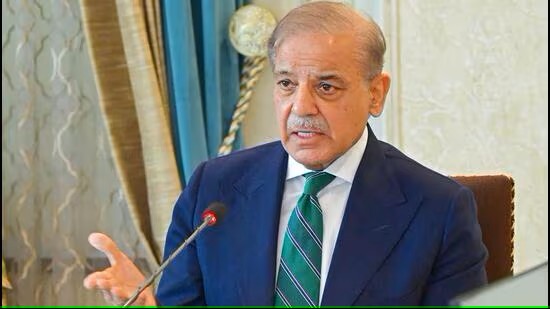
According to Dawn, a leading Pakistani daily, Sharif claimed that India had no legal right to pull out of the agreement unilaterally. He described India’s move as an attack on Pakistan’s water security and promised firm countermeasures.
“We are facing the enemy’s evil design,” Sharif said, “but we will respond with national strength. We will build water storage projects using domestic resources.” He also directed Pakistan’s National Disaster Management Authority (NDMA) to lead the project execution.
Diamer-Bhasha Dam Back in Focus
Sharif also announced a revival of the long-delayed Diamer-Bhasha Dam project. Though first proposed in the 1980s, the dam has faced decades of setbacks, including environmental objections, lack of funding, and its controversial location in Gilgit-Baltistan.
Now, under pressure, the government plans to fast-track construction, hoping to strengthen its water resilience before the next irrigation season.
Opposition Raises Concerns
Bilawal Bhutto-Zardari, the chairman of the Pakistan People’s Party, issued a stern warning. “India’s action is an existential threat. If they block our water, it is war,” he declared during a televised address.
His comments reflect rising anxiety within Pakistan’s political leadership, which is already struggling to address inflation, unemployment, and climate risks.
Agriculture Sector Faces Uncertainty
Pakistan’s agriculture depends heavily on the western rivers of the Indus Basin. Nearly 80% of the country’s water supply comes from these rivers, and over 90% of that water supports farming.
Any major disruption could trigger crop failures, food shortages, and sharp economic downturns. Without new reservoirs or better water management, the risk of large-scale water insecurity grows each day.
Furthermore, India’s decision to stop sharing real-time hydrological data—such as flood warnings during monsoon—has left Pakistan more vulnerable to natural disasters.
Diplomatic Standoff Continues
Although international observers have urged both nations to return to the negotiating table, India has made its position clear. New Delhi insists that formal dialogue can resume only if Pakistan cracks down on cross-border terrorism.
So far, neither side has confirmed any upcoming discussions or third-party mediation attempts.
Conclusion
India’s decision to suspend the Indus Waters Treaty marks a turning point in regional geopolitics. While India appears determined to act decisively, Pakistan now faces an urgent challenge to secure its future water supply.
The next few months could reshape how both nations manage critical natural resources. Whether through diplomacy or confrontation, South Asia’s water politics have entered a turbulent new chapter.