India and Japan are deepening their partnership in the textile sector. With fresh trade figures, bilateral agreements, and joint initiatives, both nations are taking big steps forward.
In 2024, India exported $354 million worth of textiles and apparel to Japan. Meanwhile, Japan’s total textile imports from the world stood at $30.87 billion. (Source: UNCOM Trade Database)
This data reveals a big opportunity for India to expand its textile footprint in the Japanese market.
CEPA: A Gateway to Trade Growth
India and Japan signed the Comprehensive Economic Partnership Agreement (CEPA) in 2011. The goal was to reduce tariffs and remove trade barriers.
CEPA also simplified customs procedures and tackled structural issues. As a result, Indian exporters became more competitive in the Japanese market.
This agreement continues to serve as a strong foundation for growing textile trade between the two countries.
 PM MITRA Parks: A Big Invitation to Japan
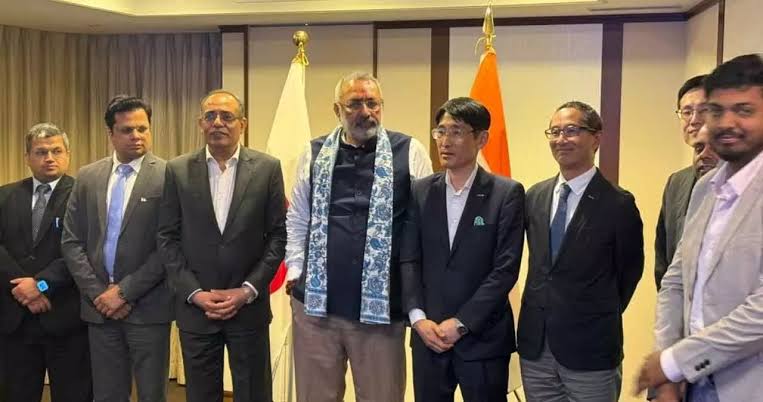
In a recent high-level visit to Japan, Indian delegates met with key players across Japan’s textile value chain. These included apparel, machinery, technical textile, and processing companies.
The delegation invited Japanese companies to invest in PM MITRA Parks—India’s world-class plug-and-play textile infrastructure.
These parks offer modern facilities, efficient logistics, and a strong ecosystem. They are designed to attract global partners and boost large-scale manufacturing.
Government Schemes Supporting the Sector
The Indian government has launched several flagship schemes to support the textile sector. Two major ones are:
- PM MITRA Parks Scheme – to develop integrated textile hubs with cutting-edge infrastructure.
- Production Linked Incentive (PLI) Scheme – focused on MMF (Man-Made Fibres) Fabric, Apparel, and Technical Textiles.
These schemes aim to promote domestic production, generate jobs, and attract foreign investment.
Sustainability Through ESG Taskforce
The Ministry of Textiles has created an Environment, Social, and Governance (ESG) Taskforce. The taskforce works closely with industry players to promote sustainable and resource-efficient production models.
It identifies current challenges and develops solutions to help the industry shift towards eco-friendly practices.
This move aligns with global trends and meets the expectations of environmentally conscious consumers.
Japanese Quality Training for Indian Officers
To boost quality and technical expertise, Japan has stepped in with support. The Association for Overseas Technical Cooperation and Sustainable Partnerships (AOTS), under Japan’s Ministry of Economy, Trade and Industry (METI), is training Indian technical officers.
The training focuses on the Japanese System of Quality Evaluation and is held in major textile export hubs—Mumbai, Kolkata, Jaipur, and Tirupur.
These programs aim to enhance India’s textile standards and prepare it for greater exports to quality-sensitive markets like Japan.
India’s Vision: Innovation Meets Collaboration
India is combining its scale, skill, and policy strength with Japan’s precision, technology, and demand. This powerful combination is reshaping textile trade between the two nations.
The partnership offers scope for innovation, co-investment, and knowledge exchange across the value chain—from raw materials to finished products.
Opportunities Ahead
There’s a lot to look forward to in the India-Japan textile collaboration. Some of the key opportunities include:
- Growing India’s share in Japan’s textile imports.
- Setting up Japanese manufacturing units inside PM MITRA parks.
- Introducing advanced Japanese textile machinery into Indian factories.
- Adopting circular economy and sustainability practices together.
Conclusion: Weaving a Stronger Future
The textile sector is a powerful driver of growth, jobs, and exports. The India-Japan textile trade relationship is strengthening with each new initiative.
With schemes like PM MITRA, PLI, ESG taskforces, and CEPA as a foundation, India is offering a golden opportunity to Japanese investors.
As both countries continue to collaborate, this partnership could set a global benchmark for sustainable and strategic textile cooperation.