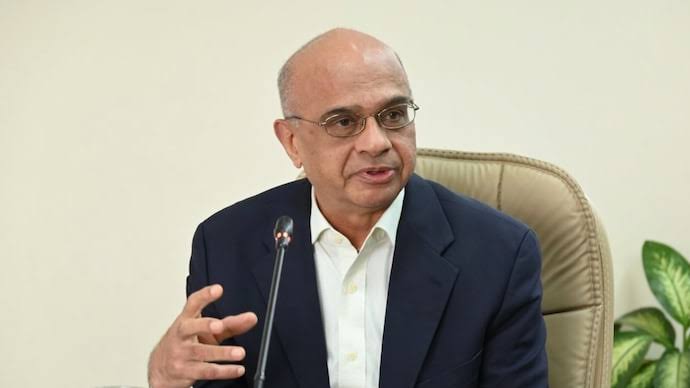
At the 20th session of the United Nations Forum on Forests (UNFF20), held in New York from May 5 to 9, 2025, India reaffirmed its steadfast commitment to forest conservation and sustainable forest management. Represented by Shri Sushil Kumar Awasthi, Director General of Forests and Special Secretary in the Ministry of Environment, Forest and Climate Change, the Indian delegation presented a heartfelt account of the nation’s progress, achievements, and vision for the future of global forestry.

India shared that its forest and tree cover has steadily increased, now standing at 25.17% of the country’s total geographical area. This achievement reflects years of dedicated national efforts, including afforestation of over 1.55 lakh hectares under the Green India Mission, the rejuvenation of degraded landscapes such as the Aravalli Green Wall, and a remarkable 7.86% rise in mangrove cover over the past decade. A particularly touching initiative, the “Ek Ped Maa Ke Naam” campaign, has seen the planting of 1.4 billion seedlings—symbolizing both environmental responsibility and emotional connection to nature, by encouraging citizens to plant a tree in their mother’s name.
One of the most inspiring moments of India’s participation was its invitation to all United Nations Member States to join the International Big Cat Alliance (IBCA). Launched by India, this global coalition aims to protect and conserve the seven big cat species through collaborative research, knowledge-sharing, and mutual capacity-building. It’s a call not just to safeguard majestic wildlife, but to unite humanity behind a shared ecological purpose.
India also drew attention to the significant outcomes of the Country-Led Initiative it hosted in Dehradun in October 2023, focusing on pressing concerns such as forest fire management and forest certification. In a spirit of solidarity, India acknowledged the valuable contributions of other CLI hosts like the Republic of Congo, DPR Korea, and Austria, and emphasized the need to integrate such efforts into broader international frameworks.
In a side event titled “Restoring Degraded Forest Landscapes: India’s Approach to Sustainable Forest Management and Climate Resilience,” India showcased its holistic approach, blending policy innovation with community involvement and technological tools. These efforts reflect a model of inclusive and adaptive forest governance, designed not only to restore ecological balance but also to uplift rural livelihoods.
India’s voice was also heard at a high-level panel on valuing forest ecosystems in national policy. Presenting insights from pilot studies conducted in states like Uttarakhand and Rajasthan, as well as in tiger reserves, the delegation highlighted the crucial role forests play in providing vital services like carbon storage, water regulation, and biodiversity support. While recognizing the challenges in quantifying these non-market values, India stressed the urgent need to integrate such assessments into national planning for the sake of future generations.
India’s participation at UNFF20 served as both a progress report and a passionate plea—to act now, to collaborate globally, and to protect the planet’s green lungs. Through compassion, innovation, and shared purpose, India’s message to the world was clear: the health of our forests reflects the health of humanity itself.