
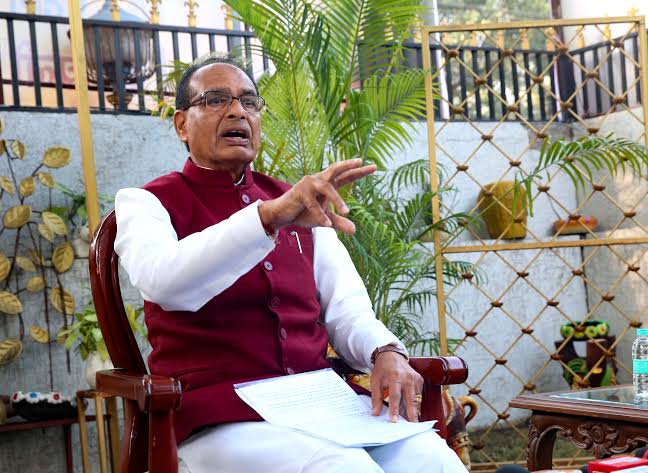

Shri Shivraj Singh Chouhan said the agreement sends a clear message to the world that India’s policy is based on commitment, not compromise. He noted that decisions are taken with full confidence and in the best interest of the country.
The Union Minister said India does not believe in bargaining politics but follows a balanced and positive strategy rooted in dialogue. This approach, he added, is the reason why India is today emerging as a reliable and trusted global partner.
Diplomacy, Development, and Dignity
Describing the agreement as an example of diplomacy, development, and dignity, Shri Chouhan explained that diplomacy in this deal means placing the nation first. He said India’s strategic interests were carefully protected during negotiations.
On development, the Minister said the agreement strengthens the foundation of Viksit Bharat by opening new economic opportunities. Dignity, he noted, refers to the dignity of farmers, which has been fully safeguarded in the trade deal.
All concerns related to Indian agriculture have been addressed, ensuring that farmers remain secure while also gaining access to new global markets.
Zero Tariffs for Indian Agricultural Exports
The Union Minister highlighted that several Indian agricultural products will now enter the United States market with zero tariffs. At the same time, American agricultural products will not receive similar concessions in the Indian market.
He said the US has reduced tariffs, which earlier went up to 50 per cent, to zero on products such as spices, tea, coffee, coconut, cashew, fruits, mushrooms, and select grains. In 2024–25, India’s agricultural exports stood at USD 4.45 billion, with spice exports witnessing an 88 per cent increase.
With India already exporting spices to nearly 200 destinations worldwide, the US market is expected to provide a significant boost to farmers’ incomes.
No Compromise on Farmer Security
Shri Chouhan firmly stated that no product harmful to Indian farmers has been included in the trade deal. All sensitive items have been kept outside the agreement to ensure domestic market protection.
Major crops such as wheat, rice, corn, soybean, sugar, pulses, oilseeds, and coarse grains remain fully protected. Similarly, fruits like bananas, citrus fruits, strawberries, and cherries, along with poultry and dairy products, have been excluded.
He clarified that dairy items such as milk, butter, ghee, paneer, cheese, and yogurt will not enter India under the agreement, ensuring complete security for Indian farmers.
Opportunities for Farmers, Women, and Youth
The Union Minister said the trade deal would create fresh opportunities for farmers, women, and youth across sectors. Reduced tariffs in textiles are expected to provide momentum to exports, directly benefiting cotton farmers.
He added that sectors such as gems and jewellery, auto components, engineering goods, and MSMEs will also gain. Women-led self-help groups, involved in production across sectors, are expected to receive global recognition for their work.
Milestone for Atmanirbhar and Viksit Bharat
Shri Shivraj Singh Chouhan noted that under the leadership of Prime Minister Narendra Modi, India has completed nine free trade agreements so far. Agreements with multiple countries have strengthened India’s economic integration with the world.
He said such trade deals will benefit farmers, labourers, exporters, manufacturers, and the poor, contributing to the goal of a developed India by 2047. The Minister expressed confidence that the India-US trade deal would serve as a milestone in building an Atmanirbhar and Viksit Bharat.