India to Divert Indus Water from Pakistan to Rajasthan: Amit Shah
New Delhi | June 22, 2025
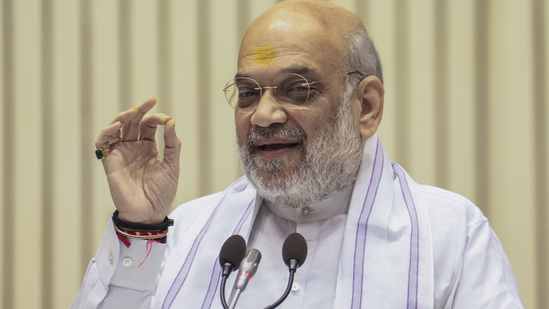
Union Home Minister Amit Shah has categorically ruled out any revival of the Indus Waters Treaty (IWT) with Pakistan, declaring that India will use the water for its own needs, especially in Rajasthan, by constructing a dedicated canal.
This comes in the aftermath of the April 22 terrorist attack in Pahalgam, Jammu & Kashmir, which killed 26 civilians. India officially placed the treaty “in abeyance” on April 24, citing Pakistan’s continued support for cross-border terrorism.
 “No, It Will Never Be Restored”: Shah
In an interview with The Times of India, Amit Shah was direct when asked if India plans to revive the six-decade-old water-sharing pact.
“No, it will never be restored,” Shah responded firmly.
“We will take water that was flowing to Pakistan and bring it to Rajasthan by constructing a canal,” he added.
What Is the Indus Waters Treaty?
The Indus Waters Treaty, signed in 1960 between India and Pakistan under World Bank mediation, governs the distribution of the Indus River system. It granted Pakistan access to the western rivers—Indus, Jhelum, and Chenab—while India retained rights over the eastern rivers—Ravi, Beas, and Sutlej.
Despite wars and hostility, the treaty had remained intact for over 60 years, until the recent terror-linked suspension.
Terrorism Ends Dialogue: India’s Stand
India’s firm stance is based on a consistent policy: “Talks and terror cannot go together.” The government blames Pakistan for repeated terror incidents, particularly the Pahalgam killings, which India claims were orchestrated by terror groups based and trained in Pakistan.
As a result, India communicated the formal suspension of the treaty on April 24, just two days after the attack. The letter from Debashree Mukherjee, Secretary of the Jal Shakti Ministry, stated:
“The obligation to honour a treaty in good faith is fundamental. But we’ve instead witnessed sustained terrorism from Pakistan.”
Pakistan’s Reaction and Repeated Appeals
Since the suspension, Pakistan has written four letters—three of them after Operation Sindoor, India’s military response to the Pahalgam attack—urging a reconsideration.
Pakistan’s water resources secretary, Syed Ali Murtaza, argued that India’s move is a unilateral violation of the treaty. The Pakistani media and leadership also termed water as their “red line”, implying potential escalation if the treaty is permanently terminated.
However, India remains unmoved. Officials insist that the treaty cannot survive in an atmosphere of continued violence.
Water to Rajasthan: National Priority
The new canal project, aimed at diverting water from rivers that previously flowed into Pakistan, is part of a broader strategy to boost irrigation and drinking water access in arid regions of Rajasthan.
This move aligns with the government’s agenda of resource optimization and internal prioritization. The canal, once constructed, could transform large swaths of drought-prone Rajasthan.
“Why should water go to a country that sponsors terror? Our own people need it more,” a senior Home Ministry official said.
Historic Pact Now at Risk
The Indus Waters Treaty has long been hailed as a rare example of India-Pakistan cooperation, surviving the Kargil conflict, the 2008 Mumbai attacks, and multiple ceasefire violations. However, the post-Pahalgam shift signals that even this pillar of diplomacy may not be immune to breakdown if terror persists.