Skip to content
Ramrajya News Website RamRajya News

Heralding RamRajya in Bharat

  • My Account
  • Dharm
  • Editorial
  • Register
  • Mandir
  • From Social Media
  • Contact Us
Ramrajya News Website
RamRajya News

Heralding RamRajya in Bharat

Indian Scientists’ Breakthrough in Stellar Atmosphere Modeling

RR Team, August 23, 2025August 23, 2025
In a major leap for computational astrophysics, researchers from the Indian Institute of Astrophysics (IIA), Bengaluru, in collaboration with colleagues at the Institut de Recherche en Astrophysique et Planétologie (IRAP), France, have unveiled a method to model stellar atmospheres with unprecedented realism. Their work, recently published in the journal Astronomy & Astrophysics, marks the first successful solution of the full non-local thermodynamic equilibrium (FNLTE) radiative transfer problem for a three-level atom — a milestone that scientists had chased for decades.

Why Stellar Atmospheres Are So Complex

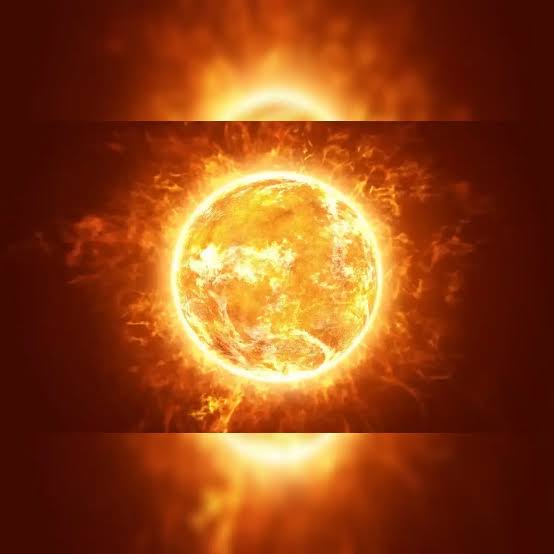
The atmosphere of a star is not a calm, orderly environment. It is a chaotic region where photons scatter unpredictably, atoms constantly change energy states, and particles rarely stay in equilibrium. Traditional models made a simplifying assumption: while atoms could shift energy states, their velocity distributions would still follow the neat Maxwellian curve expected in equilibrium. This allowed calculations but ignored crucial physical effects.

Such simplifications limited astronomers’ ability to decode the fine details of stellar spectra, the unique light signatures that reveal a star’s temperature, composition, and structure. As stars are the primary light sources in the universe, even small inaccuracies cascade into larger uncertainties in astrophysical research.

The FNLTE Breakthrough

FNLTE modeling removes these approximations by allowing all variables to vary simultaneously — atomic populations, their velocity distributions, and the radiation field. The challenge is that each of these quantities is interdependent, creating a highly complex web of equations. Earlier attempts in the 1980s failed due to computational limitations.

The IIA–IRAP team, led by Dr. Sampoorna M from IIA and researchers T. Lagache and F. Paletou from Toulouse, first solved the simpler two-level atom case. Building on this, they have now achieved the far more demanding three-level atom model, where additional scattering processes, such as Raman scattering (light absorbed at one frequency and re-emitted at another), naturally emerge in the calculations.
What the Results Show

When the new FNLTE model was compared with conventional approximations, the results were striking. For example, the velocity distribution of excited hydrogen atoms no longer followed the tidy Maxwellian pattern. Instead, significant deviations appeared near the stellar surface — precisely where astronomers collect the light signatures used in spectral analysis.

These findings suggest that existing models may underestimate or misinterpret spectral features, especially in the outer layers of stars. More accurate modeling could sharpen measurements of stellar temperatures, chemical abundances, and internal dynamics.

Implications for Astronomy and Exoplanet Science

This advancement could reshape several fields of astrophysics. Stellar spectra are central to identifying Earth-like exoplanets, as astronomers must carefully separate the faint planetary signals from the far brighter stellar background. With more realistic atmosphere models, researchers can better distinguish whether a spectral anomaly originates in the star itself or hints at a planet orbiting it.

Similarly, the findings will help refine our understanding of circumstellar disks, interstellar clouds, and the processes that govern star and planet formation. By improving the accuracy of stellar models, astronomers gain a more reliable toolkit for interpreting cosmic phenomena.

this work also positions Indian research institutes at the forefront of cutting-edge computational astrophysics, advancing both theory and global collaborations.

The Road Ahead

The conceptual leap from two to three atomic levels represents a major step forward. The IIA–IRAP team is now working on expanding the method to more complex multi-level atoms and developing faster numerical algorithms to manage the heavy computational load. If successful, these efforts could eventually provide astronomers with the ability to simulate stellar spectra in their full complexity — a dream long considered beyond reach.

“The major conceptual jump from two to three or more atomic levels has now been made,” said Dr. Sampoorna. “Our goal is to keep pushing toward generalizing this method, so that we can explore stars in the most realistic way possible.”
News #IndianScience #SpaceResearch #Astronomy #StellarBreakthrough #ISRO #ScientificInnovation

Post navigation

Previous post
Next post

Related Posts

News

Modi-Meloni G7 Meeting Reinforces India-Italy Ties

June 19, 2025June 19, 2025

PM Modi Meets Italian PM Giorgia Meloni at G7 Summit On 17 June 2025, Indian Prime Minister Narendra Modi met with Italian Prime Minister Giorgia Meloni on the sidelines of the 51st G7 Summit in Kananaskis, Canada. The leaders held warm and constructive discussions, reaffirming the strong and growing partnership…

Read More
News

Union Minister Dr. Jitendra Singh Calls for United Efforts to Combat Cervical Cancer at “Together Against HPV” Conclave

December 17, 2024

Union Minister Dr. Jitendra Singh highlighted the importance of prioritizing women’s health and preventive healthcare during the “Together Against HPV” conclave held in New Delhi. The event, organized by a leading news channel, focused on addressing the challenges posed by cervical cancer in India, which claims nearly 1 lakh women’s…

Read More
News

Vice President Praises Uttarakhand’s Implementation of Uniform Civil Code

January 27, 2025January 27, 2025

Vice President Jagdeep Dhankhar, addressing participants at the inauguration of the Rajya Sabha Internship Programme and the launch of its online portal, celebrated Uttarakhand’s adoption of the Uniform Civil Code (UCC) as a historic and auspicious development. He commended the state for fulfilling the constitutional vision laid out in Article…

Read More

Leave a Reply Cancel reply

You must be logged in to post a comment.

Recent Posts

  • Putin’s Il-80 ‘Flying Kremlin’ Becomes World’s Most-Tracked Jet
  • Labour Codes Reshape BOCW Protections Nationwide
  • Govt Defines EMRS Expansion Rules in Bihar
  • PMJUGA Launched to Transform 63,843 Tribal Villages Nationwide
  • PSU MoU Enhances EMRS Infra, Digital Learning

Recent Comments

No comments to show.

Archives

  • December 2025
  • November 2025
  • October 2025
  • September 2025
  • August 2025
  • July 2025
  • June 2025
  • May 2025
  • April 2025
  • March 2025
  • February 2025
  • January 2025
  • December 2024
  • November 2024
  • October 2024
  • September 2024
  • June 2024
  • May 2024
  • January 2024
  • November 2023
  • October 2023
  • September 2023
  • August 2023

Categories

  • Ancient Bharat
  • Article 1
  • Article 2
  • Article 3
  • Article 4
  • Articles
  • Artist
  • BB – Article 1
  • BB – Article 2
  • BB – Article 3
  • BB – Article 4
  • BB – Article 5
  • Beauty
  • Bharat
  • Bihar
  • Business and Economy
  • By – Devendra Sikarwar
  • By – Kumar Satish
  • By – Menuka Shahi
  • By – Nitin Tripathi
  • By – Raj Shekhar Tiwari
  • By – Sarvesh Kumar Tiwari
  • By – Shanees Arya
  • By – Shouvik Roy
  • By – विनय सिंह बैस
  • By – कमलाकांत त्रिपाठी
  • Career
  • Covid
  • Defence
  • Dharm
  • Editorial
  • Educational
  • Elections
  • Events
  • Expose-Series
  • Festivals
  • From Social Media
  • GeoPolitics
  • Glorious Bharat
  • Health
  • Inspired by SM Posts About Current Events
  • International
  • Life style
  • Lok Sabha
  • Mandir
  • Model
  • Nation First
  • News
  • Operation Sindoor
  • Photography
  • Politics
  • Press Release
  • Rajya Sabha
  • Ramayan Series
  • Ramp
  • Rituals
  • Sports
  • Tips & Tricks
  • Trends
  • Uncategorized
  • Warfare
  • बदलता भारत

Tags

##India #AatmanirbharBharat #AmitShah #AtmanirbharBharat #BiharElections2025 #BiharPolitics #BJP #BreakingNews #CulturalHeritage #CyberSecurity #DigitalIndia #Diplomacy #ECI #EconomicGrowth #ElectionCommission #GlobalTrade #GoodGovernance #GovernmentOfIndia #IndiaEconomy #IndianEconomy #IndiaNews #IndianNavy #IndianPolitics #IndianRailways #MakeInIndia #MaritimeSecurity #NarendraModi #NationalSecurity #NortheastIndia #OmBirla #PiyushGoyal #PMModi #PresidentMurmu #RamRajyaNews #RuralDevelopment #ShivrajSinghChouhan #SkillDevelopment #SpecialCampaign5 #SupremeCourt #SwachhBharat #TeamIndia #ViksitBharat #ViksitBharat2047 #WomenEmpowerment innovation

Categories

  • Ancient Bharat (10)
  • Article 1 (1)
  • Article 2 (1)
  • Article 3 (1)
  • Article 4 (1)
  • Articles (34)
  • Artist (1)
  • BB – Article 1 (2)
  • BB – Article 2 (2)
  • BB – Article 3 (2)
  • BB – Article 4 (2)
  • BB – Article 5 (2)
  • Beauty (2)
  • Bharat (46)
  • Bihar (121)
  • Business and Economy (7)
  • By – Devendra Sikarwar (10)
  • By – Kumar Satish (2)
  • By – Menuka Shahi (1)
  • By – Nitin Tripathi (1)
  • By – Raj Shekhar Tiwari (2)
  • By – Sarvesh Kumar Tiwari (1)
  • By – Shanees Arya (1)
  • By – Shouvik Roy (1)
  • By – विनय सिंह बैस (4)
  • By – कमलाकांत त्रिपाठी (1)
  • Career (18)
  • Covid (6)
  • Defence (9)
  • Dharm (170)
  • Editorial (18)
  • Educational (4)
  • Elections (106)
  • Events (3)
  • Expose-Series (2)
  • Festivals (133)
  • From Social Media (33)
  • GeoPolitics (7)
  • Glorious Bharat (9)
  • Health (28)
  • Inspired by SM Posts About Current Events (1)
  • International (32)
  • Life style (1)
  • Lok Sabha (6)
  • Mandir (22)
  • Model (3)
  • Nation First (8)
  • News (4,805)
  • Operation Sindoor (8)
  • Photography (2)
  • Politics (65)
  • Press Release (8)
  • Rajya Sabha (1)
  • Ramayan Series (4)
  • Ramp (3)
  • Rituals (22)
  • Sports (72)
  • Tips & Tricks (1)
  • Trends (4)
  • Uncategorized (13)
  • Warfare (1)
  • बदलता भारत (8)
©2025 RamRajya News | WordPress Theme by SuperbThemes
Go to mobile version